Art that functions
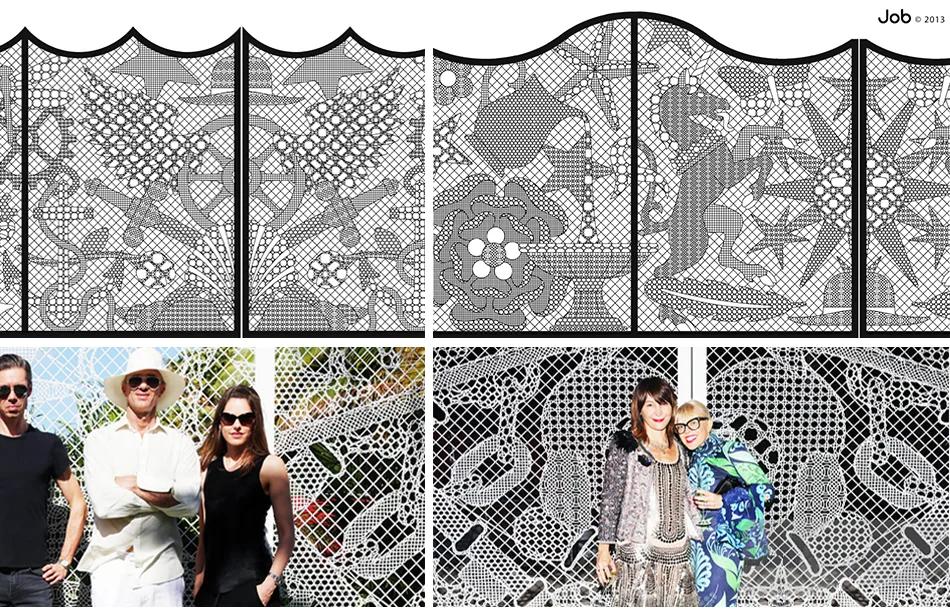
A fence, gate or net is needed anyway. Making it the artwork means the commission becomes part of the architecture, as with the gates of the Faena Art Center in Miami, designed by Studio Job.
Solutions
An art commission for a public building or space has to become part of the place, not an object placed in front of it. Redfort turns the work of artists into fences, nets, gates and installations in steel mesh that serve a function and tell a story.
Get in touch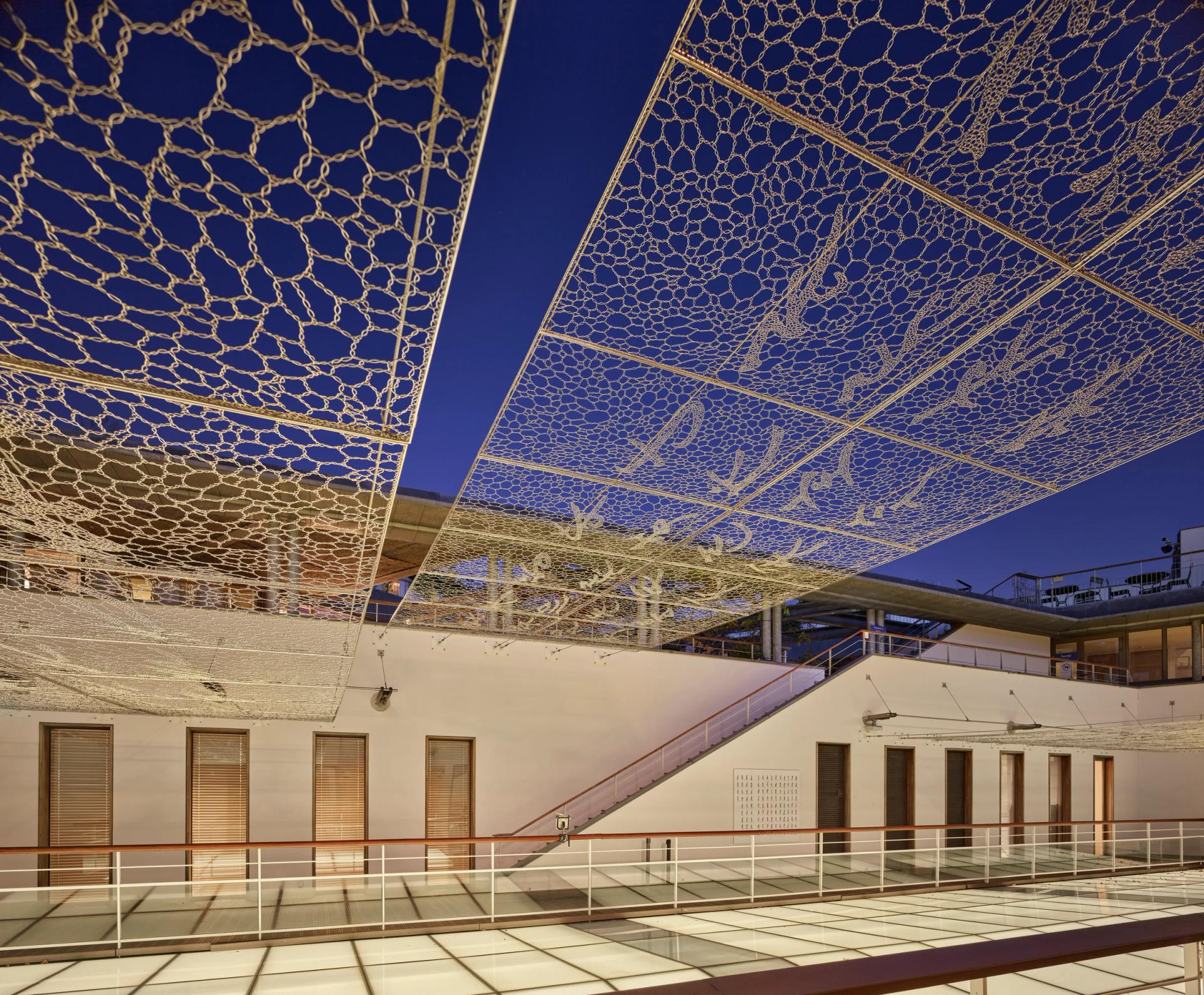
Art in a building or public space has to meet two demands. It must carry the idea of the artist and stand up to intensive public use. It often also has to fit into elements the project needs anyway, such as a fence, a gate, a net or a ceiling.
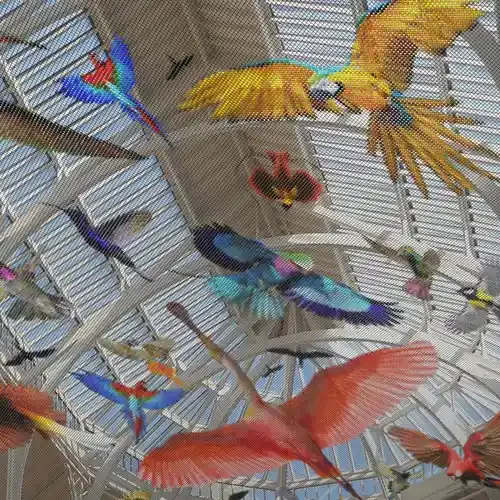
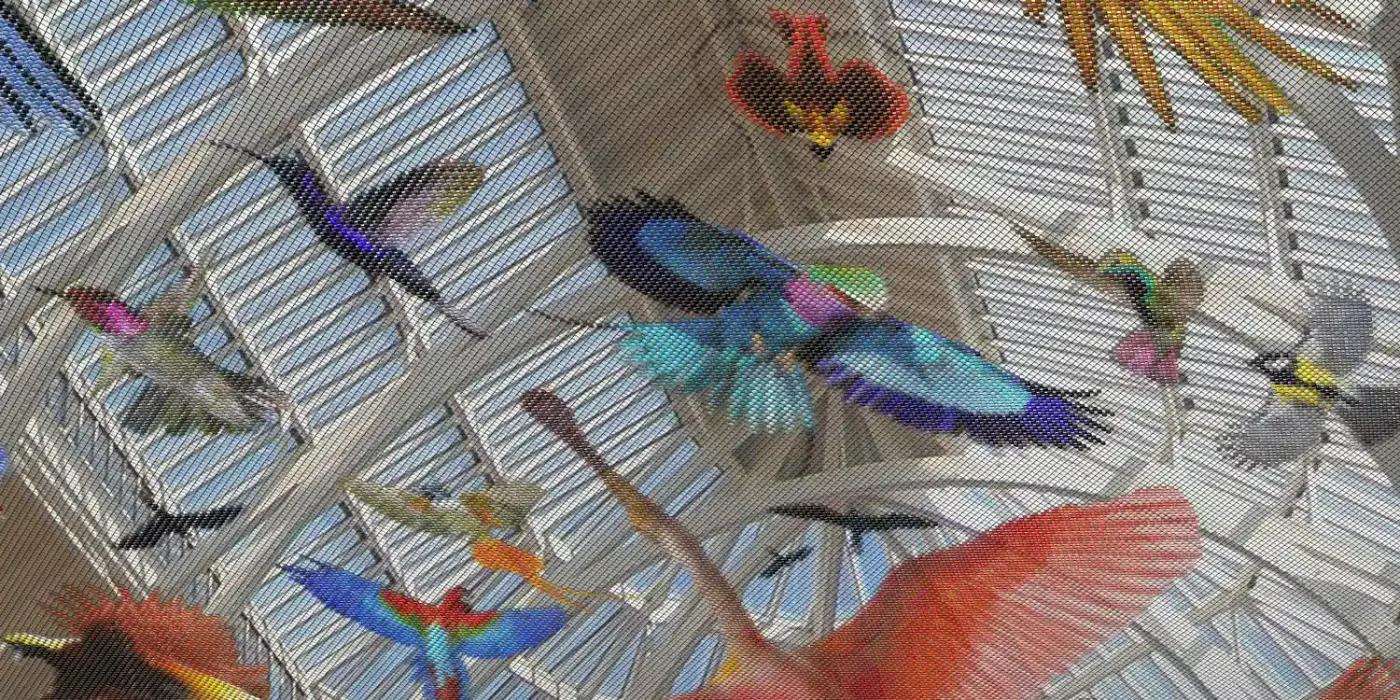
Redfort translates artworks into steel. With Lalace artist Jiang Qiong Er embroidered poetic words into a woven net above the terrace of Musée Guimet in Paris. With Dedots one hundred colourful birds float through the main hall of the National Museum of Scotland on nets that need no substructure.
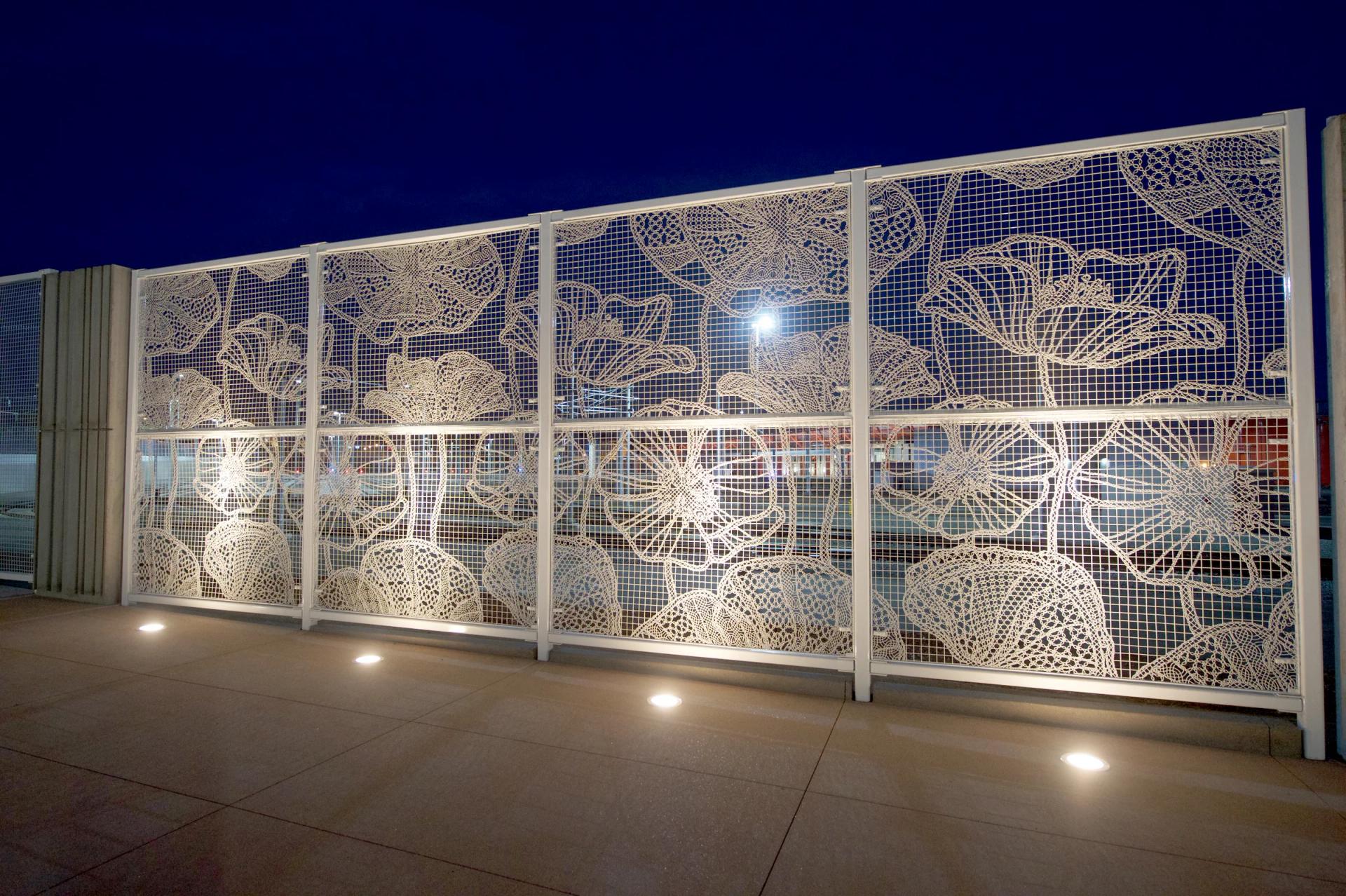
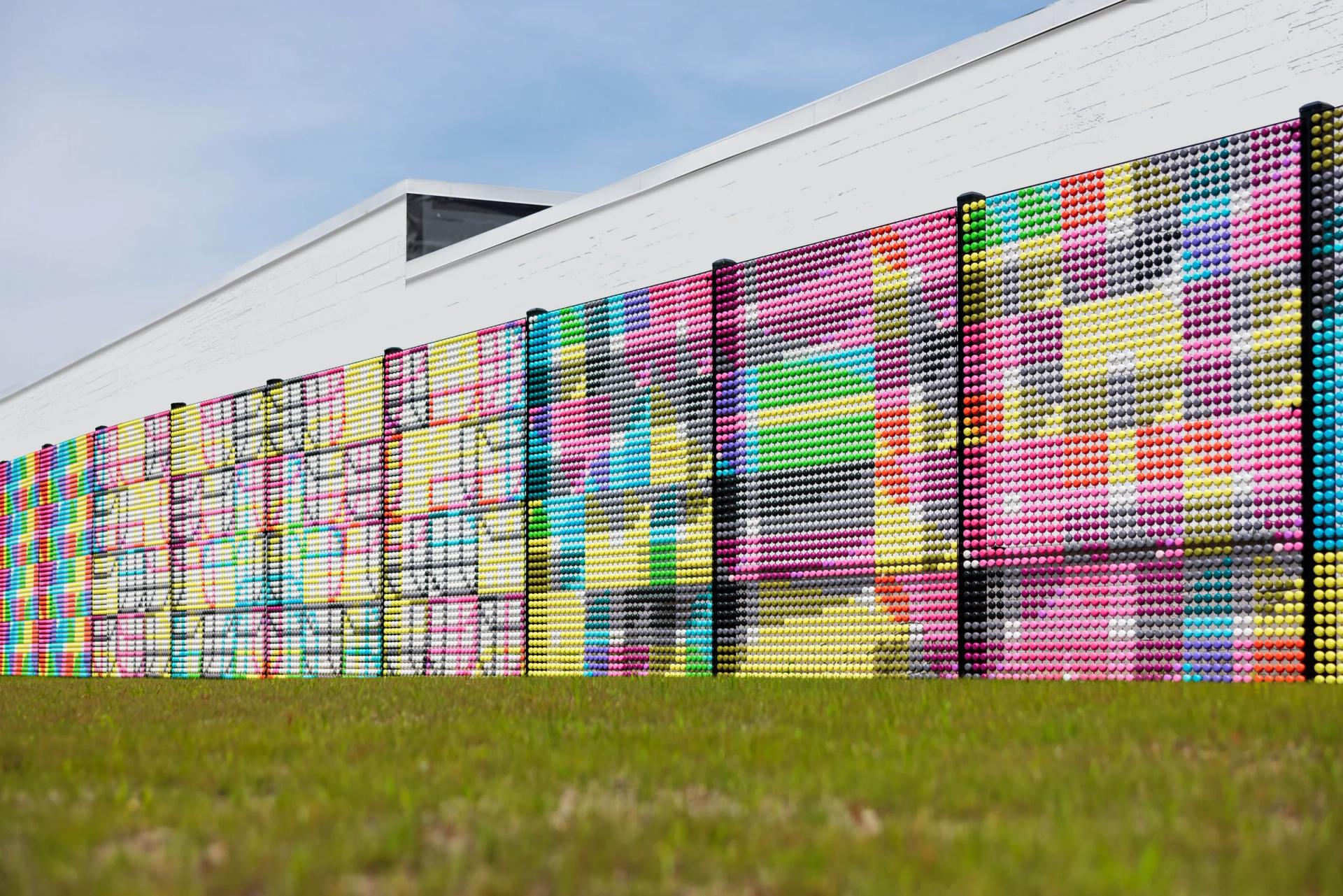
Because the art is part of a functional element, it works every day. The perimeter fence of a rail operations campus, designed by artist Christie Beniston, secures the site while visitors sit in the plaza. At the Faena Art Center in Miami gates designed by Studio Job keep the audience amused and at bay.
A fence, gate or net is needed anyway. Making it the artwork means the commission becomes part of the architecture, as with the gates of the Faena Art Center in Miami, designed by Studio Job.
Nets span large areas with minimal structure. That allows installations above terraces or in historic halls, such as the bird installation in Edinburgh, without a substructure that would disturb the interior.
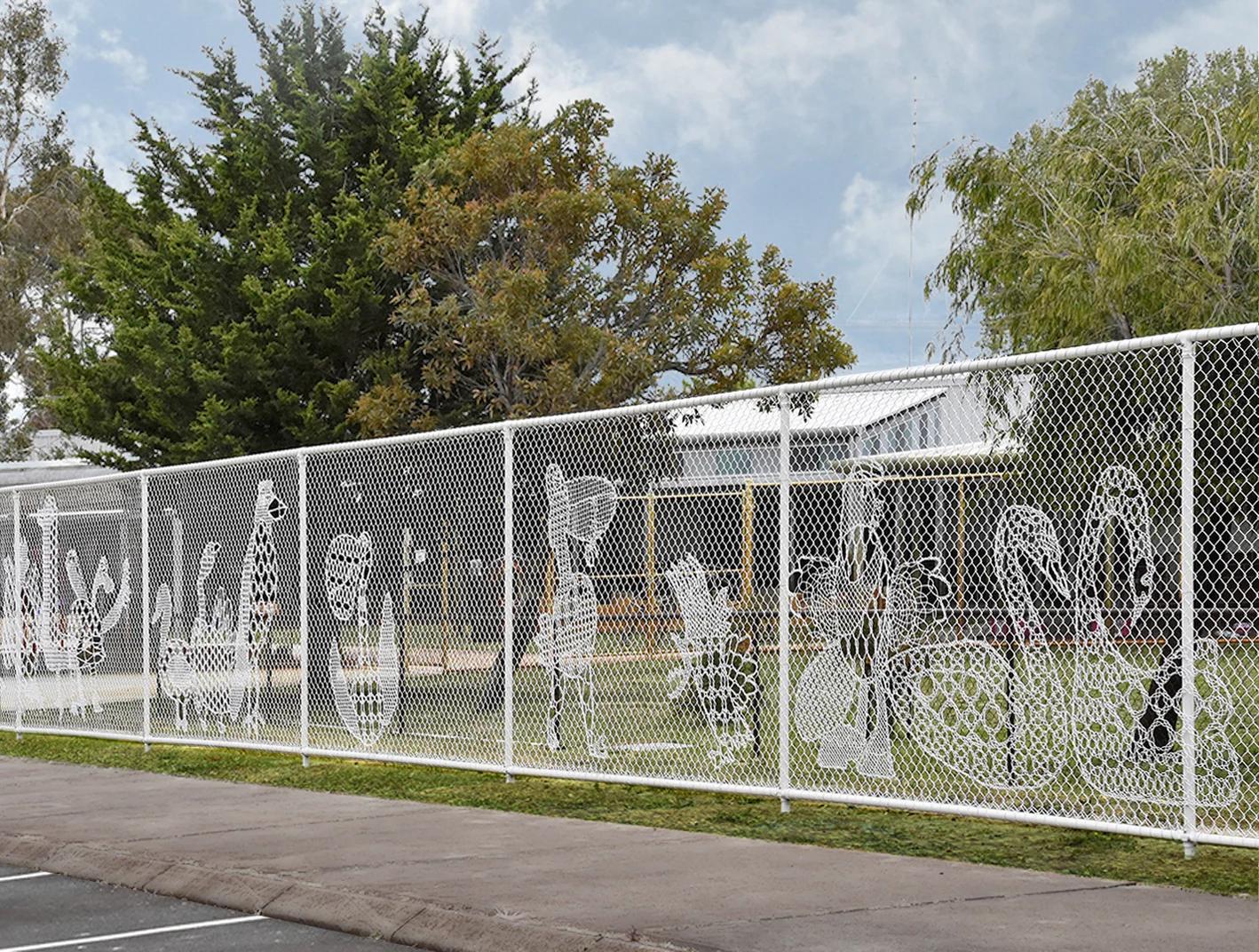
Art in public space gains meaning when users take part. At a primary school in Bunbury pupils drew local birds, which artist Paula Hart turned into lace bobbin stitches in the school fence.
Reference projects
From museums in Paris and Edinburgh and an art center in Miami to a rail operations campus, a school in Bunbury and the Dotted Sequences fence, these projects were made with artists. Each shows art in architecture that also serves a function. Open a project to see the artwork and the artist.
Colorful bird installation with spanning nets
Woven metal canopy with poetic engravings
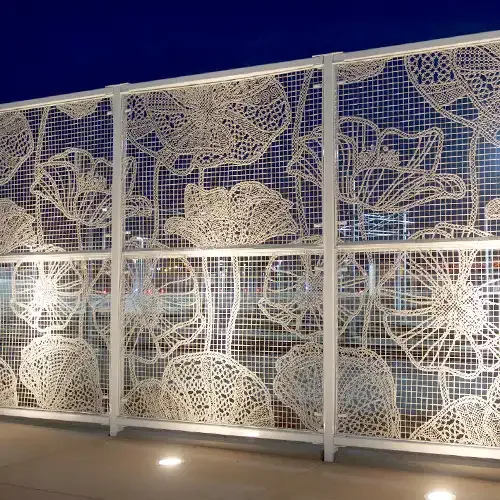
Decorative fence and perimeter enclosure for infrastructure campus
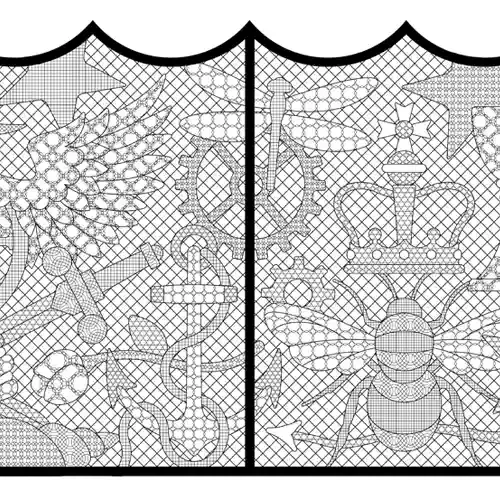
Faena Art Center gates in Miami
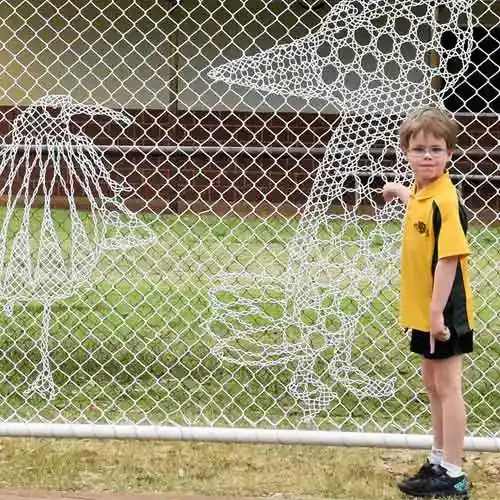
Lace artwork enclosure at Bunbury Primary
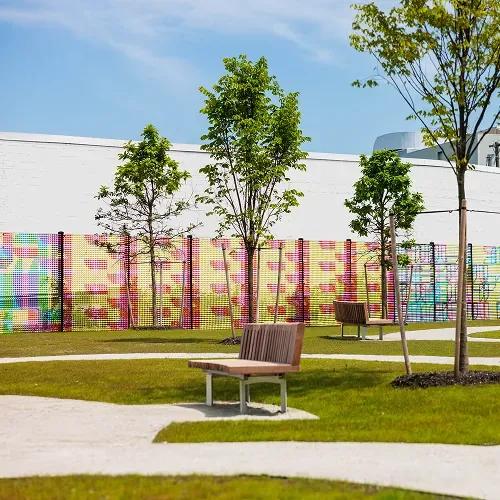
Recycled public art installation
The artist creates the image and Redfort translates it into a pattern that can be produced in Lalace or Dedots and mounted safely. Projects were made with artists such as Paula Hart, Christie Beniston, Jiang Qiong Er and Studio Job.
Almost any element a building or public space needs, such as fences, gates, railings, nets, ceilings and walls. Read more on nets for installations over large spans, like the woven net at Musée Guimet in Paris.
Yes. The Dotted Sequences installation uses more than 56,500 recycled 3D dots across 1,500 square feet of fence and turns genetic science into public art. Dedots is made of PC-ASA, and its return programme recycles 96% of the products.
Yes. Lalace is TNO tested and passes the sandbag impact test, while Dedots panels resist vandalism. The mesh sizes prevent climbing, and railing designs meet EU standards for fall through protection, so the artwork can also secure a site.
Yes. In Bunbury pupils drew local birds, and artist Paula Hart translated their drawings into traditional lace bobbin stitches for the school fence. Taking part gives the artwork meaning for the people who use the place every day.
Yes. In the main hall of the National Museum of Scotland one hundred colourful Dedots birds float on nets. Because the nets need no substructure, large spans were possible without disturbing the historic interior of the museum.