
Hard to climb
Specific mesh sizes give no foothold. The 40 by 40 mm mesh of a Dedots fence in Zelenograd prevents climbing, while the Welded type of Lalace is developed for maximum resistance to vandalism.
Solutions
High security sites need protection against climbing, impact and vandalism. Yet bars and plain mesh make a place look like a prison and feel hostile to everyone inside. Redfort builds architectural security fences that put strength first and still look like part of the architecture.
Get in touch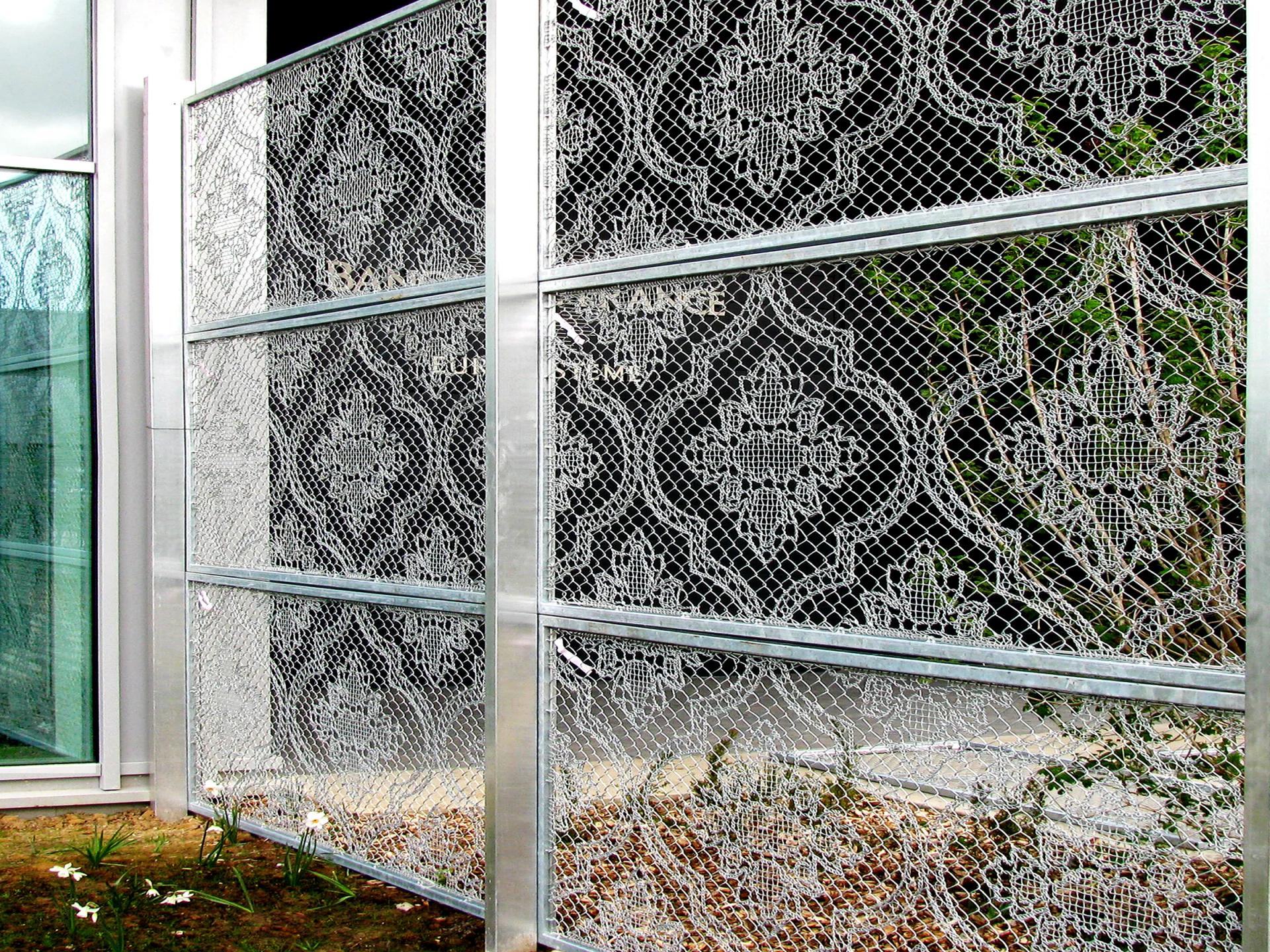
When safety dominates design, the human dimension gets lost. Security barriers in banks, treatment centres and critical sites often feel austere and fortress like, for staff, visitors and residents alike. The fence must stop people and withstand abuse, and still not turn the site into a stronghold.
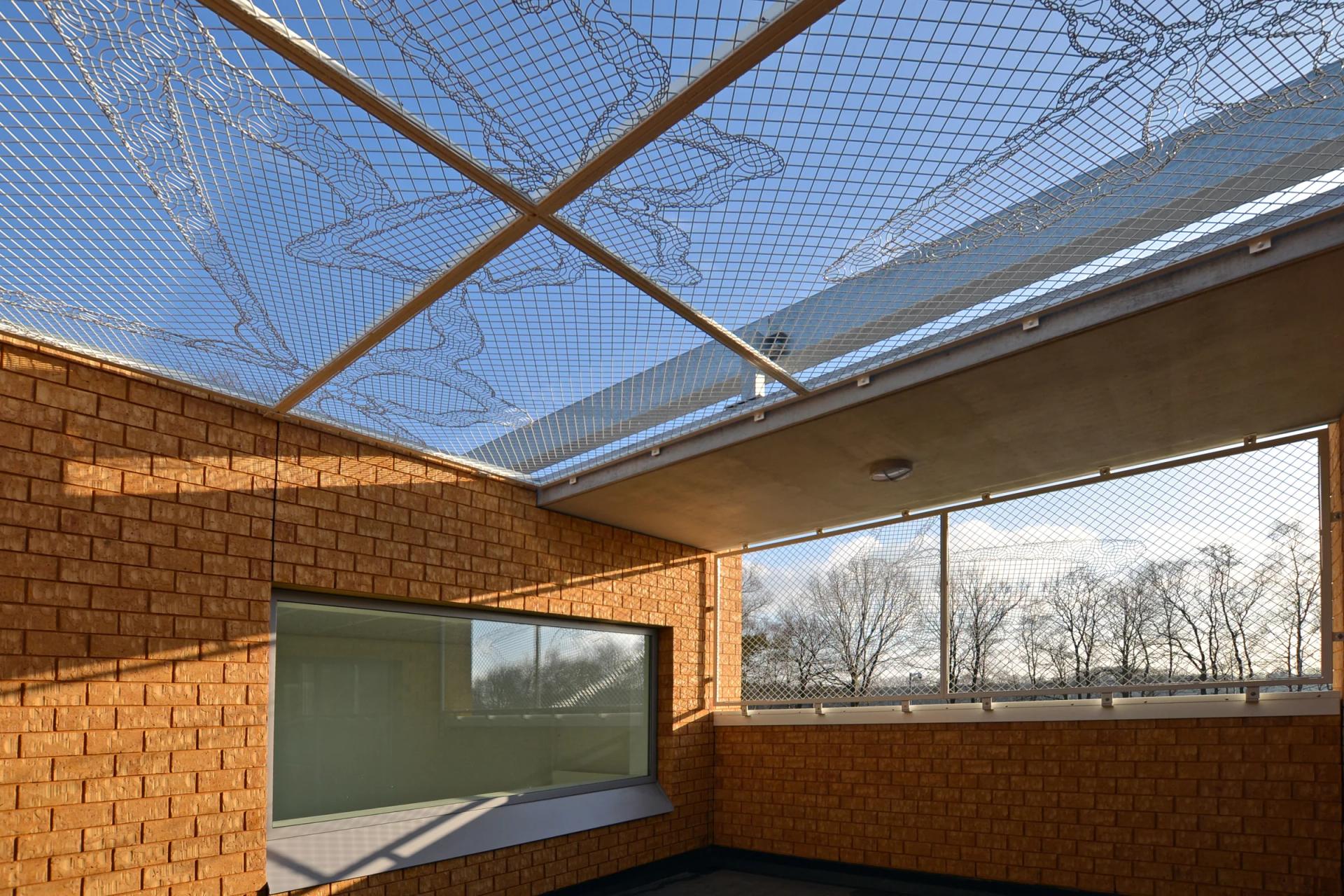
The Welded type of Lalace is developed for maximum resistance to vandalism, and its specific mesh sizes prevent climbing. Lalace is TNO tested and passes the sandbag impact test. In a Paris bank a high security barrier carries a lace wallpaper pattern, so protection comes with a sense of familiarity.
Openings can be adapted to any requirement, from a dense screen to a semi transparent fence that keeps sightlines for supervision. For graffiti prone surfaces Dedots helps, because the dots hide damage and discourage graffiti on exposed walls. Read more on enclosures.
Specific mesh sizes give no foothold. The 40 by 40 mm mesh of a Dedots fence in Zelenograd prevents climbing, while the Welded type of Lalace is developed for maximum resistance to vandalism.
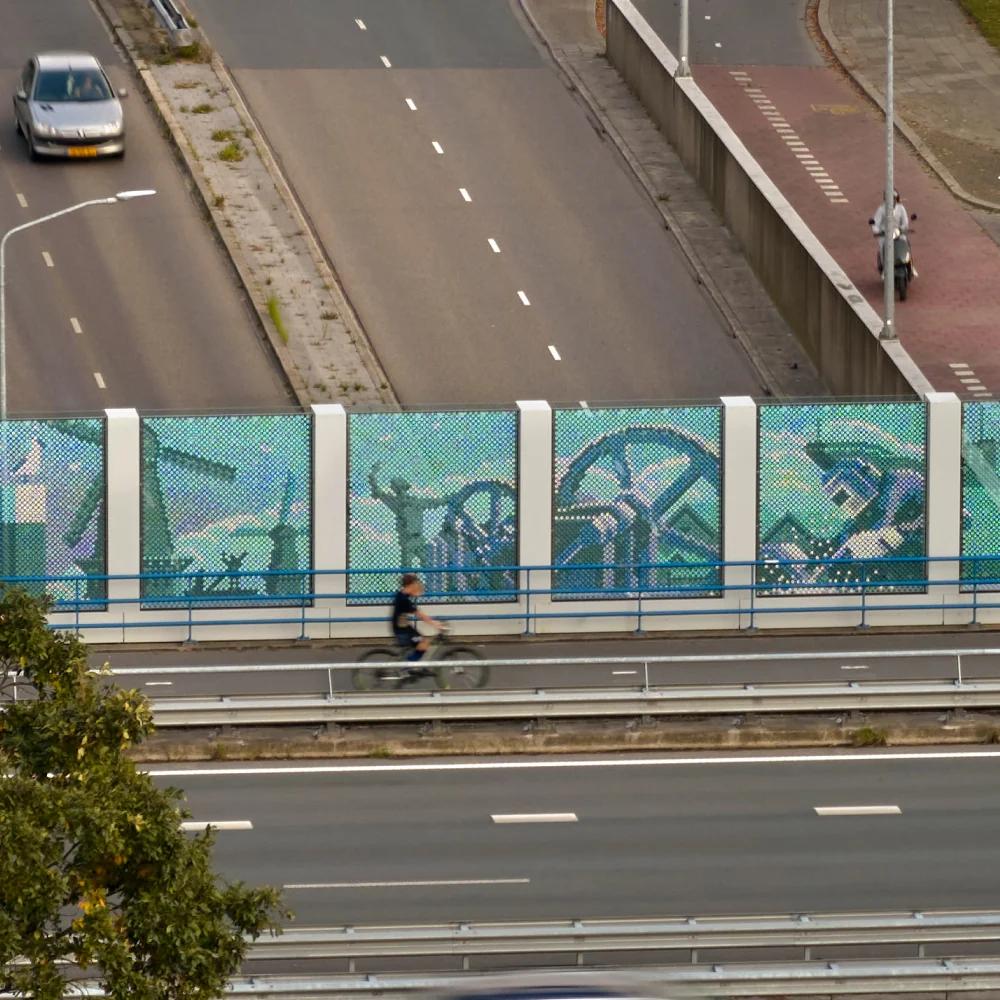
High tensile strength lets Lalace withstand intensive use and impact. On the noise barrier in Dordrecht the dots make the surface far less attractive to graffiti, so the screen stays presentable for passers by.
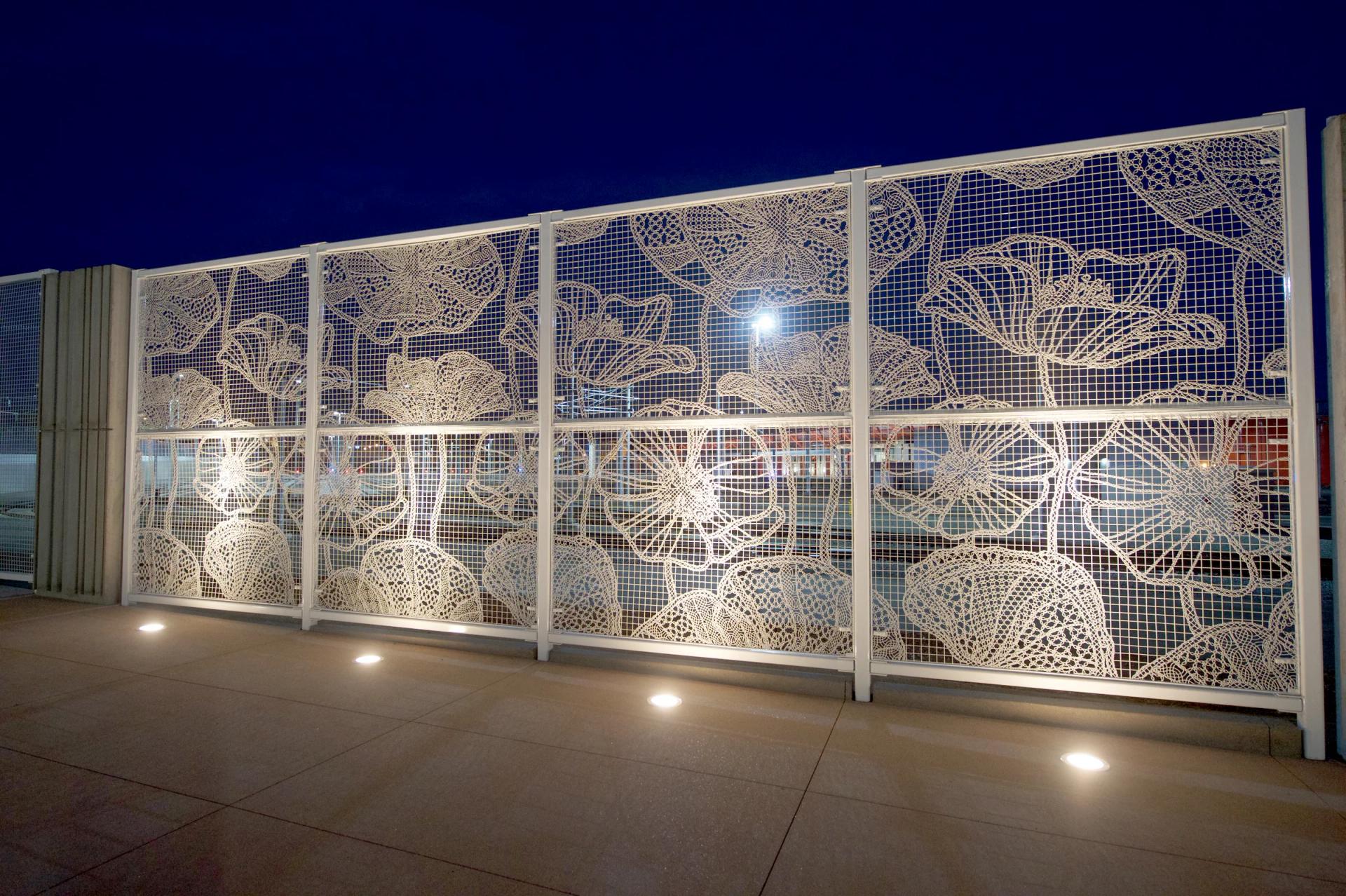
A pattern softens the hardest boundary. At the Faena Art Center in Miami the gates secure the entrances with a collage of iconic images, so visitors meet an artwork instead of a barrier.
Reference projects
These projects show a bank in Paris, a closed treatment centre in Rekken, an art centre in Miami, a rail operations campus, a baseball club in Zelenograd and a noise barrier in Dordrecht. Each architectural security fence protects without looking hostile. Open a project to see the solution and the photos.

Dedots noise barrier as 60-meter city tableau for Dordrecht
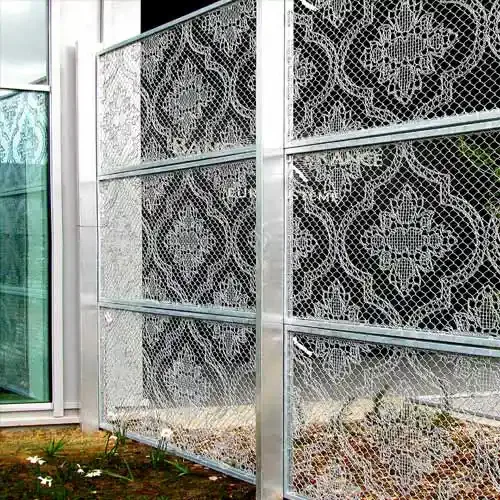
Lalace decorative barrier for high-security bank area
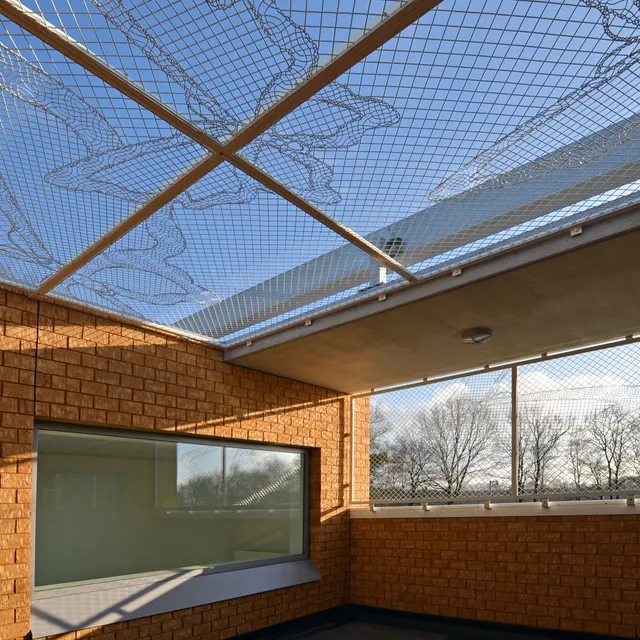
Secure therapeutic center enclosures
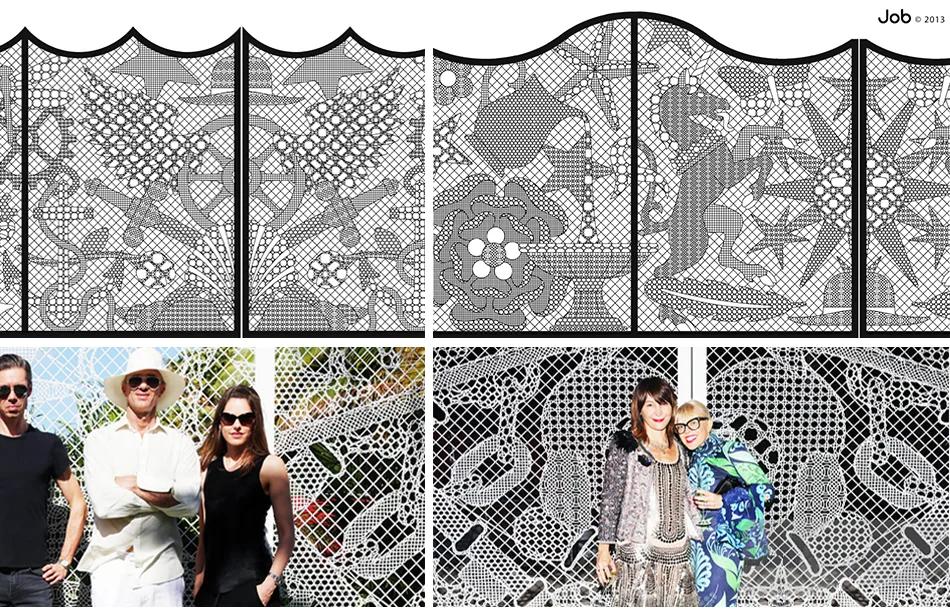
Faena Art Center gates in Miami
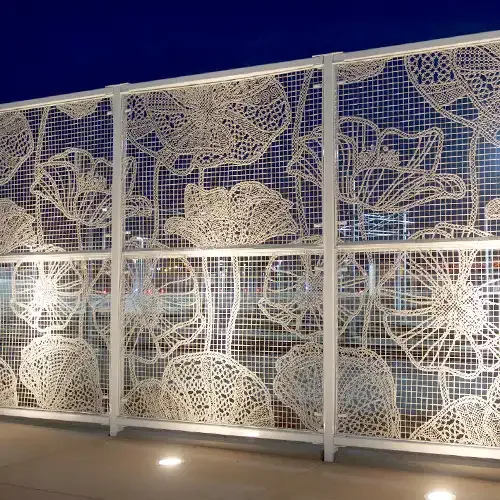
Decorative fence and perimeter enclosure for infrastructure campus

Dedots sports fence with club identity for baseball
Lalace combines a high tensile strength for intensive use with TNO testing, and it passes the sandbag impact test. For an architectural security fence the Welded type is the right choice, because it is developed for maximum resistance to vandalism.
Yes. Lalace and Dedots both use mesh sizes that give no foothold, and the openings of Lalace can be adapted to the security level you need. A baseball club in Zelenograd chose a fine 40 by 40 mm base mesh for exactly that reason.
Yes. A closed department in Rekken, for clients who often come from a criminal conviction, has its courtyards and walking areas secured with tall Lalace fences. The enclosures in Rekken prevent unauthorised exit without a prison like atmosphere.
Dedots can help. On the noise barrier in Dordrecht the coloured dots hide scratches and make the glass a less tempting target for graffiti. Because every dot is coloured right through, the image stays intact.
Yes. In a Paris bank a high security area is closed off with a Lalace barrier in a lace wallpaper pattern. The design plays between a real wall and a reference to home, so it feels both safe and welcoming.
Yes. Lalace does not burn on its own and is extremely fire resistant, while Dedots achieved the best possible fire classification in UL94 testing. That matters for security fences around buildings with strict fire safety demands.