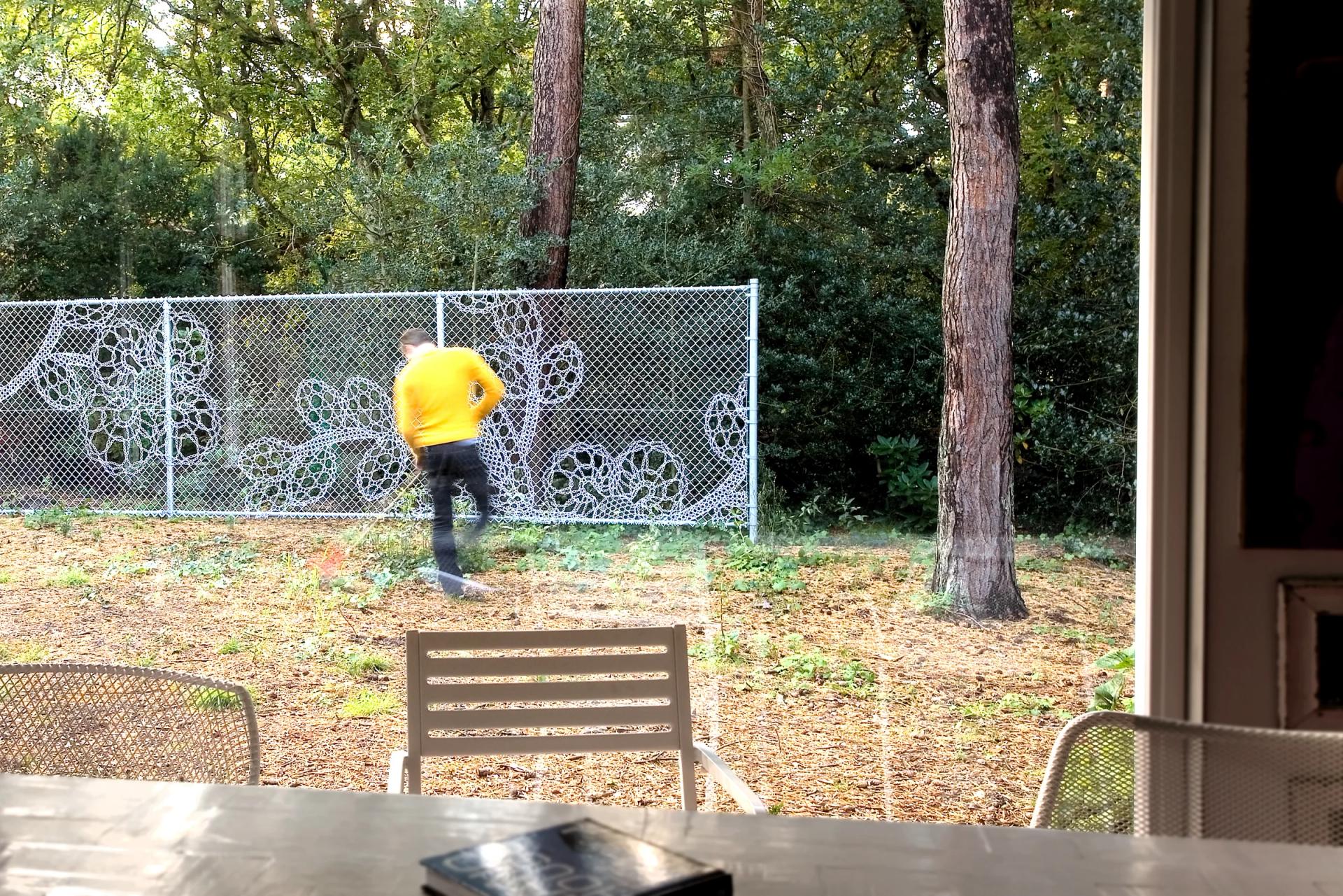
Screening from neighbours
Denser areas in the pattern block direct views between adjacent balconies. Residents keep their own space outdoors, while the screen still looks light and part of the facade rather than a solid partition.
Solutions
When balconies sit close together, neighbours and passers-by look straight in. A closed panel solves that but makes the balcony dark and boxed in. A balcony privacy screen in patterned mesh blocks the view where it matters and still lets light and air through.
Get in touch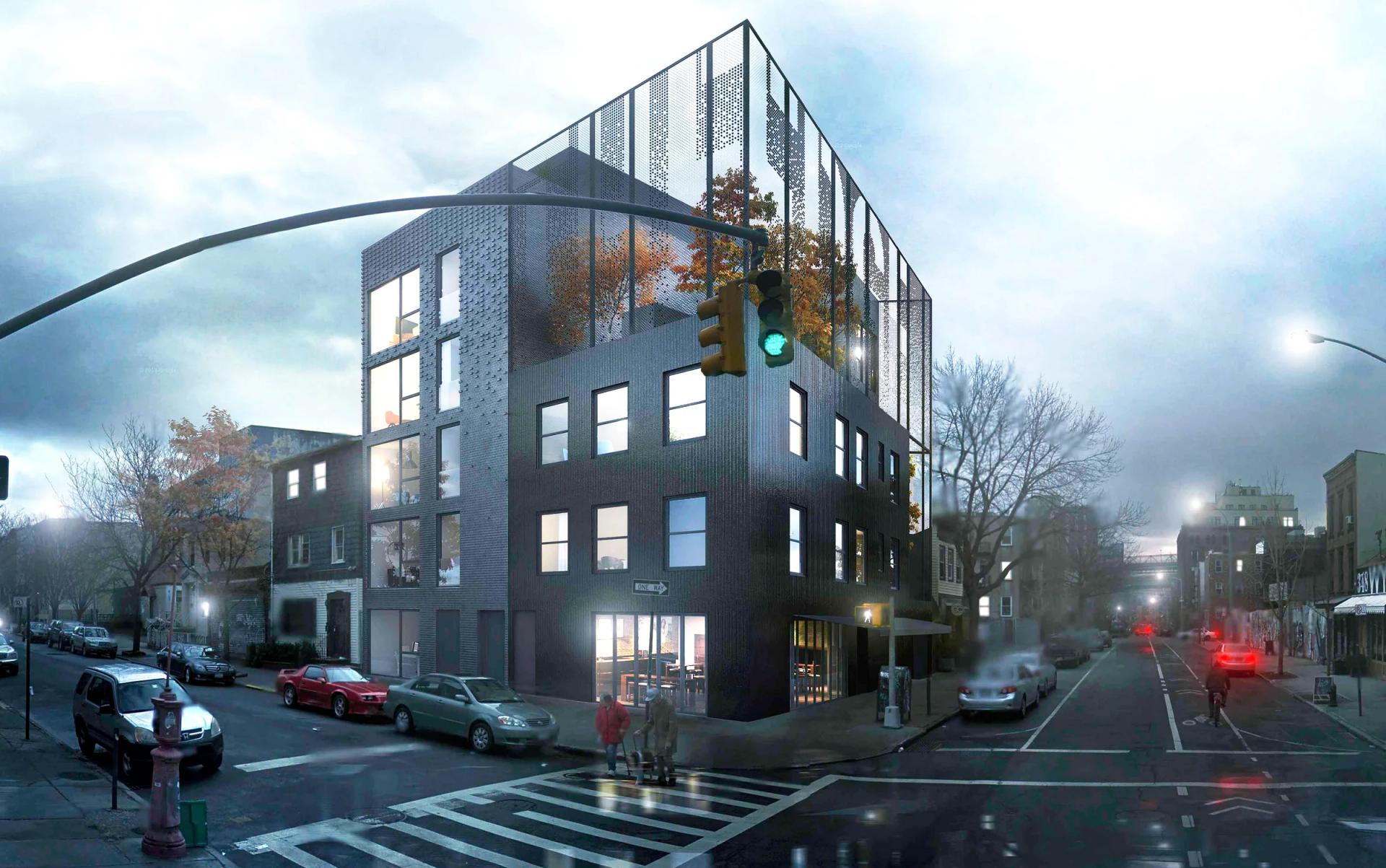
Privacy on a balcony is a matter of degree. Between two neighbours you want to see less, towards the street perhaps a little more, and nobody wants to sit behind a blind wall. The challenge is to filter views without losing daylight, air or the feeling of being outside.
Redfort controls privacy through the density of the design. With Dedots transparency comes from patterns, gradients or open areas, from subtle openness to bold visual impact. On a roof terrace in Brooklyn the dots are black outside and chrome inside, so the screen changes with view and light. Lalace motifs can be denser or more open too.
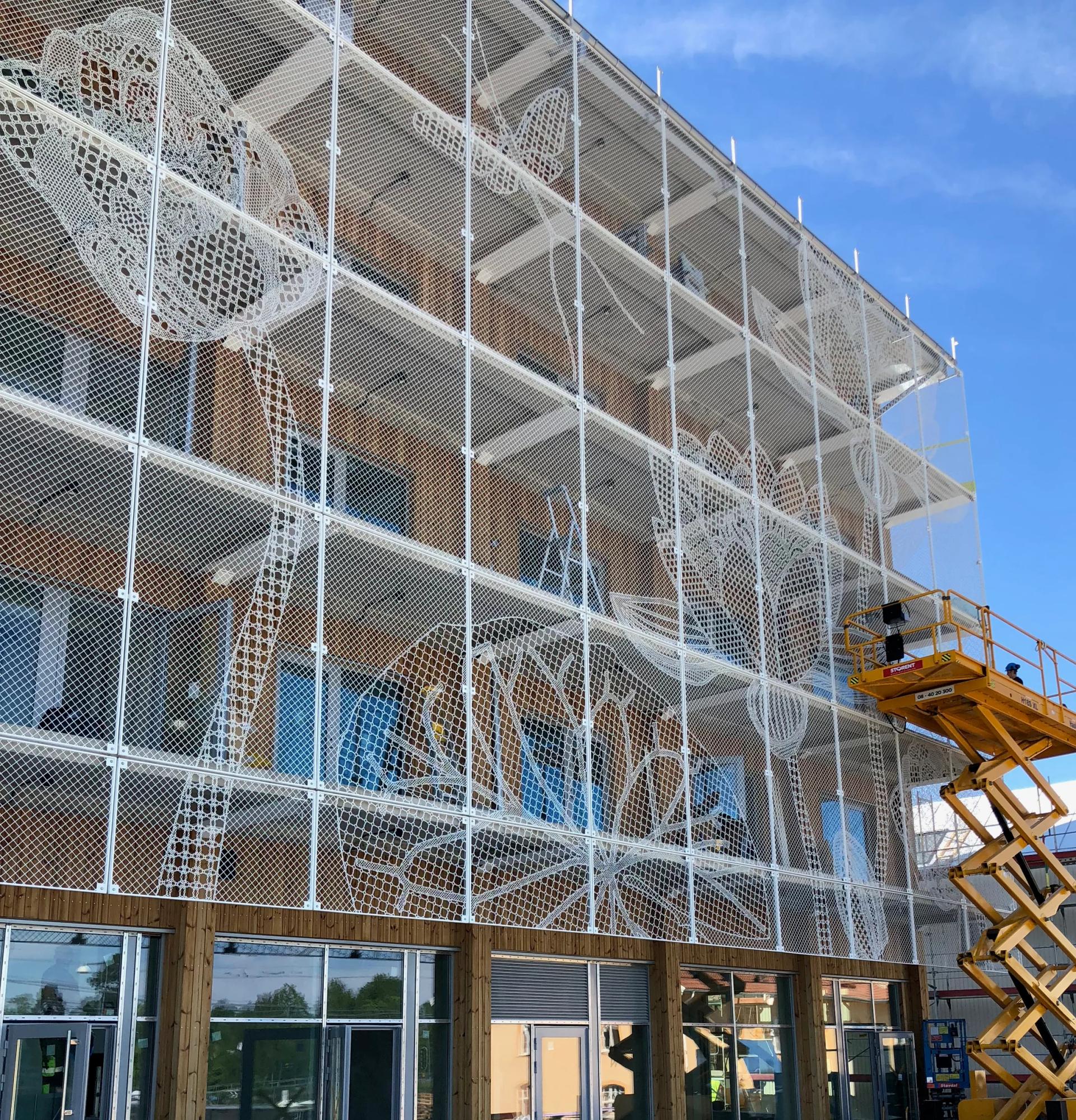
The practical choice is to vary the density per position, closer where neighbours meet and more open at the front. On an apartment building in Nykvarn a lotus pattern covers the whole facade and acts as shading and screening for residents. Read more about railings.
Denser areas in the pattern block direct views between adjacent balconies. Residents keep their own space outdoors, while the screen still looks light and part of the facade rather than a solid partition.
Because the mesh stays open, daylight reaches the balcony and the rooms behind it. The density of the design controls how much light enters, so you set the balance between privacy and brightness.
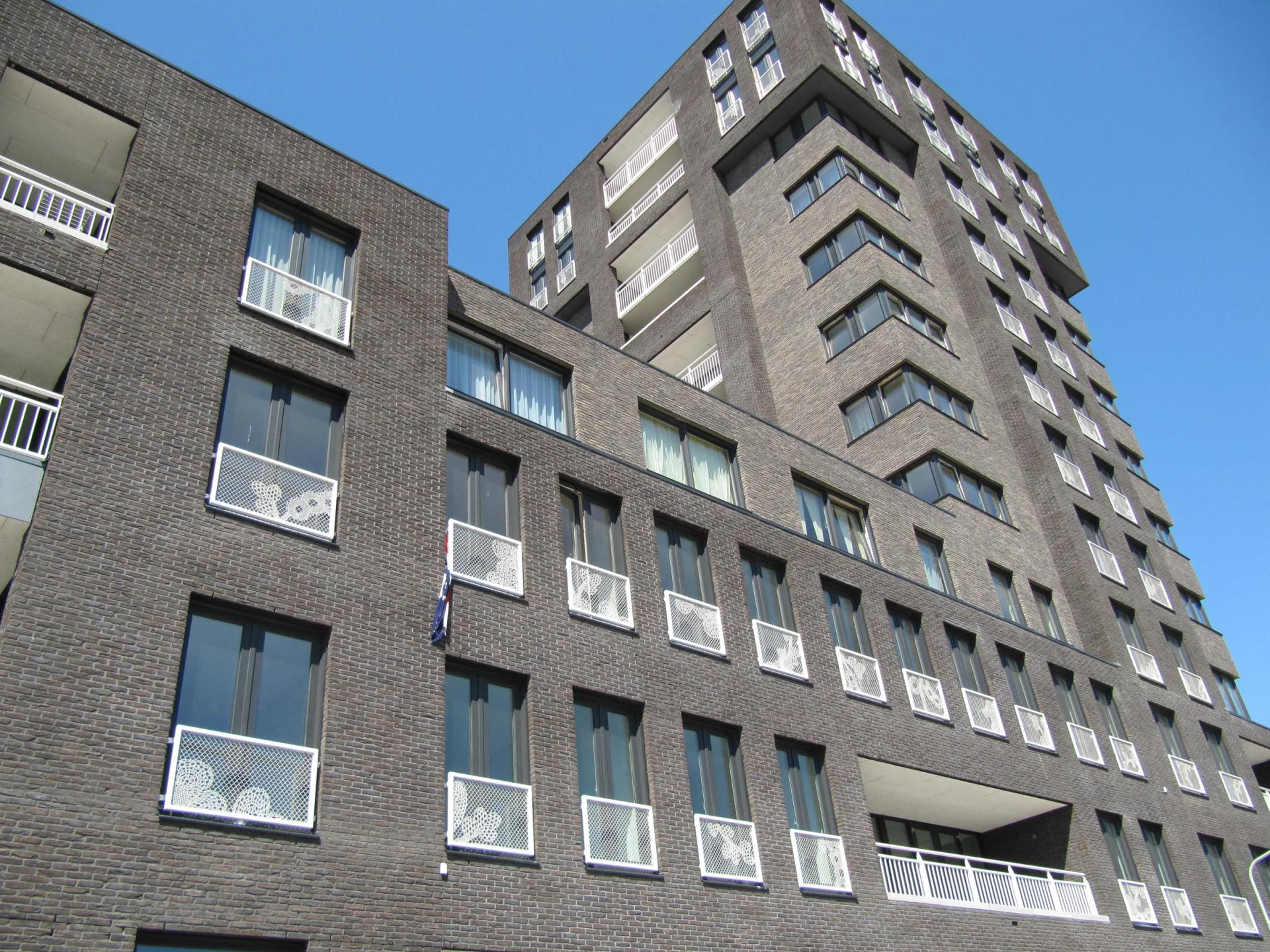
Privacy screens often look added afterwards. When the screen carries the same pattern as the other balconies, as in Graz and The Hague, privacy becomes part of one calm and coherent facade.
Reference projects
From a roof terrace in Brooklyn to housing in Nykvarn, Graz and The Hague, these projects show screens that protect residents and filter views. Every balcony privacy screen here keeps daylight and air on the balcony or terrace. Open a project to see how each screen filters the view.
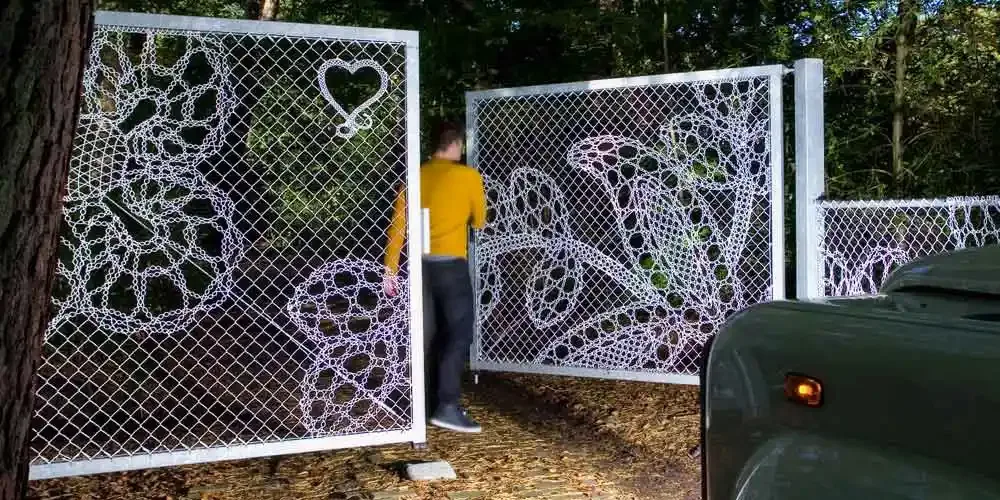
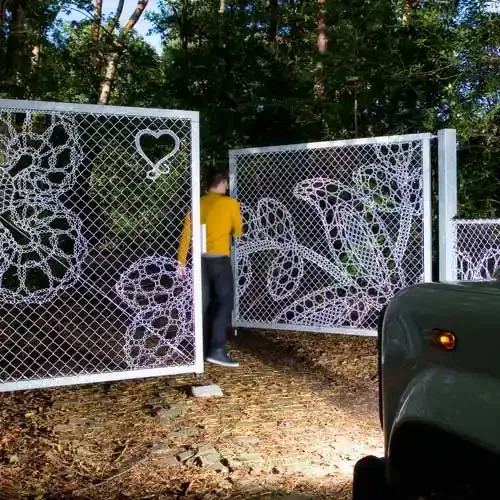
Garden enclosure for home and studio
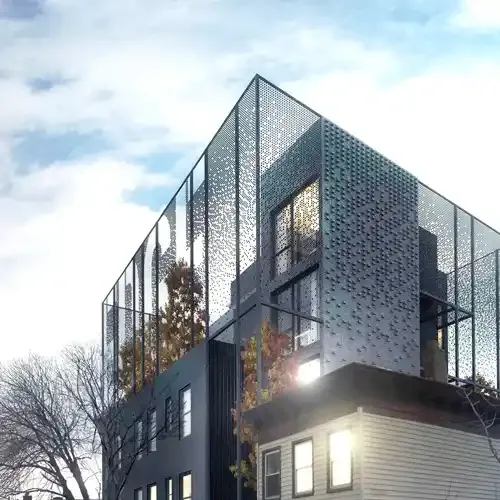
Dedots safety screen for Brooklyn roof terrace
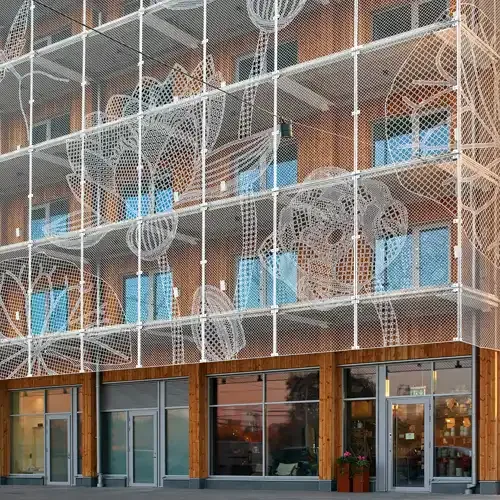
Lalace lotus-pattern facade for residential building
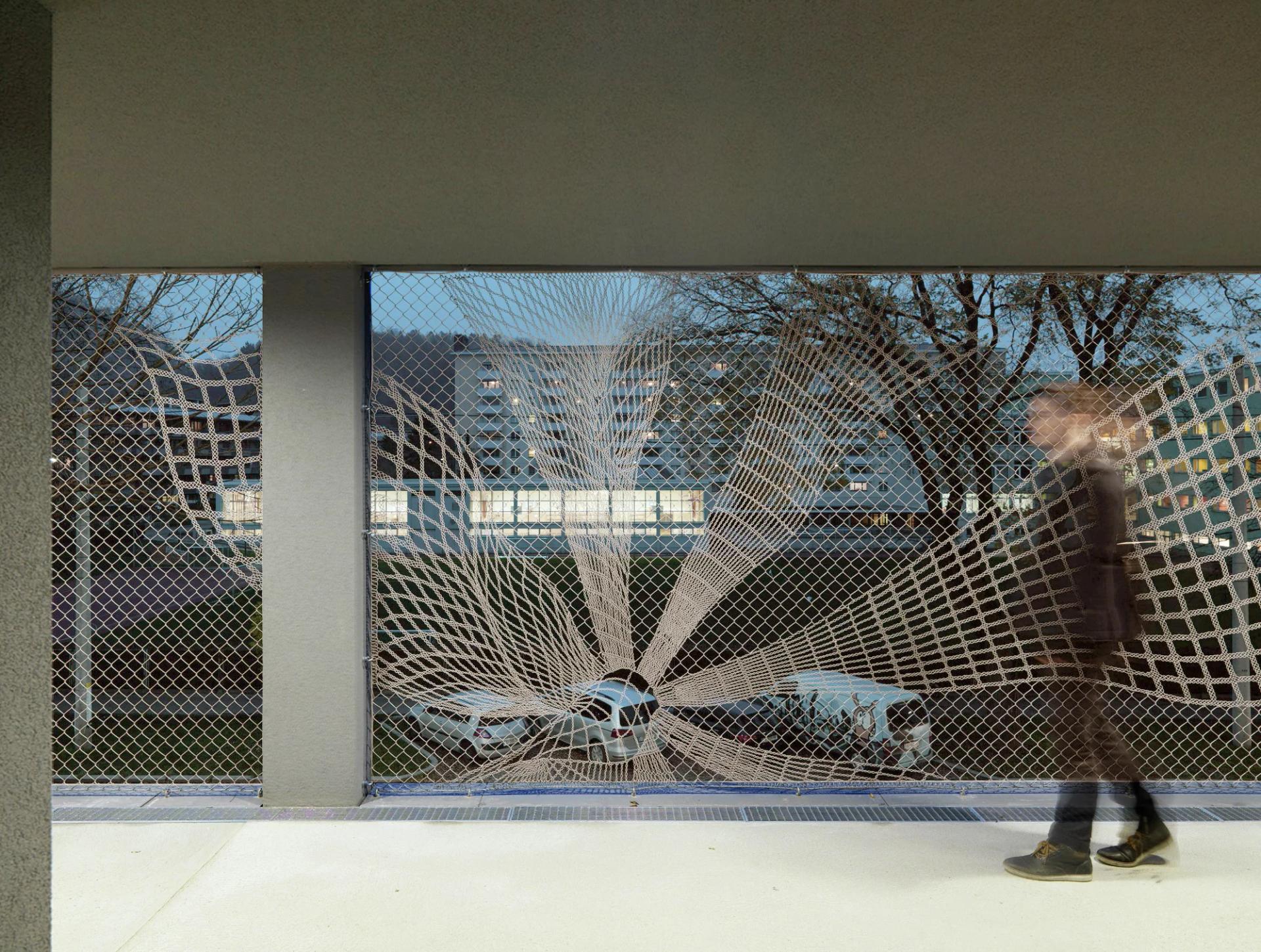
Residential complex facade integration
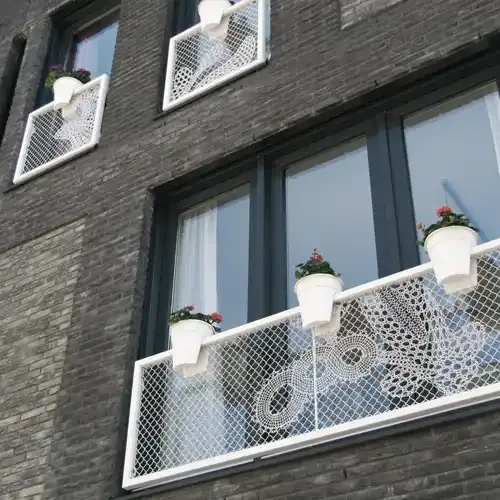
Lalace decorative balconies & gate for mixed-use life cycle project
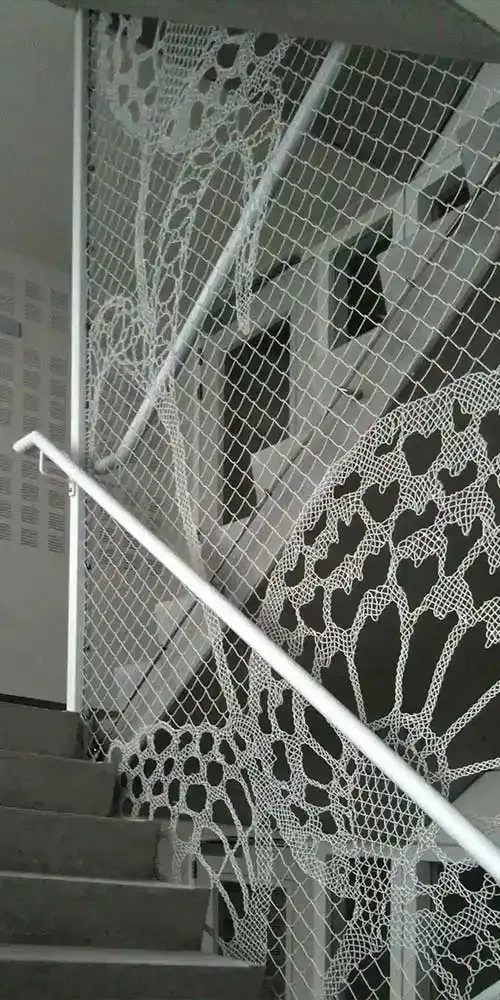
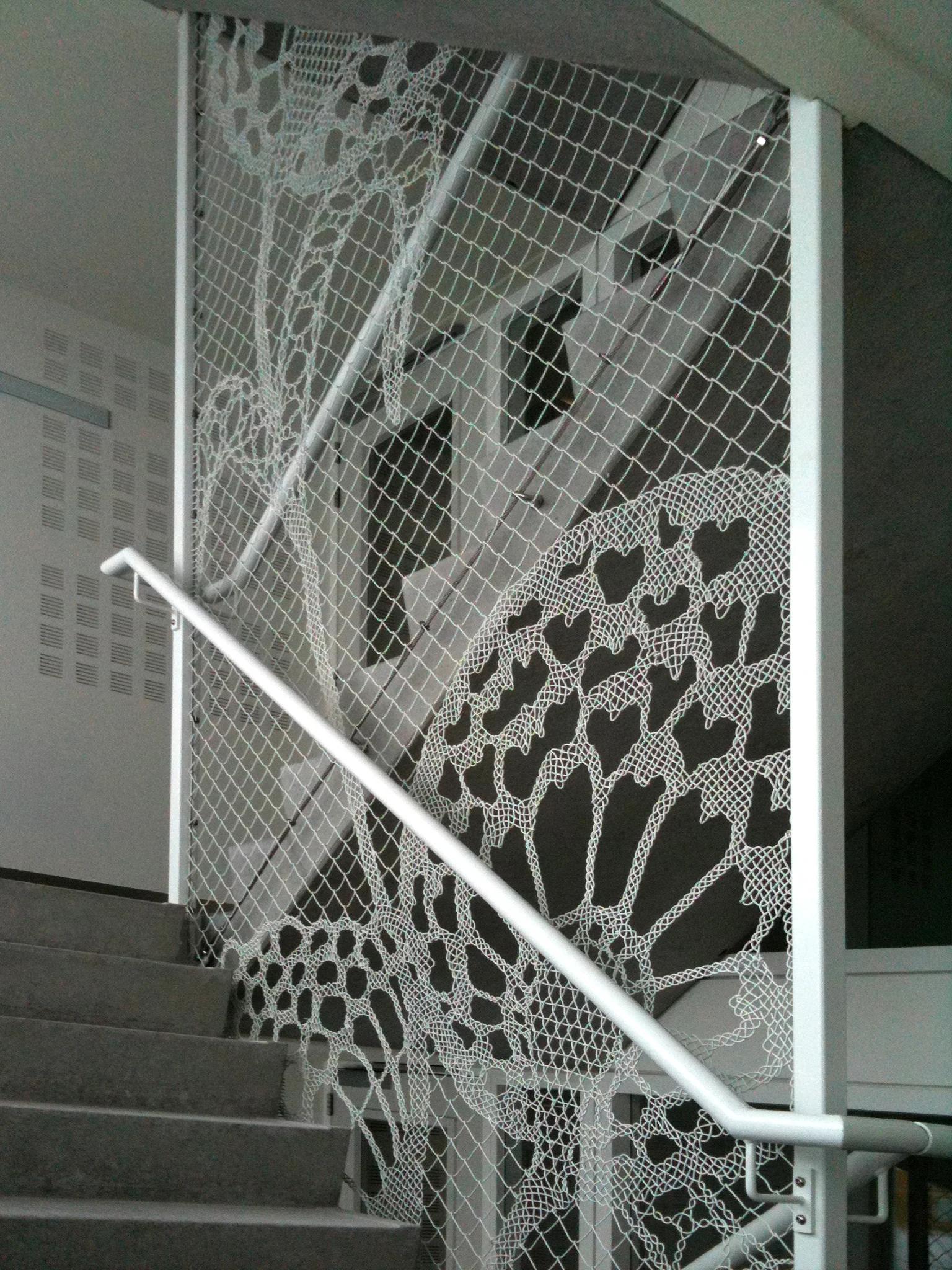
Apartment staircase safety enclosure
That depends on the density of the design, which you choose per project. Dedots ranges from subtle openness to bold, almost closed areas, and Lalace motifs can be denser or more open. That way the screen blocks views where needed and stays open elsewhere.
No. The mesh stays transparent enough to let in light, so the balcony and the rooms behind it keep their daylight. Air keeps flowing too, because the open structure does not close the balcony off.
Yes. On a roof terrace in Brooklyn the dots are black on the outside and chrome on the inside. Depending on view and light the screen seems to disappear or reveals itself, while it also acts as fall-through protection for the terrace.
Yes. The screen has mesh sizes that leave no foothold, and like every Redfort railing it meets EU standards for fall-through protection. A balcony privacy screen can therefore form the railing infill itself instead of being added in front of it.
Yes. Lalace suits environments from minus 40 to plus 40 °C and has a high tensile strength. Dedots performs in all weather conditions, carries an F1 classification according to the UL746C test and keeps its colours thanks to a UV blocker.
Chain link mesh is mounted in a steel frame with rods and clips, a method suited to railings. Welded panels of 4 mm steel rods form a stiff panel of up to 3 by 2 metres that needs no substructure.