Minimal structure
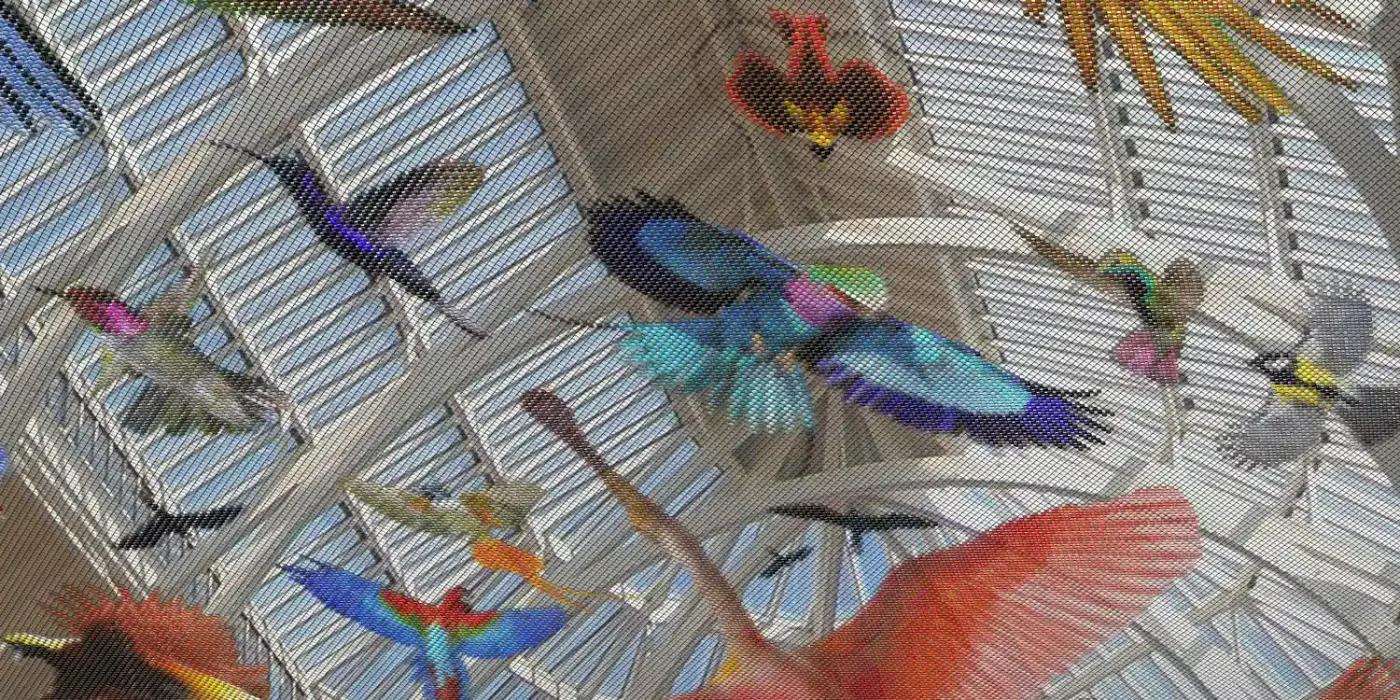
Nets span large areas with minimal supporting structure, and Dedots nets need no substructure at all. In the National Museum of Scotland this kept the historic main hall clean and unobstructed.
Solutions
Atria and voids bring light and connection into hospitals, offices and public buildings, but every open edge is a fall risk. A void safety net closes the opening with minimal structure, so the void keeps its openness and gains a pattern instead of a barrier.
Get in touch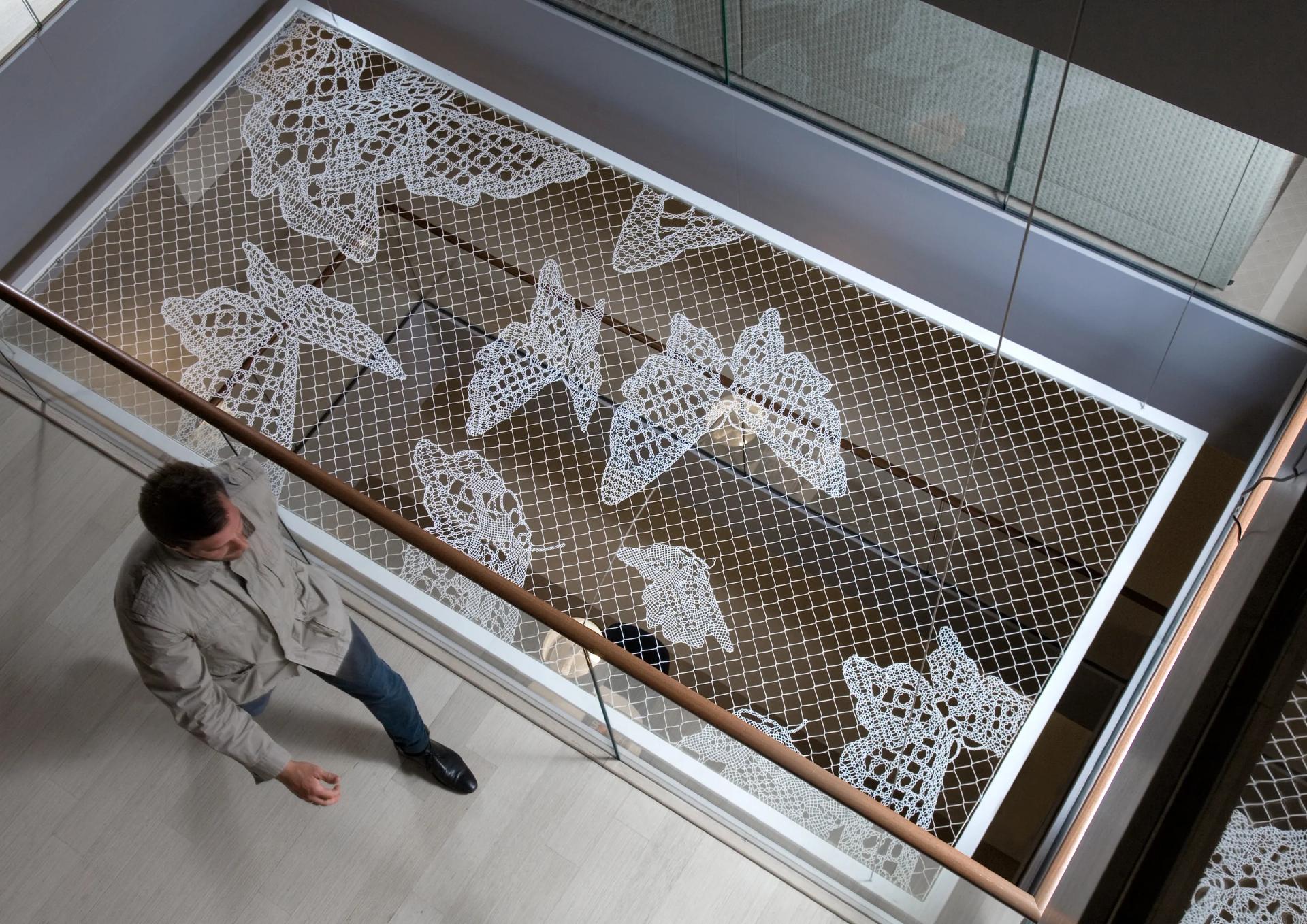
A void is designed to be open, so closing it with floors or high glass defeats its purpose. Yet in a hospital or public building people lean over edges and objects can fall. The challenge is fall protection that is almost invisible in its structure and welcome in its appearance.
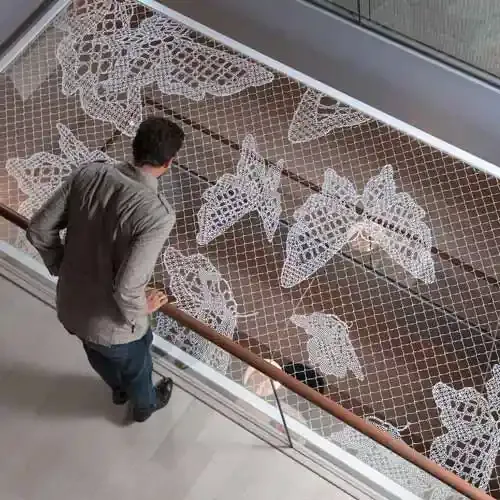
Lalace nets create large spans and are ideal for fall-through protection in voids. In an Amsterdam hospital a hand woven safety net with a butterfly pattern protects people and makes the space feel more human. Dedots nets span large distances without substructure, as in the main hall of the National Museum of Scotland.
Because the net hangs in the void itself, it protects the opening without closing the floors around it. Light keeps falling through to the lower levels and the view across the space stays intact. Every net solution meets EU safety standards. See more under nets.
Nets span large areas with minimal supporting structure, and Dedots nets need no substructure at all. In the National Museum of Scotland this kept the historic main hall clean and unobstructed.
In a hospital, a fall screen can feel cold and institutional. The butterfly pattern in Amsterdam brings softness and elegance, so the net supports a caring environment without compromising on security.
A net is open by nature, so daylight from above still reaches the lower floors of an atrium. Views across the void stay intact, which keeps the levels of the building connected.
Reference projects
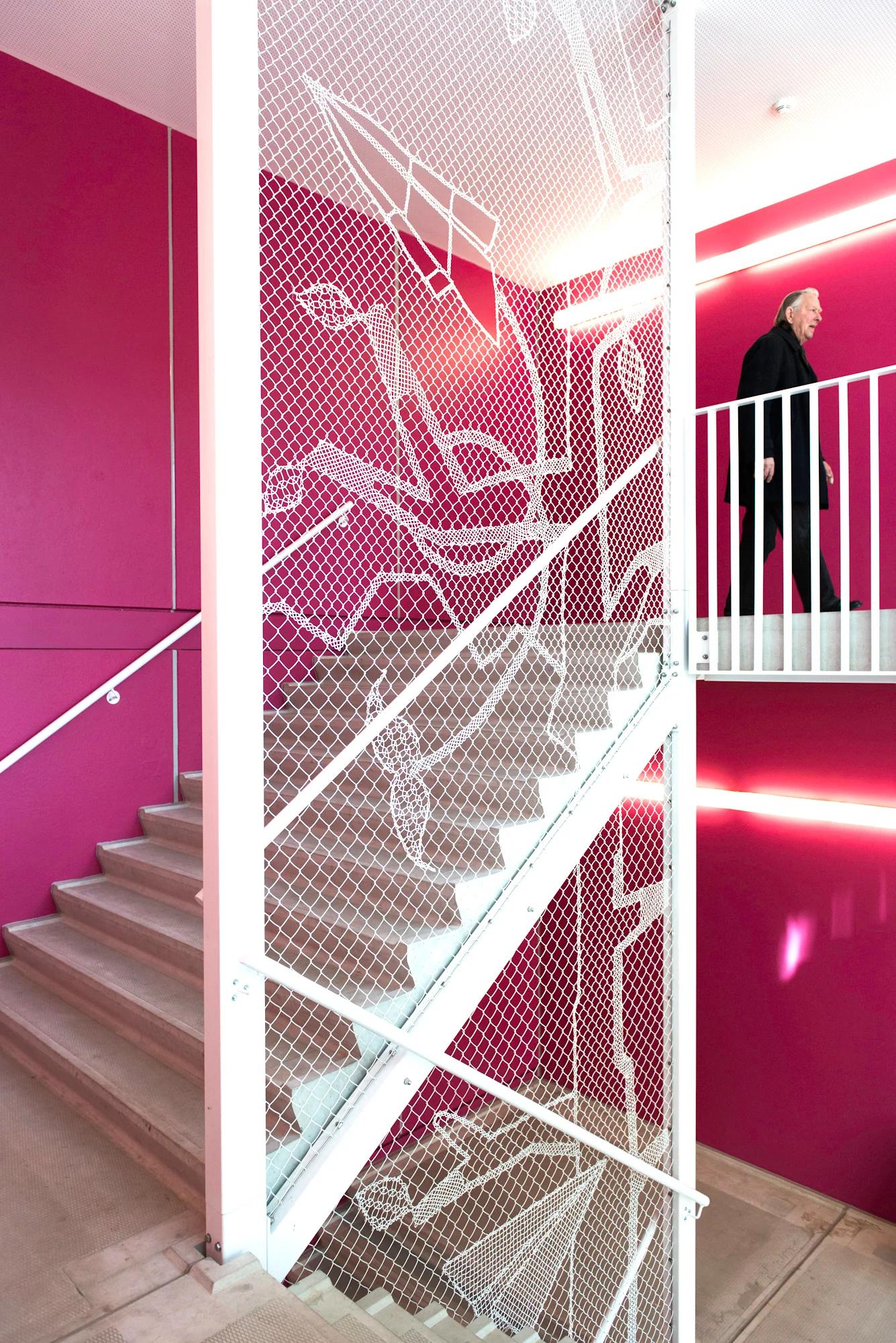
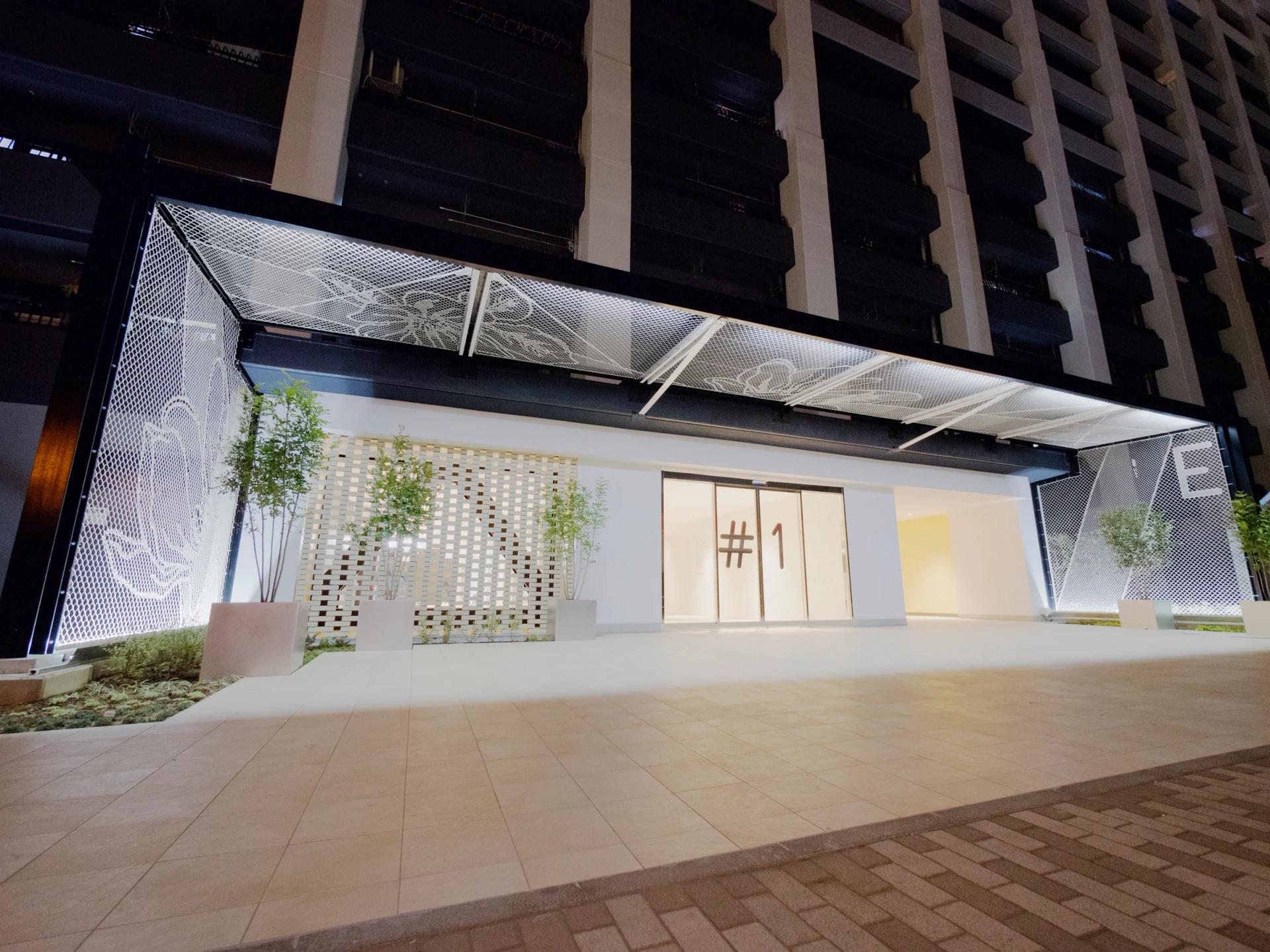
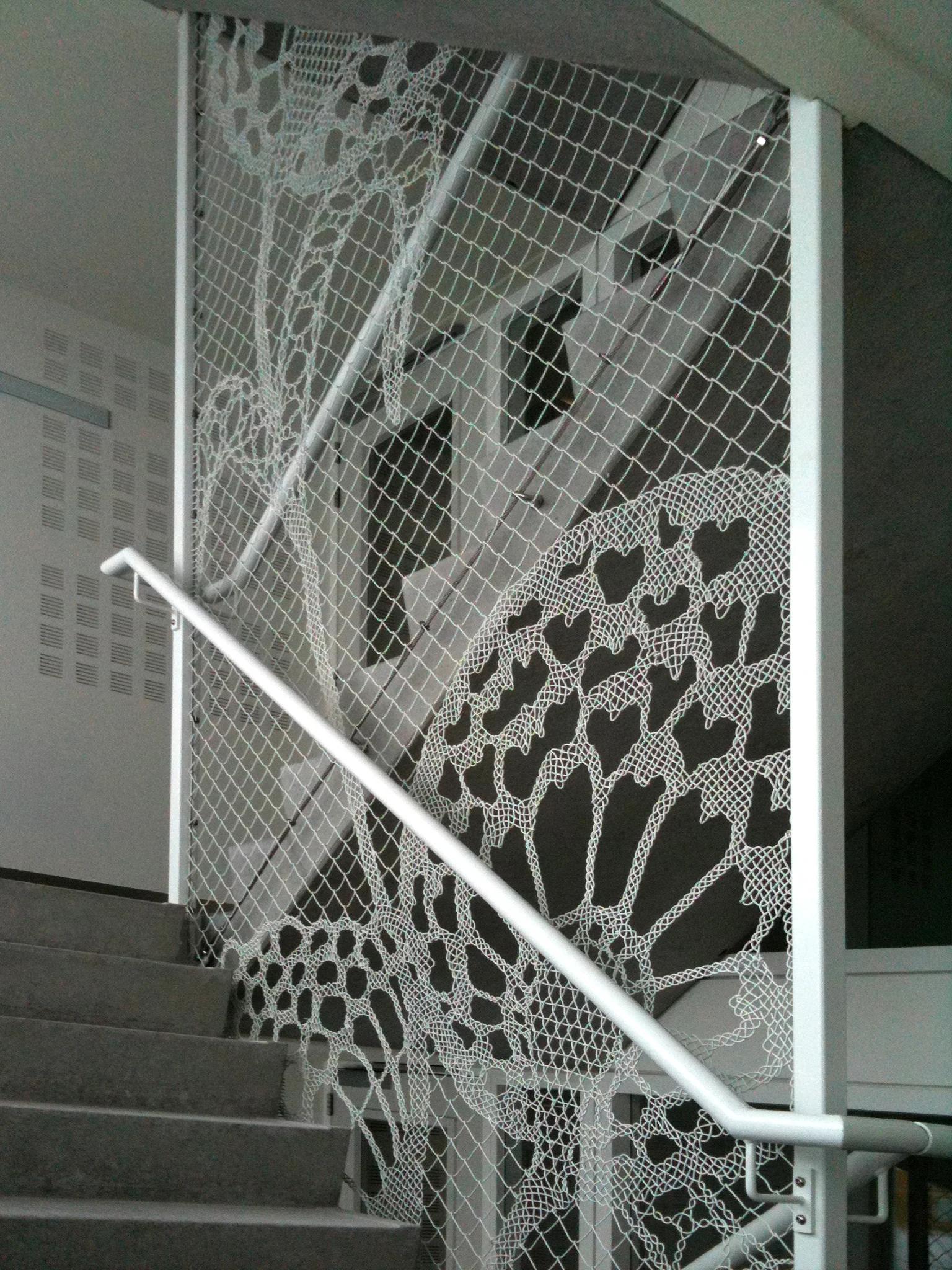
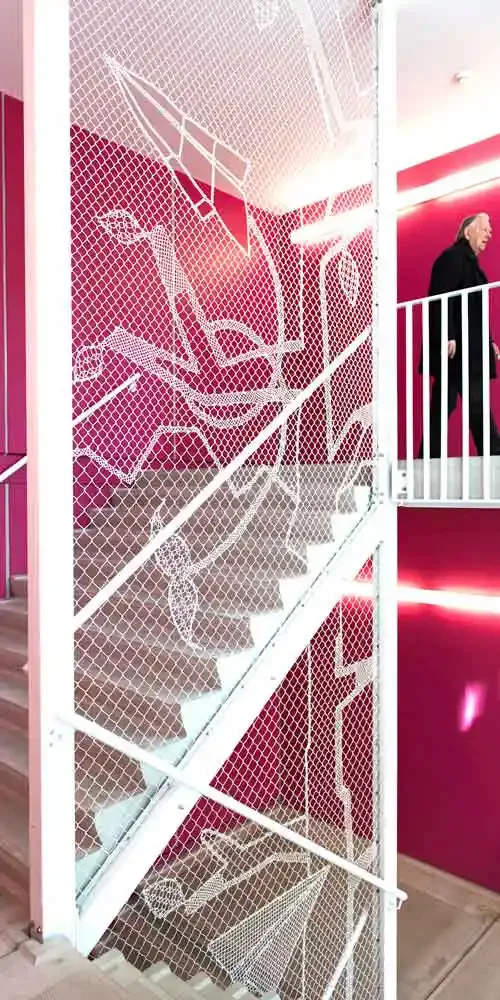
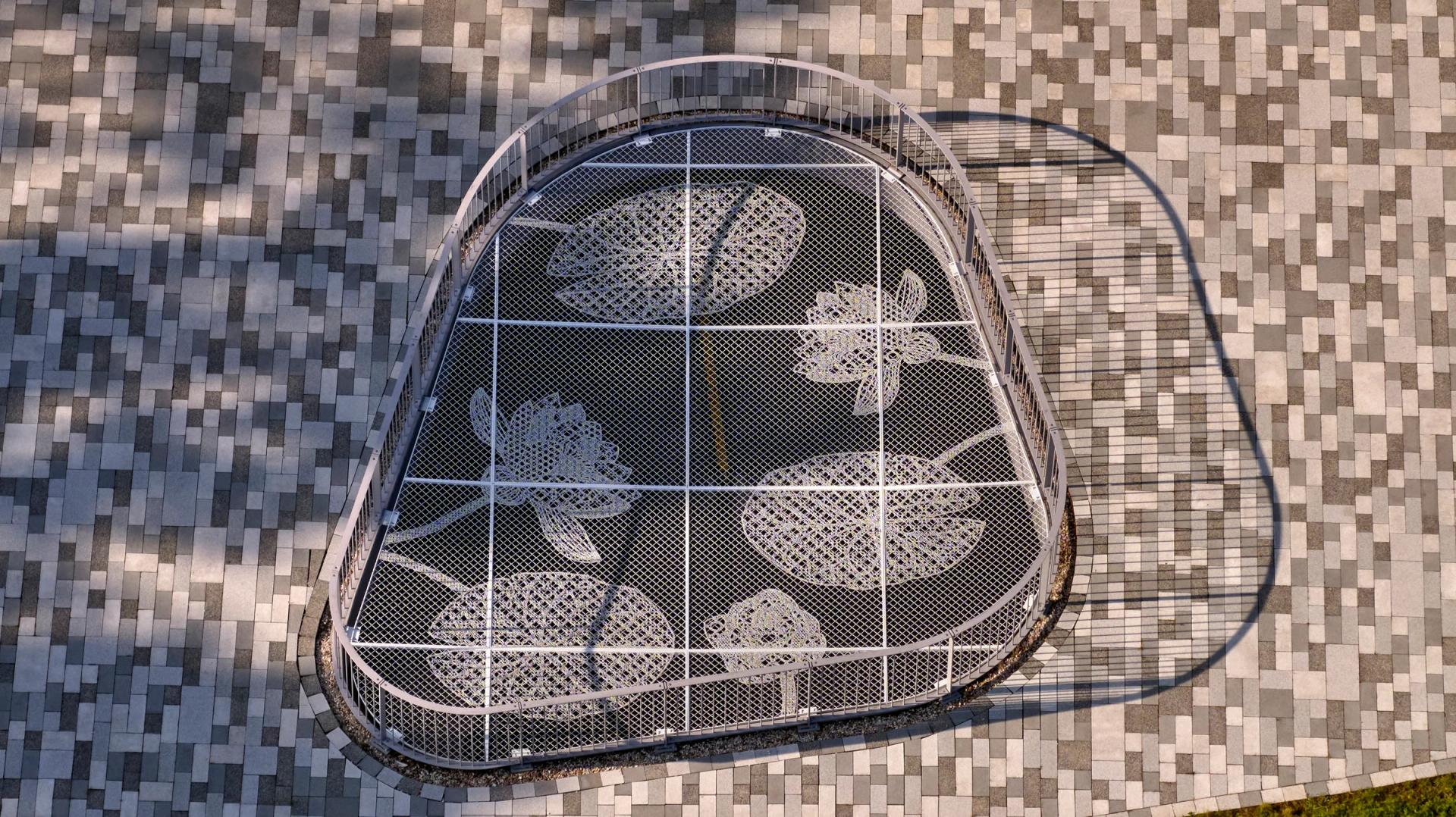
From a hospital in Amsterdam to the main hall of a museum in Edinburgh and a school in Rotterdam, these projects show open interiors made safe. Each void safety net or railing infill protects people without closing the space. Open a project to see the net or infill in place.
Colorful bird installation with spanning nets
Lalace safety net with butterfly pattern for hospital
School staircase enclosure
Lalace lotus-pattern net for parking structure
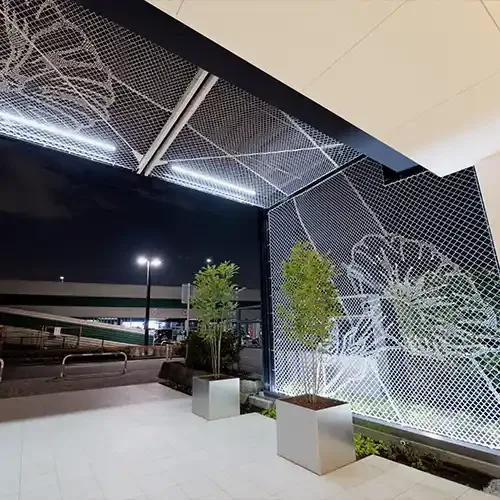
Urban netting for safety and style
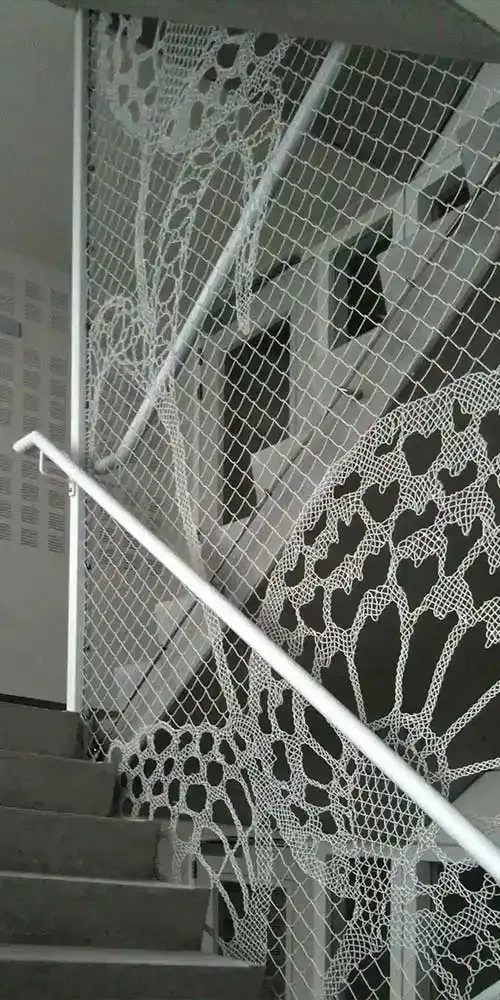
Apartment staircase safety enclosure
Yes. Every net solution meets EU safety standards, and Lalace nets are ideal for fall-through protection in voids. Lalace is TNO tested and withstands intensive use thanks to its high tensile strength.
Nets create large spans with minimal supporting structure. Dedots nets need no substructure at all, which made it possible to fill the main hall of the National Museum of Scotland with one hundred colourful birds.
Yes. In an Amsterdam hospital a safety net with a hand woven butterfly pattern protects people while it brings softness to the space. It shows that a void safety net can support a caring environment instead of feeling institutional.
No. The net is open, so daylight from above keeps reaching the lower floors. The density of the pattern decides how present the net is, from a light lace motif to a denser image.
Yes. Choose from the pattern collection, have a custom pattern made or turn an image into Dedots. The butterflies in Amsterdam and the birds in Edinburgh show how a void becomes a place to look at.
Yes. Lalace nets are extremely fire resistant and will not burn on their own. Dedots nets have the best possible classification for fire resistance according to the UL94 standard, which makes both suitable for public interiors.