No footholds
The specific mesh sizes leave no room for feet or hands to climb. The Welded type has a 50 by 50 mm mesh, and the Bended type comes in 40 by 40 or 50 by 50 mm.
Solutions
Children treat horizontal bars as a ladder, and in care or public buildings a railing must not offer a foothold either. A climb resistant railing removes every grip with specific mesh sizes, while its pattern keeps the place from feeling like a cage.
Get in touch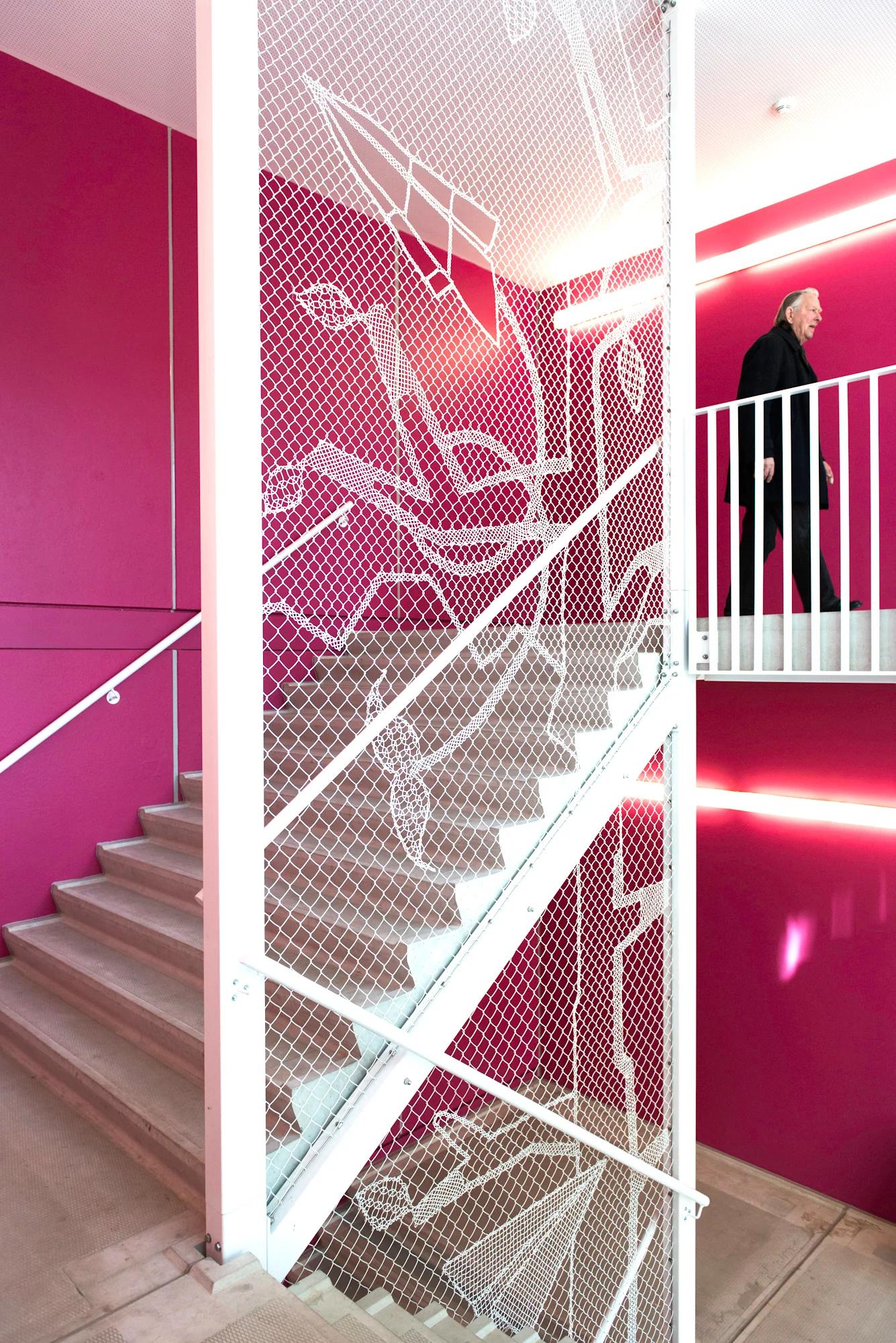
Classic railings with horizontal rails or wide openings invite climbing. In schools, care facilities and public buildings that is a real risk, but a closed wall makes the place feel locked. The challenge is a barrier without footholds that still lets people see through and feel welcome.
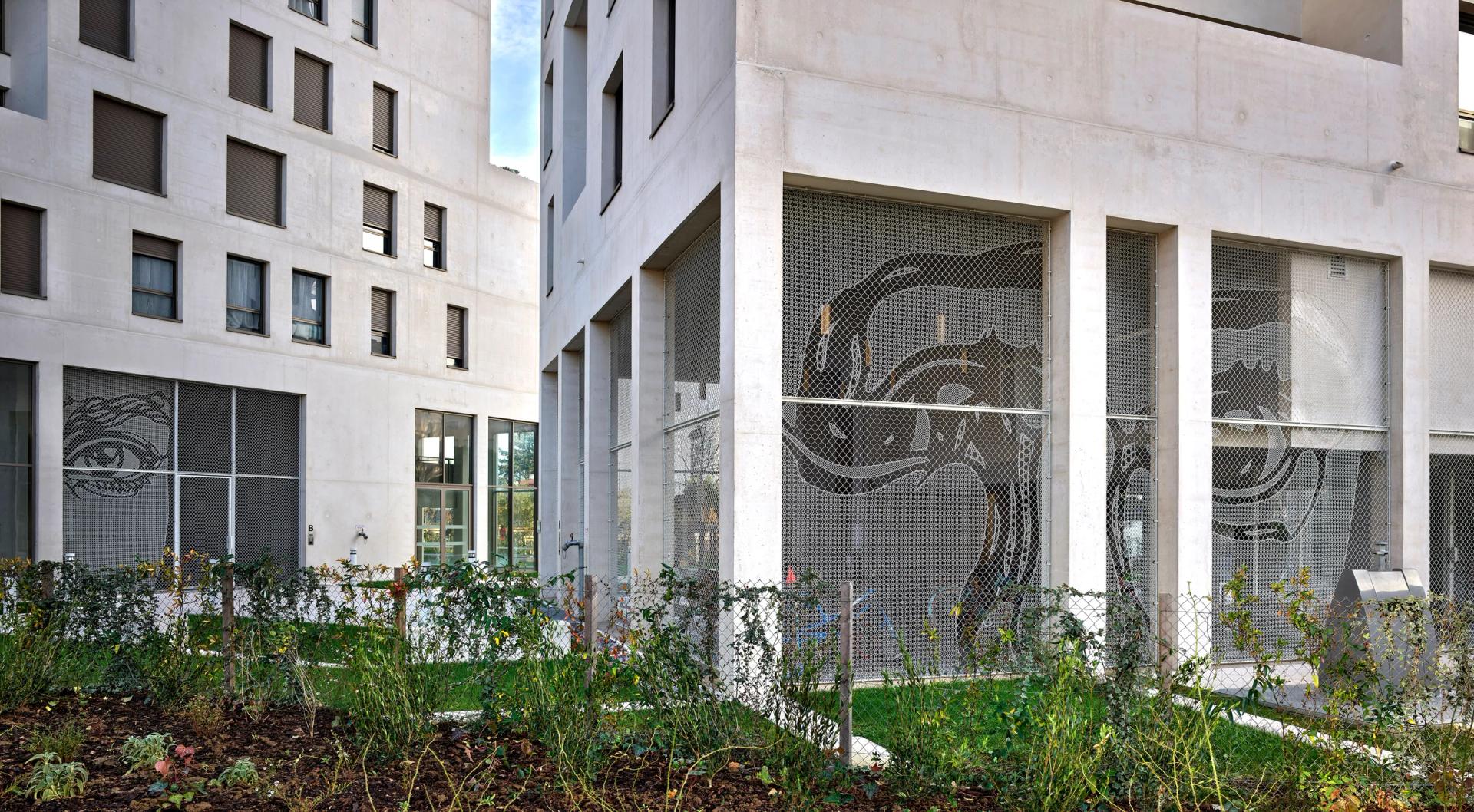
Redfort solves this with mesh. With Lalace and Dedots the specific mesh sizes prevent climbing, with 50 by 50 mm openings on the Welded type. Along the Seine in Paris the pattern was carefully adjusted so that no opening was climbable or breached safety limits.
That makes the railing suitable wherever children or vulnerable people move around. All railing designs meet EU standards for fall-through protection, and the Welded type offers the highest resistance against vandalism. Read more about railings or projects in public spaces.
The specific mesh sizes leave no room for feet or hands to climb. The Welded type has a 50 by 50 mm mesh, and the Bended type comes in 40 by 40 or 50 by 50 mm.
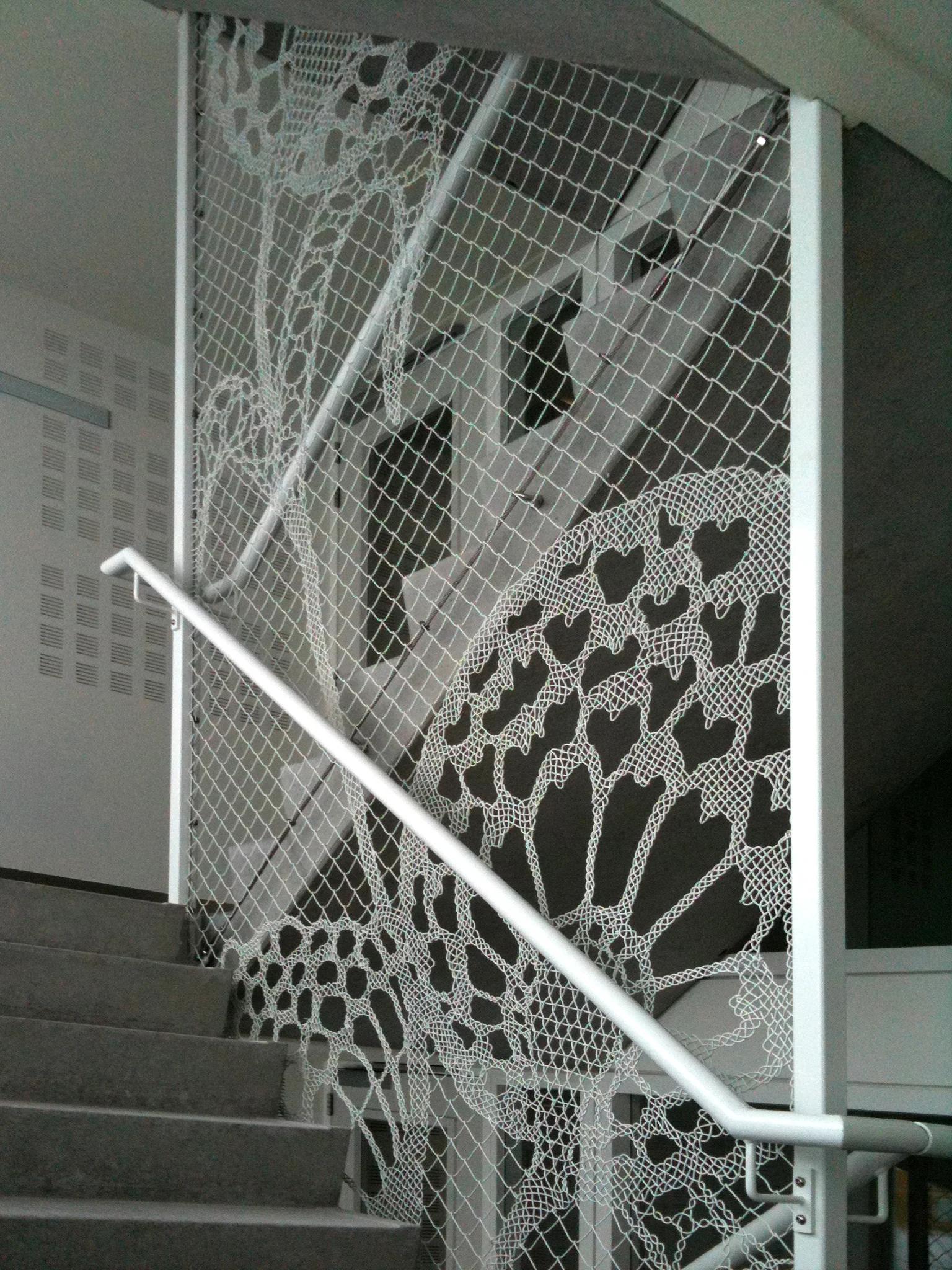
In a Rotterdam school, Lalace railing infills meet code for fall protection on stairs and mezzanines. Their playful patterns at eye level make the building friendlier for children instead of stricter.
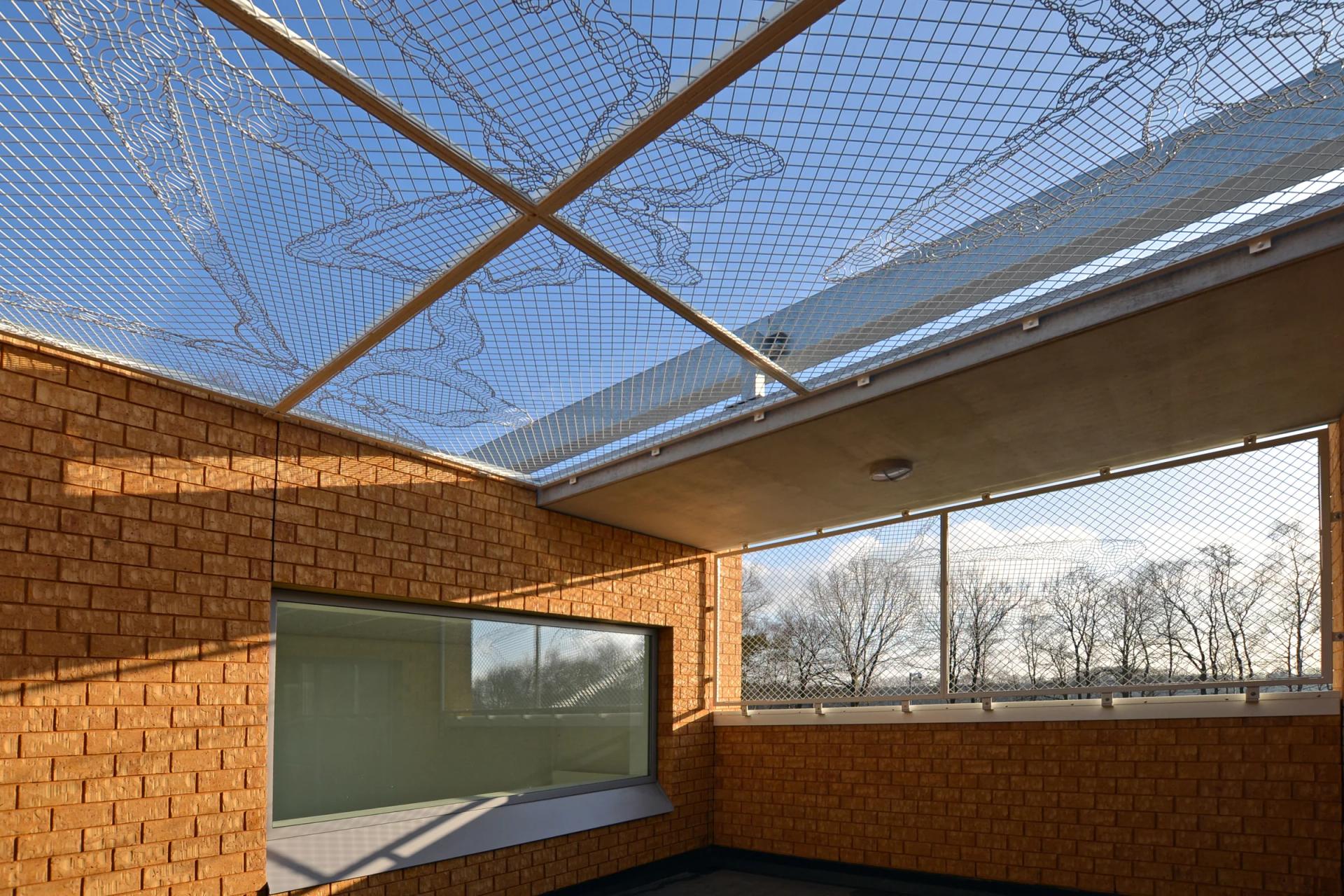
Care and treatment facilities need security without a prison look. In Rekken and Hengelo Lalace enclosures keep residents safe while the semi-transparent mesh preserves light, views and a humane atmosphere.
Reference projects
From schools in Rotterdam and Bunbury to treatment centres in Rekken and Hengelo and a riverside promenade in Paris, these projects show safety without footholds. Each climb resistant railing or enclosure protects people while it stays open and welcoming. Open a project to see the mesh and the pattern used.

Riverside portrait panels in Paris
School staircase enclosure
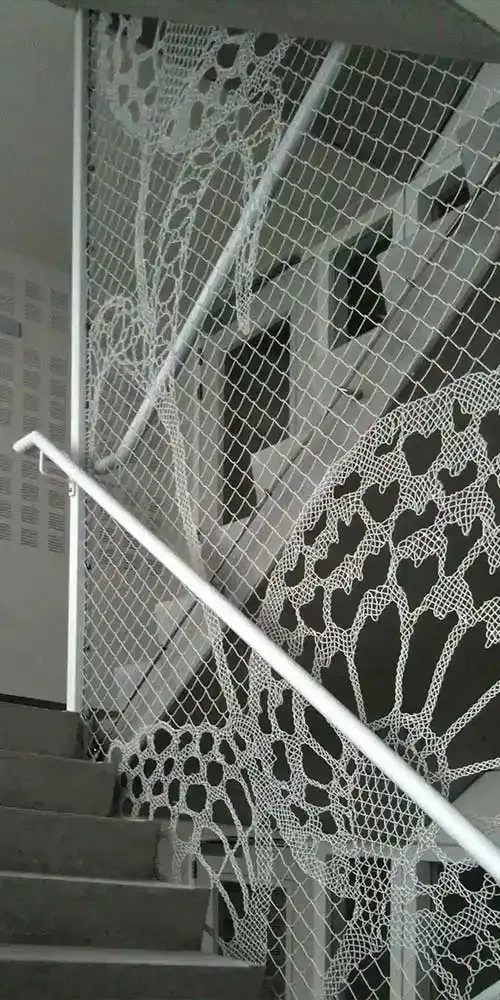
Apartment staircase safety enclosure

Lalace enclosure & screening for SBH treatment facility

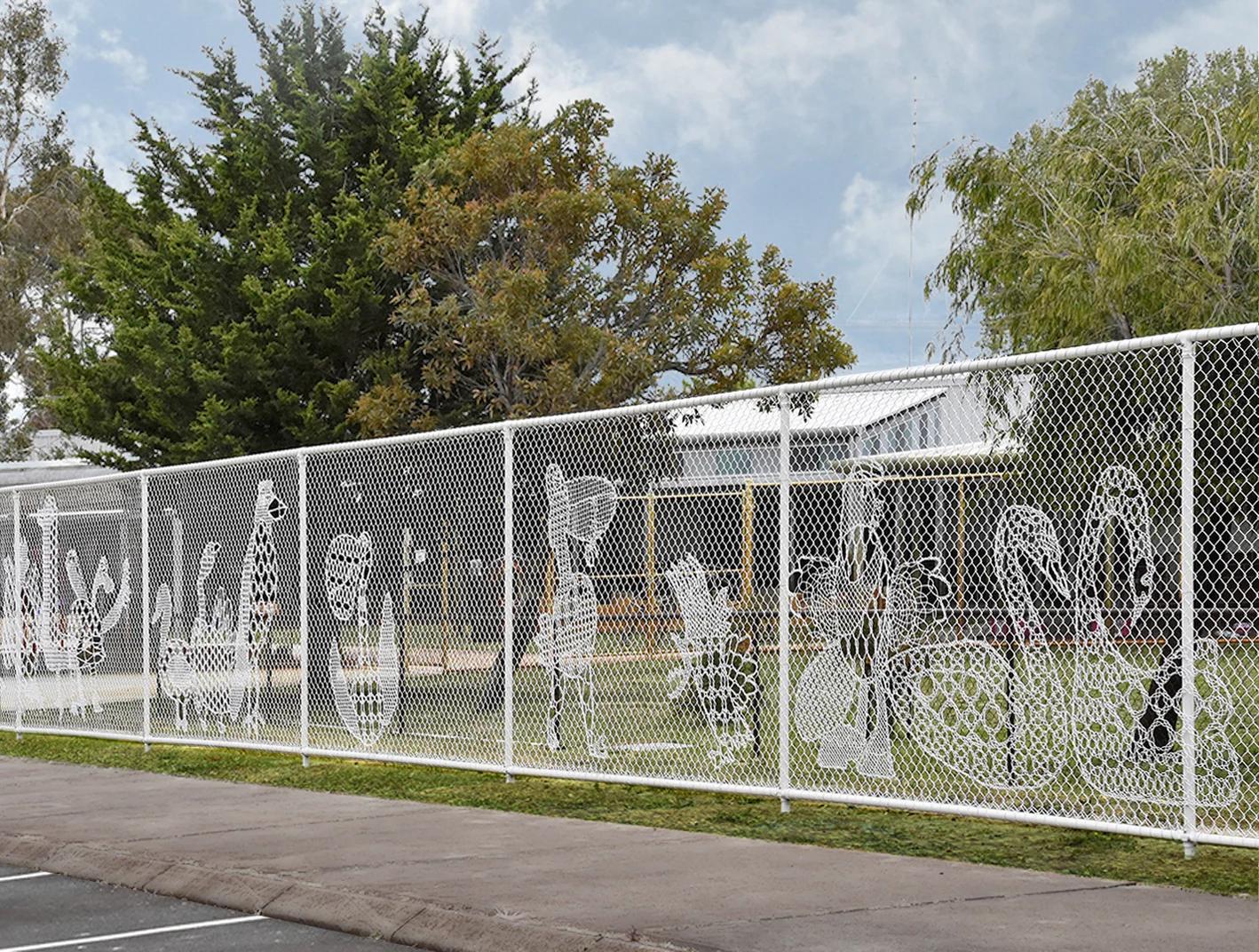
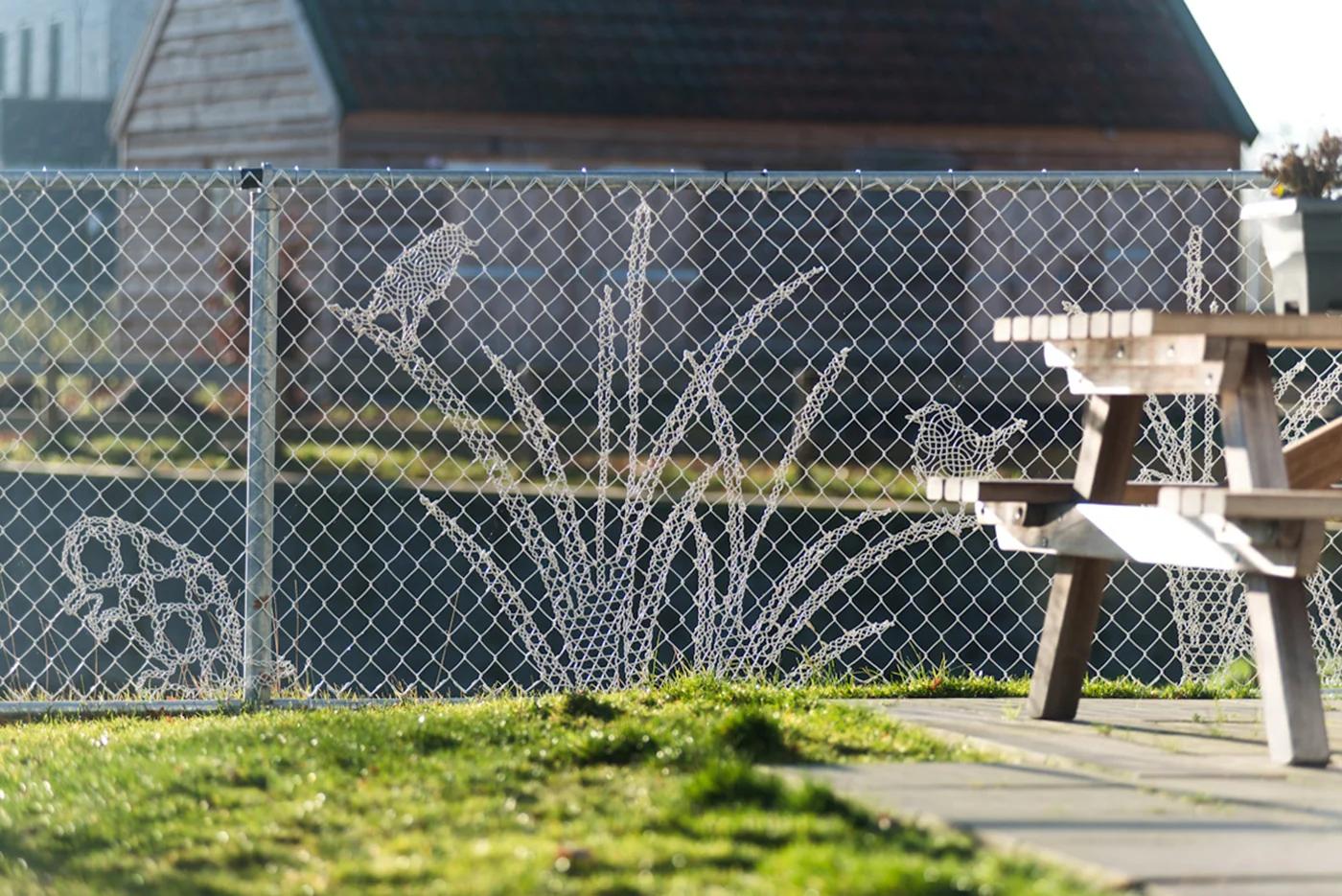
Lace artwork enclosure at Bunbury Primary
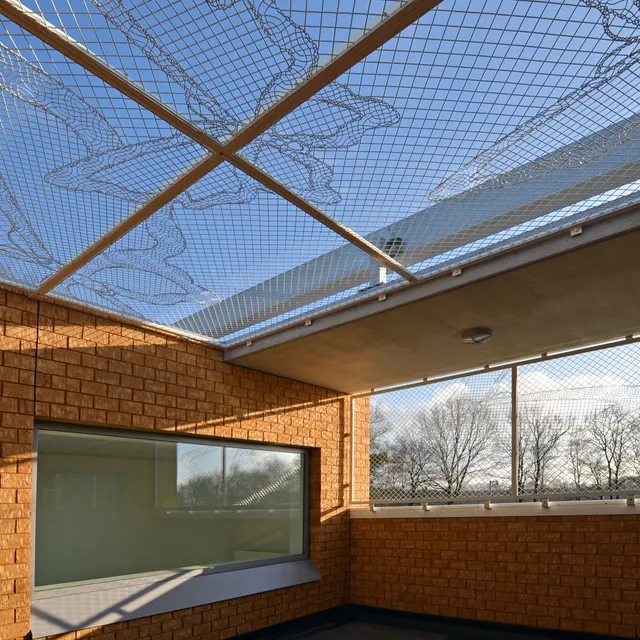
Secure therapeutic center enclosures
Its mesh. Instead of horizontal bars, the infill is a mesh with specific sizes that prevent climbing. The Welded type has 50 by 50 mm openings, and in a custom pattern the openings are adjusted so that none can be climbed, as on the promenade in Paris.
Yes. All railing designs meet EU standards for fall-through protection, and both Lalace and Dedots mesh sizes prevent climbing. Lalace is TNO tested and passes the sandbag impact test, so the railing also resists people leaning or pushing against it.
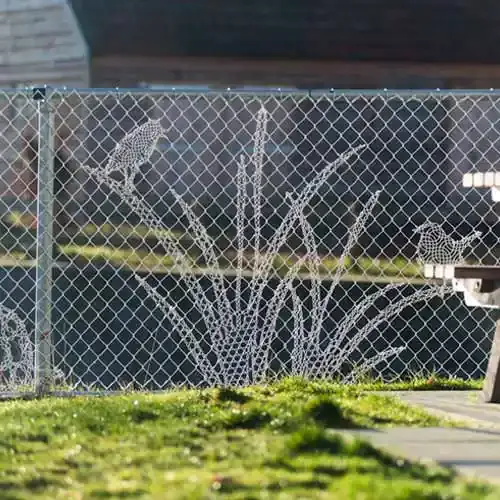
Yes. In Rotterdam railing infills with organic patterns meet code for fall protection, and at South Bunbury Primary School in Australia pupils' drawings of local birds were turned into a secure fence. Safety and play come together.
Yes. At a treatment centre in Rekken a tall Lalace Butterfly enclosure secures the outdoor spaces without feeling like a prison. The semi-transparent mesh keeps visibility and openness, so residents feel less confined.
Yes. Where vandalism is a concern the Welded type of Lalace offers the highest resistance. Dedots panels are resilient and resistant to vandalism, and their high tensile strength and irreversible internal lock let them withstand intensive use.
Yes. The pattern decides the atmosphere, from butterflies to children's drawings. Choose from the pattern collection or have a custom pattern made, so the railing protects children and residents without feeling institutional.