
Light and air
The open structure allows natural ventilation, and daylight reaches the bicycles inside. A shelter wrapped in mesh feels open and inviting instead of dark, which makes parking and collecting a bike more pleasant.
Solutions
Bicycle shelters are often built as plain sheds that nobody wants to look at. Yet they stand in the middle of the city, near stations and squares. Good bicycle shelter design keeps bikes safe and covered and gives the street a landmark instead of a box.
Get in touch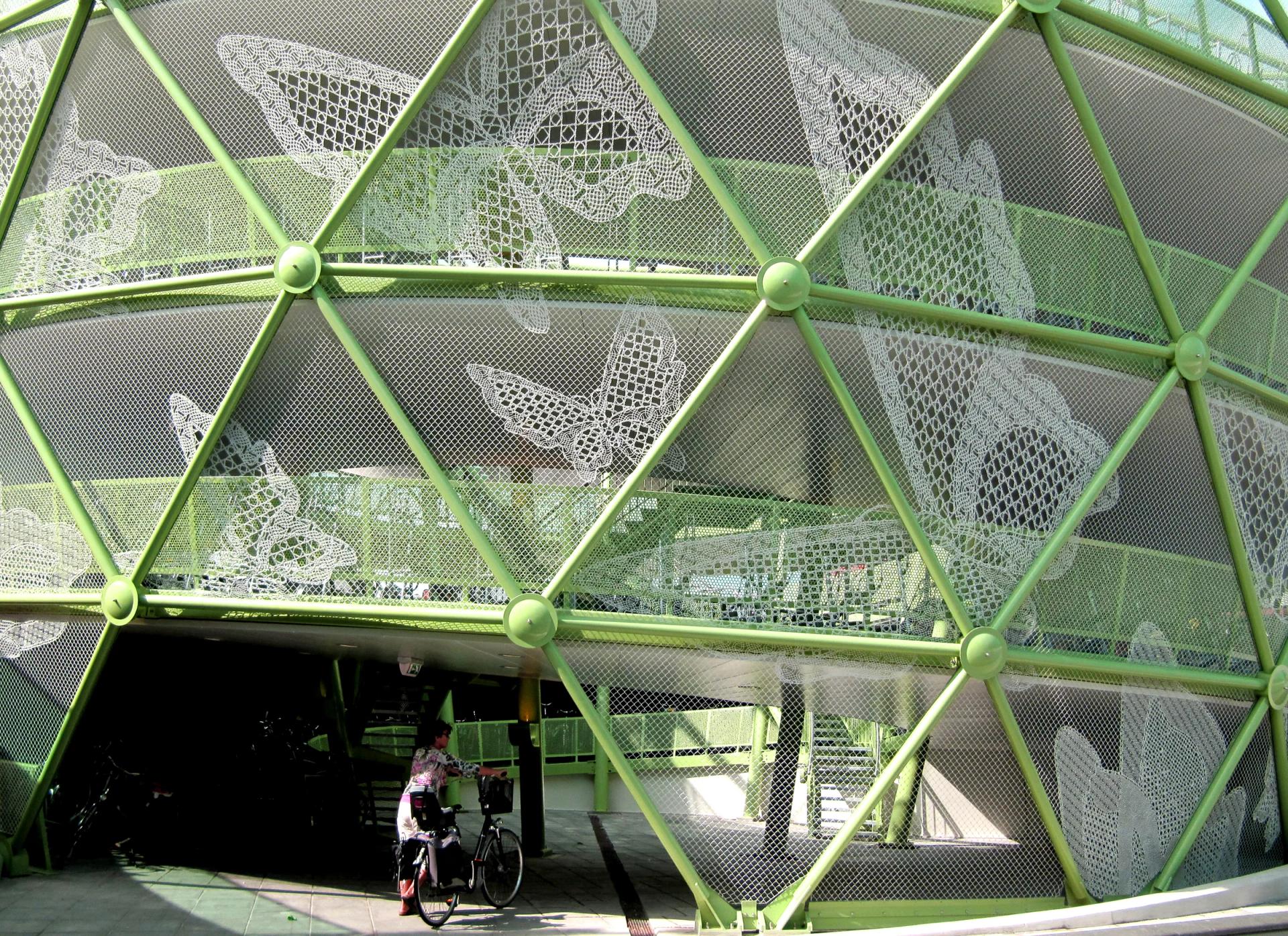
Conventional bike shelters put function before form. They are utilitarian, visually uninspiring and disconnected from the architecture around them. Because large bicycle parkings stand at busy places such as stations and transport hubs, a closed box there weakens the quality of the whole public space.
A Lalace skin turns the shelter into architecture. The open steel lace lets air and daylight in, keeps the bicycles in view and adds a pattern that suits the place. In Alphen an apple shaped parking for 800 bicycles is wrapped completely in a butterfly pattern.
The open mesh adds safety, since people can see in and out while the mesh sizes prevent climbing. For large or curved shelters the Bended type allows bigger dimensions, and the Welded type offers the highest resistance against vandalism. See more on the facade page.
The open structure allows natural ventilation, and daylight reaches the bicycles inside. A shelter wrapped in mesh feels open and inviting instead of dark, which makes parking and collecting a bike more pleasant.
People can see through the facade, so the shelter never feels like a closed box. The specific mesh sizes prevent climbing, and the welded type offers the highest resistance against vandalism in busy public places.
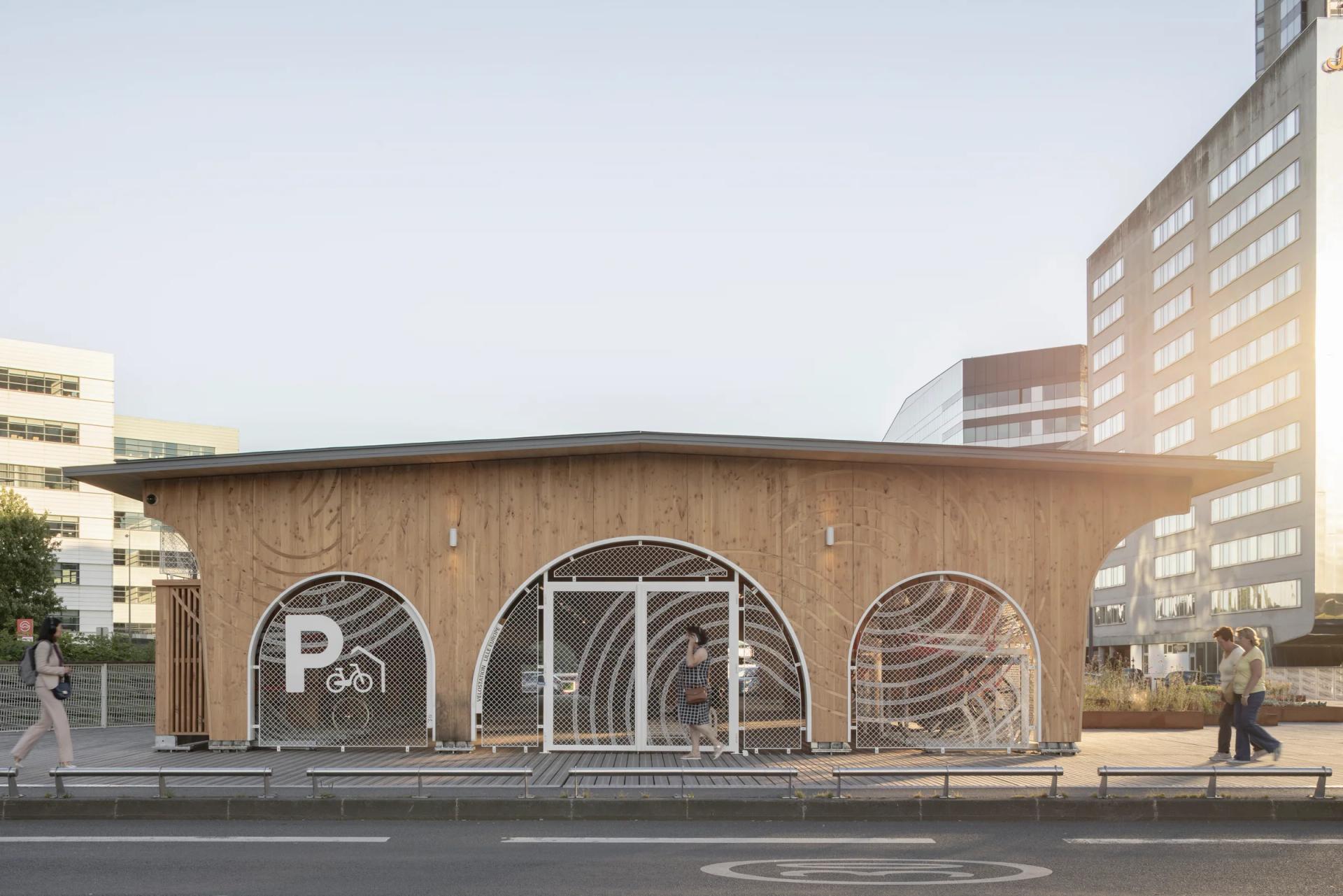
A pattern makes the shelter recognisable from far away. In Barcelona a station for 450 bicycles at a transport crossroads combines wood, a green roof and lace facades into an inviting public place.
Reference projects
These projects range from an apple shaped bicycle parking in Alphen and a bicycle station in Barcelona to a parking area and square in Utrecht. Each bicycle shelter design or parking enclosure shows how open mesh adds identity to mobility. Open a project to see the facade and the pattern.
Innovative bicycle shelter “apple” wrapped in Lalace
Bicycle hub blends mobility and urban design
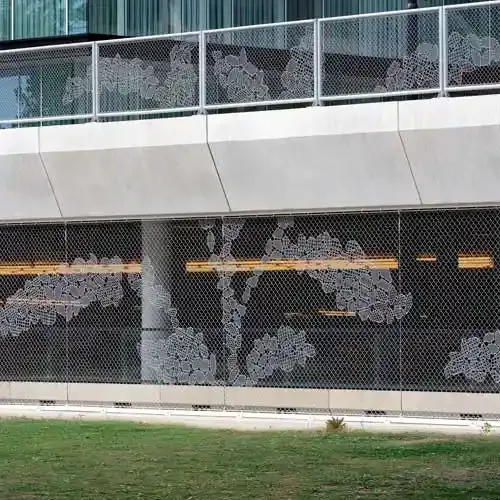
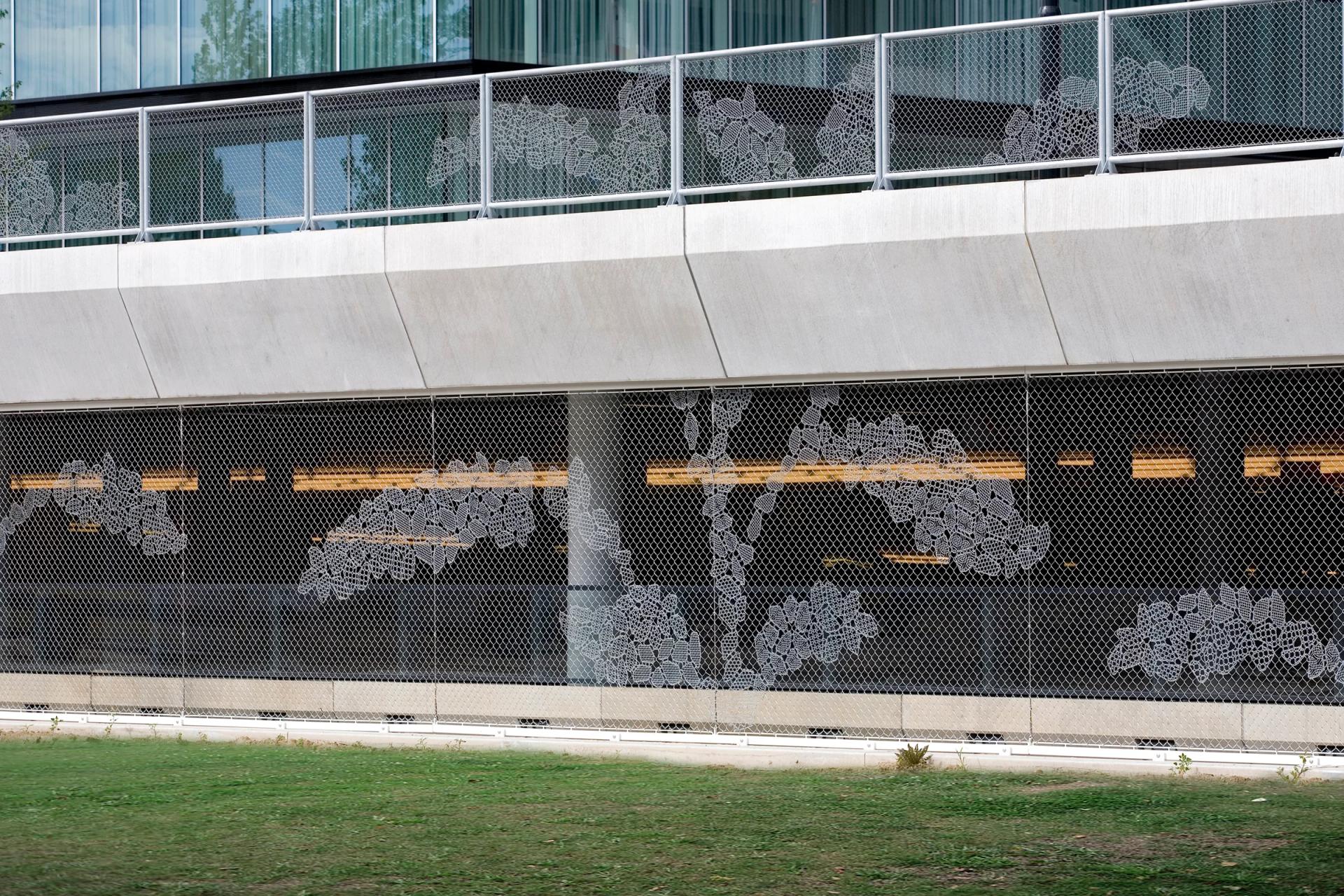
Lalace enclosure for urban parking and green spaces
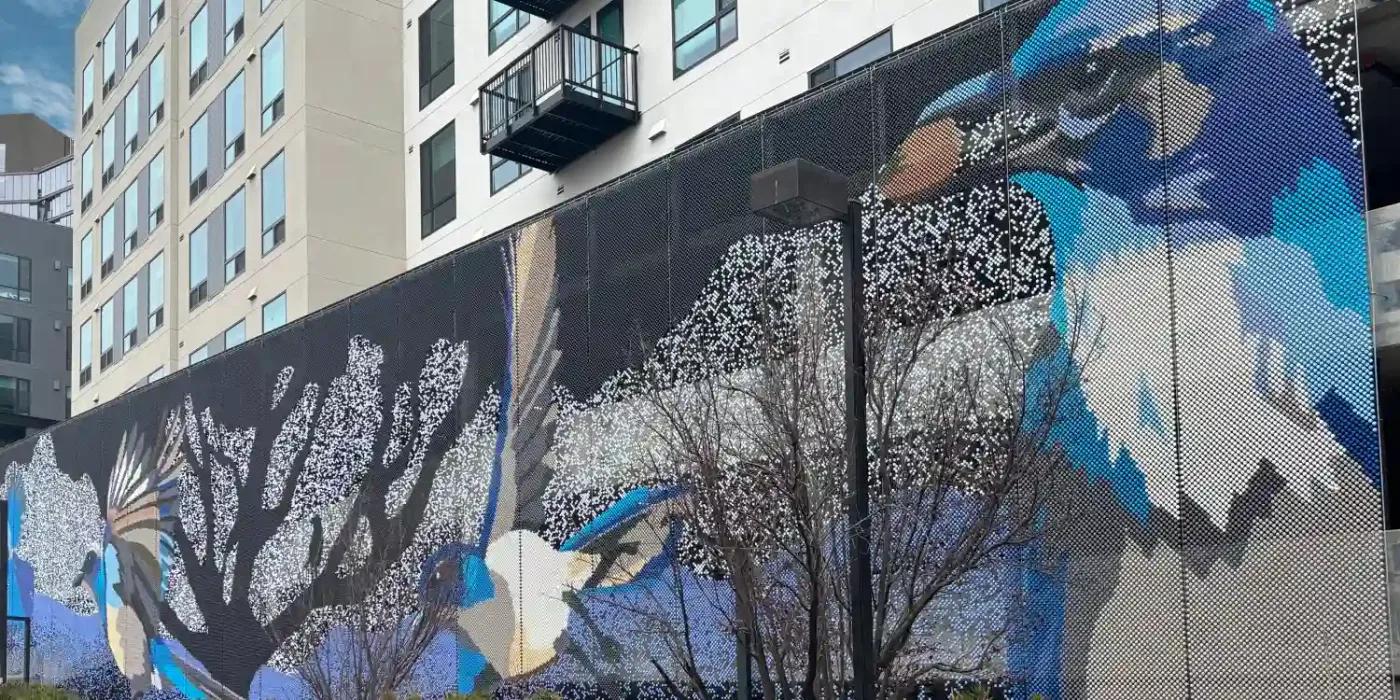
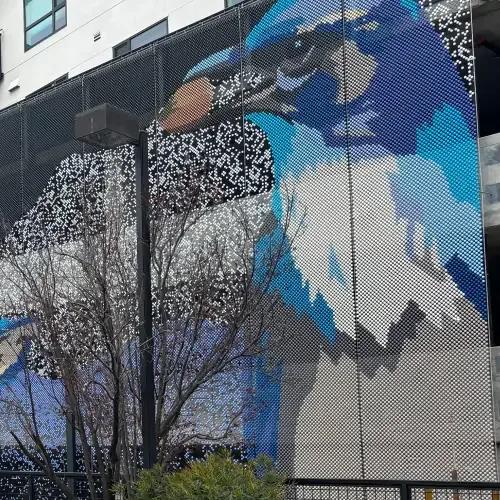
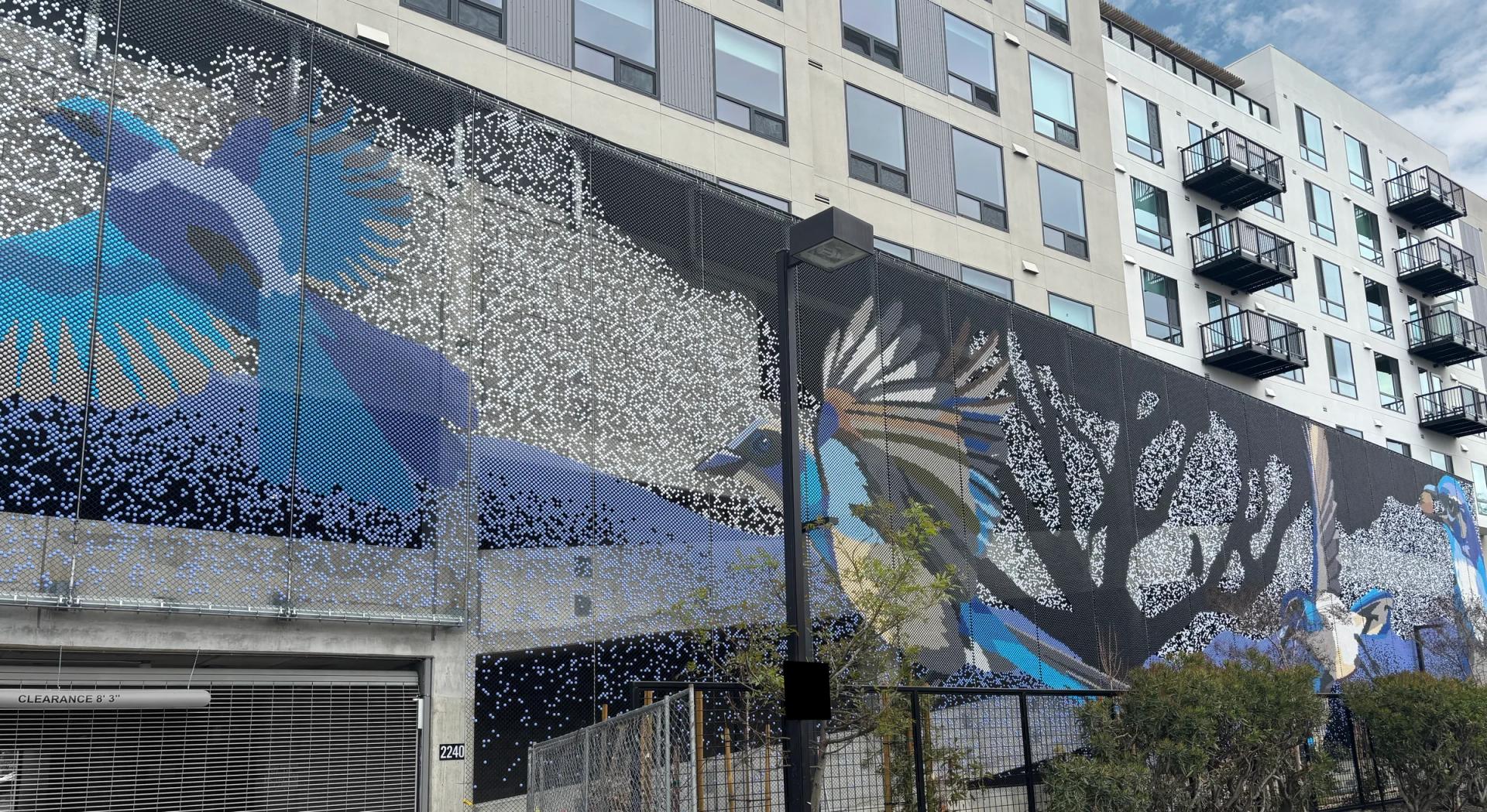
Dedots artistic screen for AVE Santa Clara parking facade
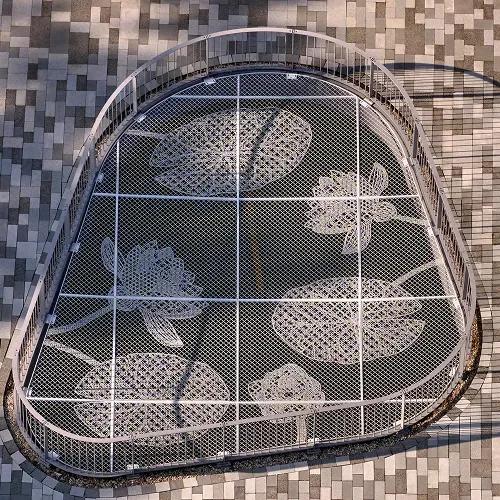
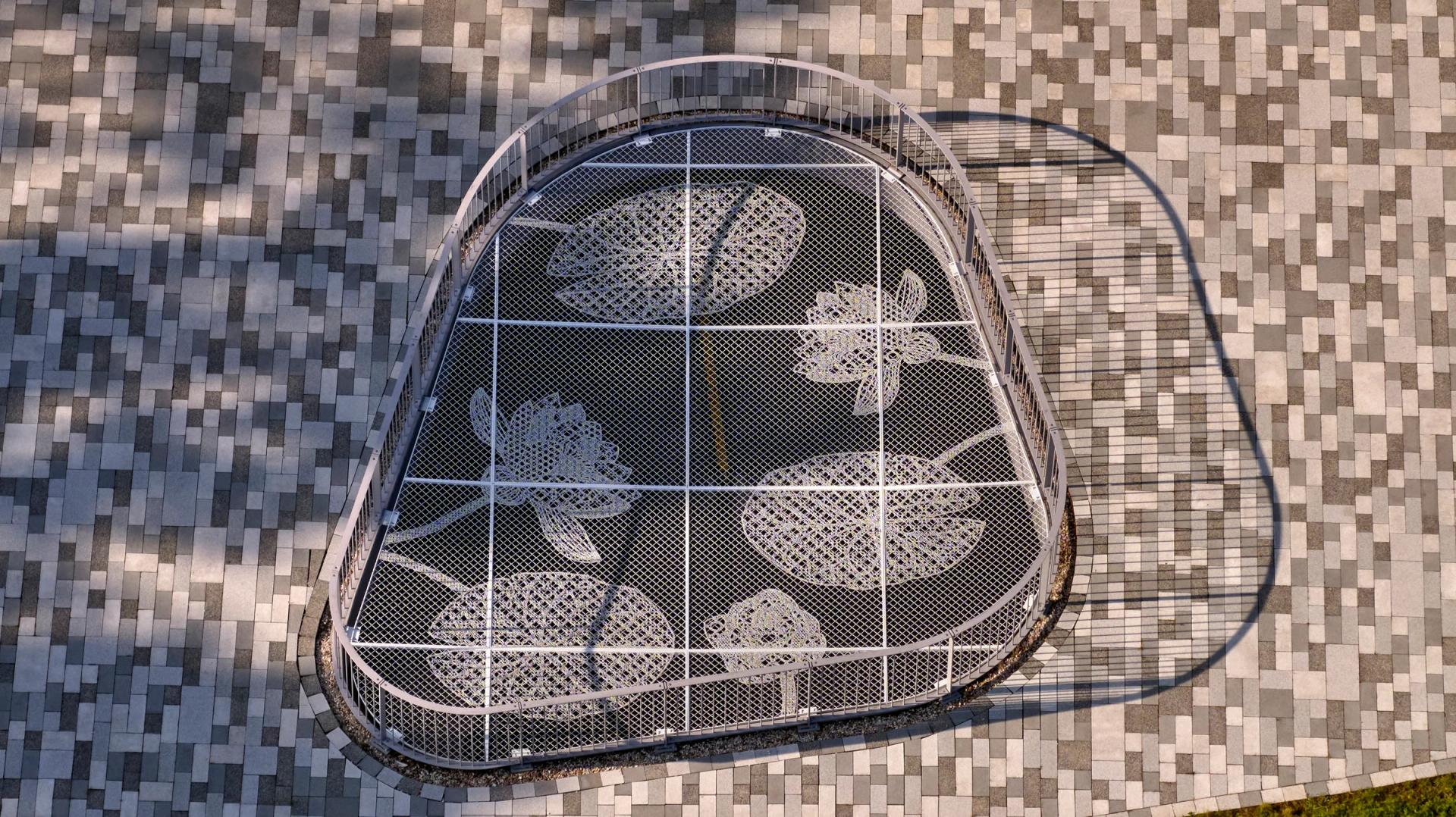
Lalace lotus-pattern net for parking structure
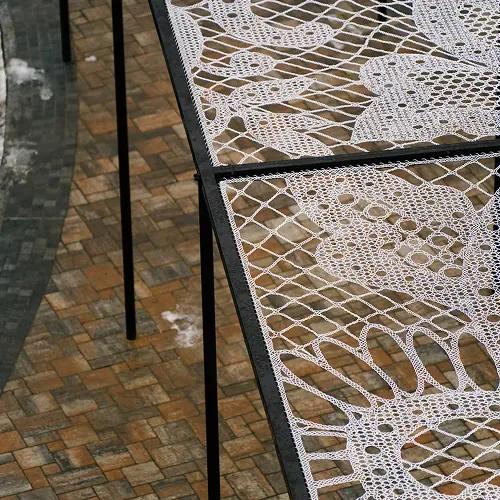
Train station facade artwork
An open facade lets air and daylight in and keeps the inside visible, which feels safer for cyclists. At the same time the pattern gives the shelter an identity, so it adds to the street instead of hiding behind plain cladding.
Yes. The bicycle parking in Alphen houses 800 bicycles, and its complete apple shaped skin is made of Lalace with a butterfly pattern. Modular panels make large surfaces possible, with a pattern that never has to repeat.
Yes. Lalace has a high tensile strength, is TNO tested and passes the sandbag impact test. Where vandalism is a concern, the Welded type offers the highest resistance, and the specific mesh sizes also prevent climbing.
Yes. A custom pattern connects the shelter with its surroundings. The bicycle station in Barcelona has lace facade screens for ventilation and identity, and in Utrecht trees appear in the enclosure around a parking area.
Yes. Lalace suits environments from minus 40 to plus 40 °C, and its coatings are highly UV resistant. For coastal areas and industrial sites the Welded type fits best, so the shelter keeps its look in every season.
Chain link mesh needs a substructure for tension and is fixed to a steel structure for large surfaces. Welded panels of 4 mm steel rods form a stiff panel that needs no substructure, with a maximum size of 3 by 2 metres.