
Less direct sun
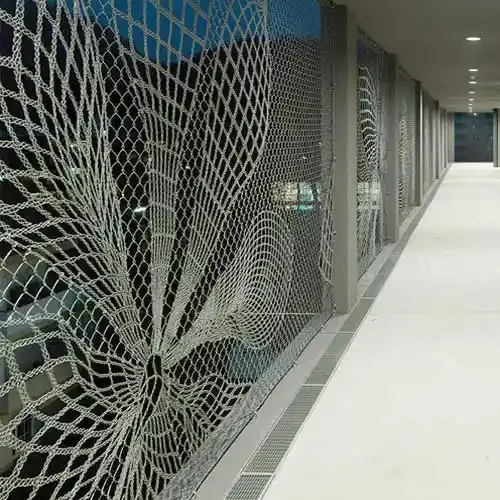
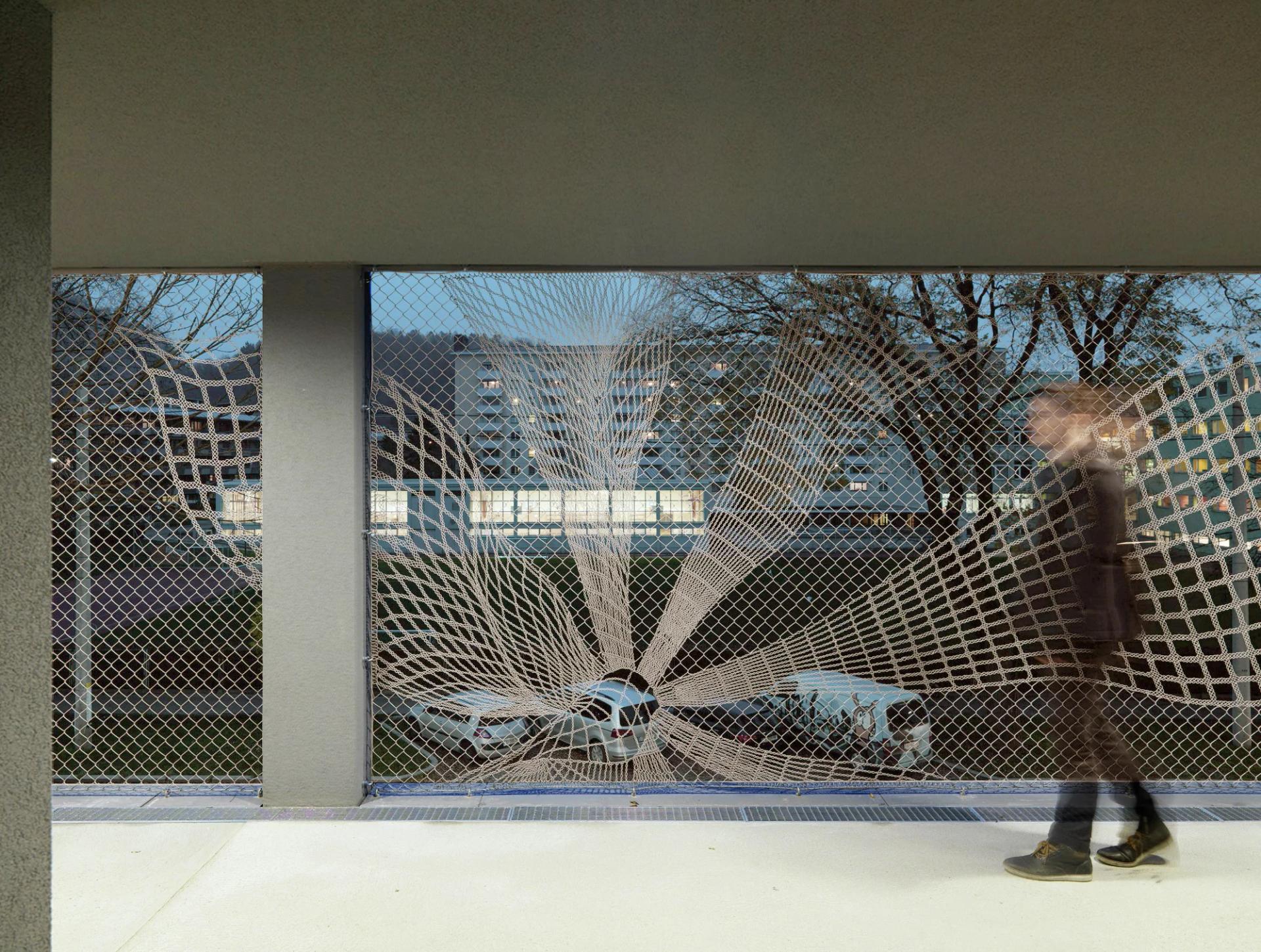
The density of the mesh decides how much sun reaches the glass. In Mühlhausen the diamond pattern reduces direct sunlight into the workplace by 35%, while the facade itself stays open and light.
Solutions
Large glass facades bring in daylight, but also direct sun and glare. Blinds go down and the view is gone. A solar shading facade in steel mesh filters the sun in front of the glass, while the building keeps its daylight and its outlook.
Get in touch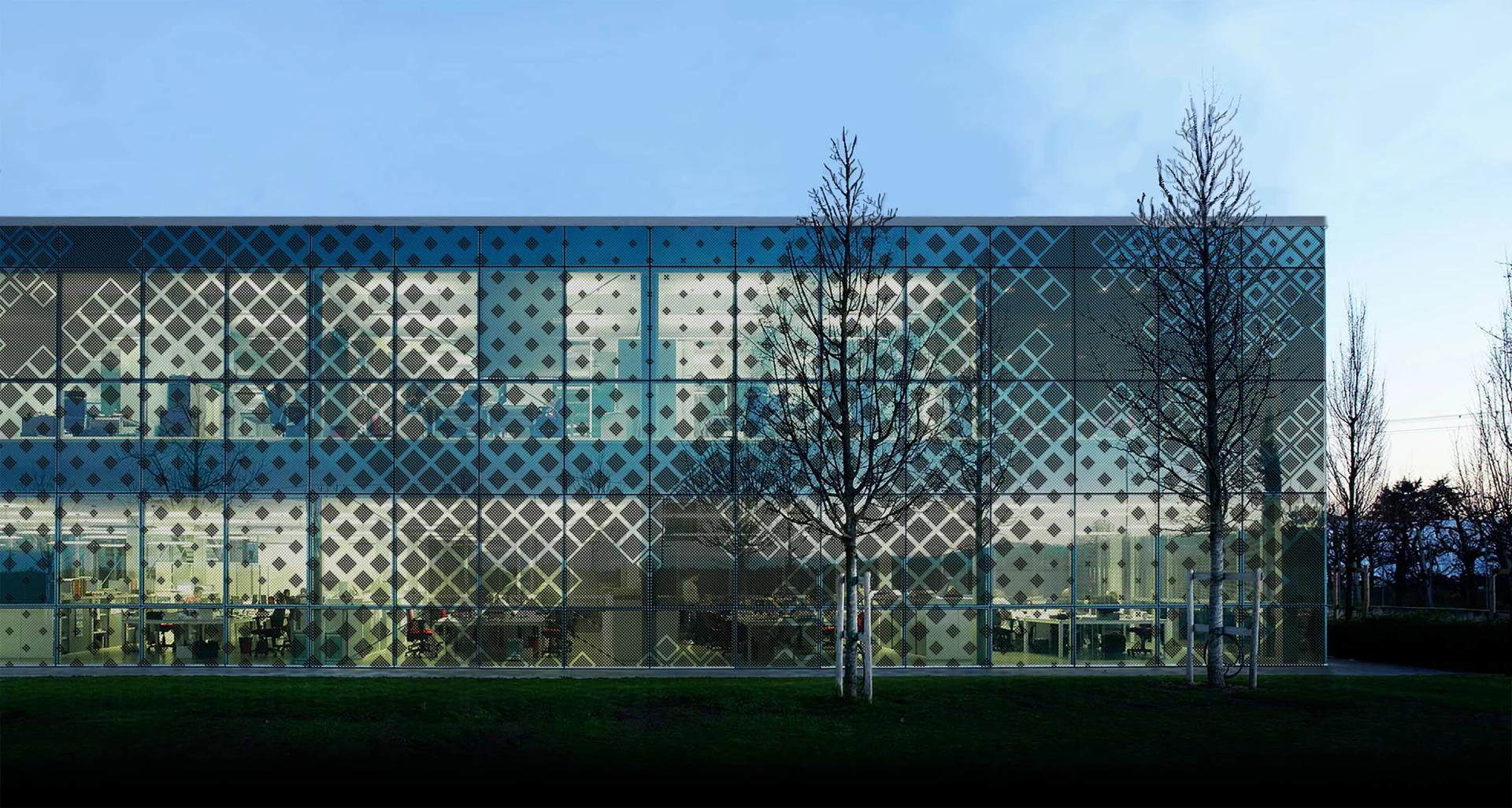
Office facades often struggle to manage daylight. Too much sun leads to glare and heat, while too much screening reduces openness. Traditional shading elements can feel heavy or monotonous and disturb the rhythm of the building. The challenge is to shade the glass without turning the facade into a closed wall.
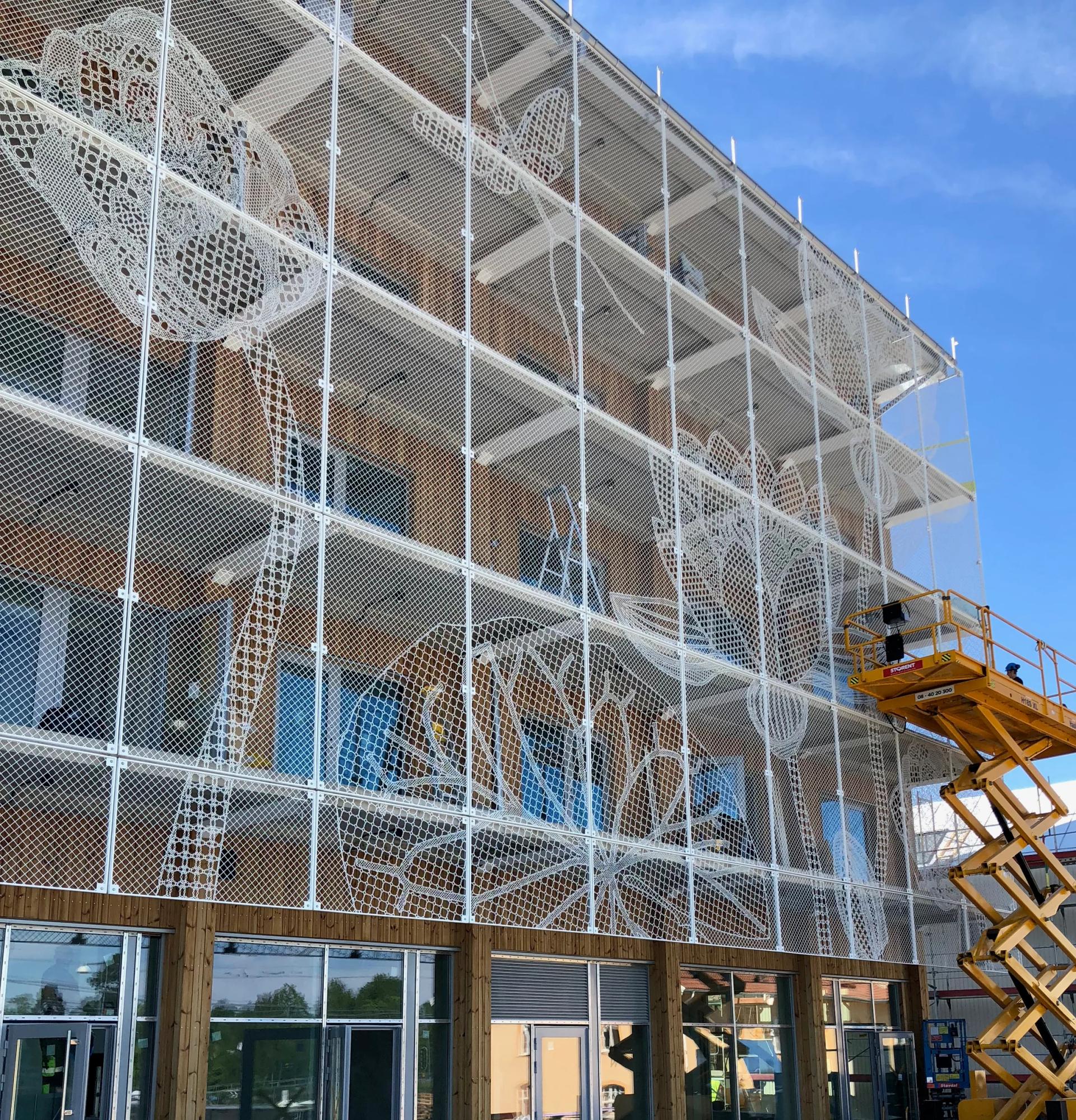
Depending on its density, Dedots can serve as a sunshade on building facades. On an office in Mühlhausen a diamond pattern with different densities reduces the amount of direct sunlight into the workplace by 35%. Denser parts shade, lighter parts keep the view. With Lalace the mesh also works as shading, as in Nykvarn.
Shading starts with the orientation of the facade. A sunny side can get a denser pattern and a shaded side an open one, all within the same design, because every square metre can be different. Light filtering through the mesh also creates an interplay of light and shadow that changes over the day.
The density of the mesh decides how much sun reaches the glass. In Mühlhausen the diamond pattern reduces direct sunlight into the workplace by 35%, while the facade itself stays open and light.
Lighter parts of the pattern keep the view and the connection with the outside. Users get filtered daylight instead of a choice between full sun and lowered blinds, all day long.
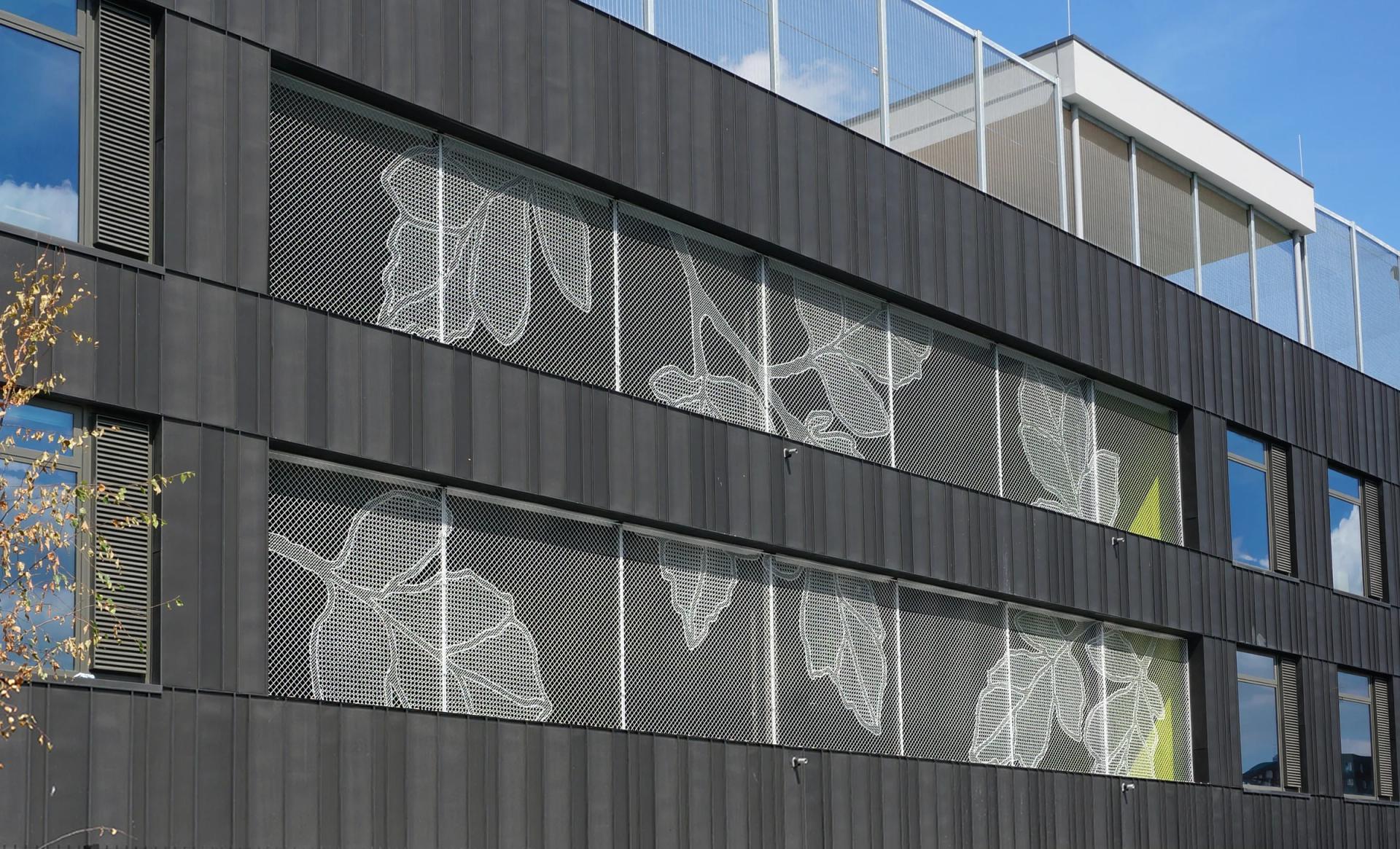
Shading works outside the building too. A Lalace pergola in a Toronto park gives dappled shade, and the spacing between the leaves on a London school facade lets light filter through like sunlight through trees.
Reference projects
From an office in Mühlhausen and an apartment building in Nykvarn to a school in London and a park pergola in Toronto, these projects filter the sun with a pattern. Each solar shading facade or canopy here gives shade without closing off. Open a project to see how light falls through the mesh.

Landmark pergola art piece
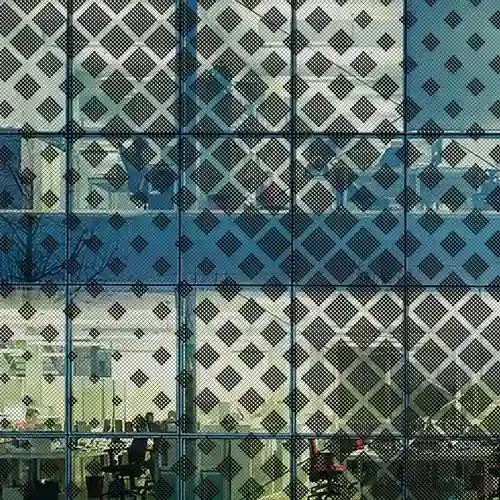
Dedots diamond-pattern facade screen for office building
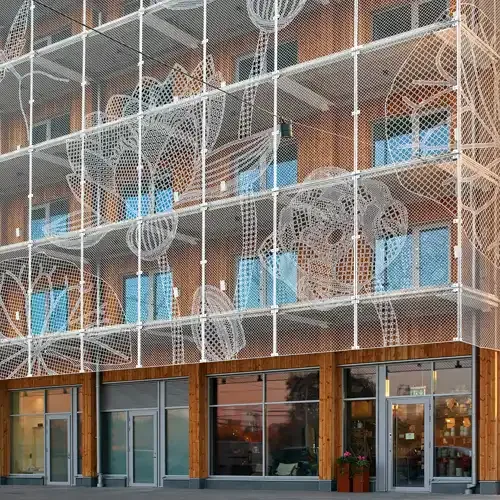
Lalace lotus-pattern facade for residential building
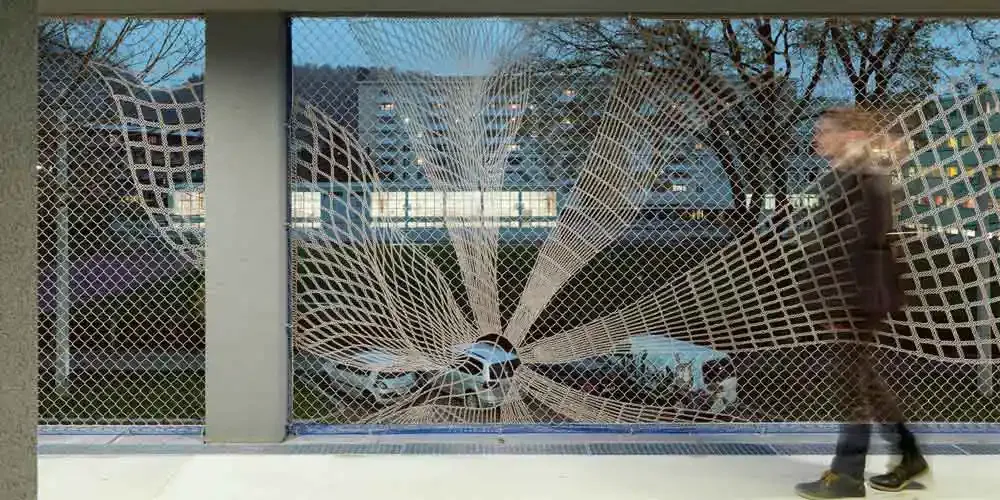
Residential complex facade integration
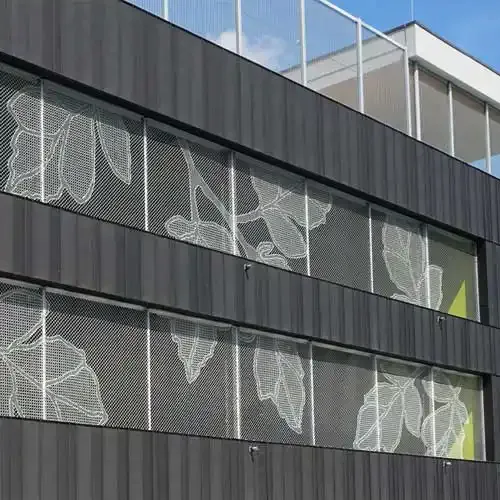
School facade inspired by nature
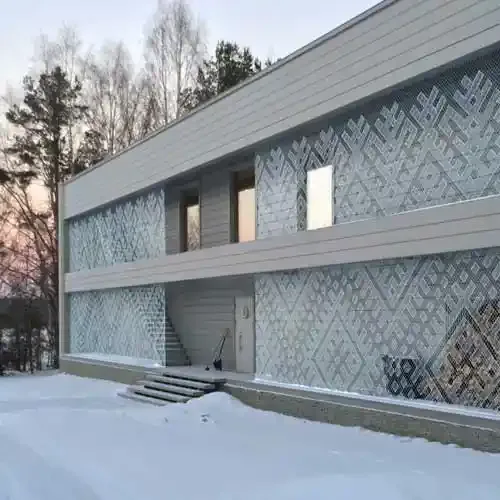
Modern housing facade in coastal setting
That depends on the density of the pattern. On an office building in Mühlhausen a Dedots diamond pattern reduces the amount of direct sunlight into the workplace by 35%. A denser design shades more, an open design lets more light in.
No. The open mesh keeps sightlines, and lighter parts of the pattern keep view and connection while denser parts provide shade. That graded approach makes the facade feel alive and responsive instead of closed, and it changes with the light.
Yes. In Mühlhausen the Dedots screen sits within the framework of the glass facade, and the different densities of the diamond pattern create a dynamic image in front of the glazing. The screen offers shading and privacy at the same time.
Depending on density, Dedots can serve as a sunshade on building facades, with transparency created by patterns, gradients or open areas. Lalace also filters light, as on an apartment building in Nykvarn where the lotus mesh works as shading and screening.
Yes. The open structure of the mesh allows natural ventilation, so air keeps moving while the sun is filtered. That is why the same facade solution is used for parking garages and other buildings that need fresh air.
Yes. Dedots is coloured all the way through with a UV blocker and has an F1 classification according to the UL746C test. Lalace coatings are highly UV resistant and suit environments from minus 40 to plus 40 °C.