Cover where needed
Dense areas of the pattern screen workplaces, homes or terraces from passers by. Because the density can change across one facade, privacy goes exactly where it is needed and the rest stays open.
Solutions
Residents and users want privacy from the street or the neighbours, but not at the cost of daylight and outlook. A facade privacy screen in steel mesh solves that by playing with density. Where you need cover the pattern closes, where you want light it opens.
Get in touch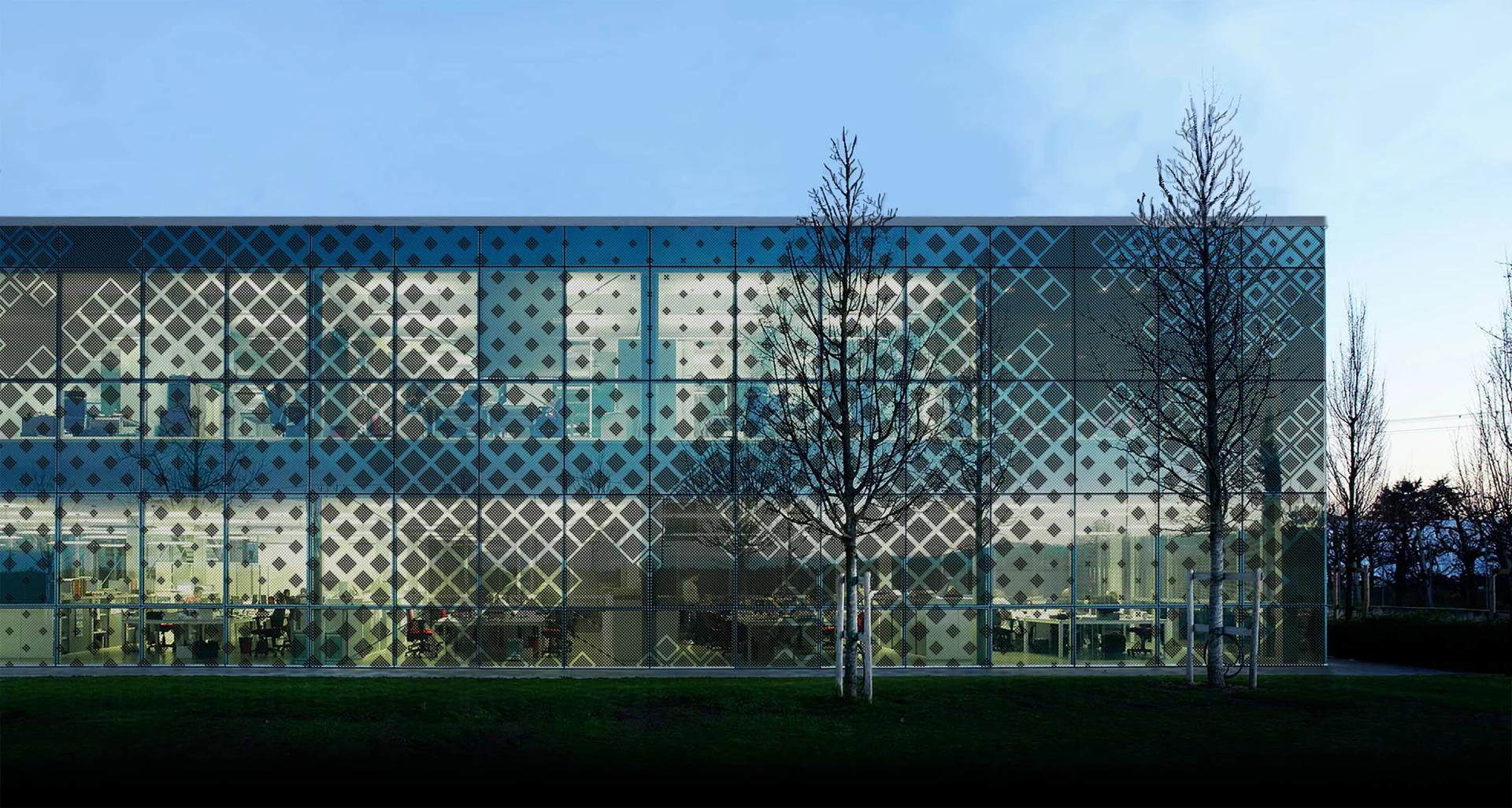
Privacy and daylight pull in opposite directions. Close a window off and the room behind it goes dark, leave it open and people look straight in. In glazed facades this balance is especially hard, and blinds or closed panels often settle it in favour of privacy, leaving people without daylight or view.
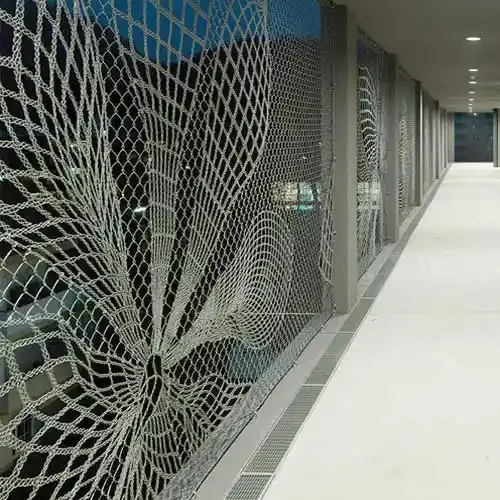
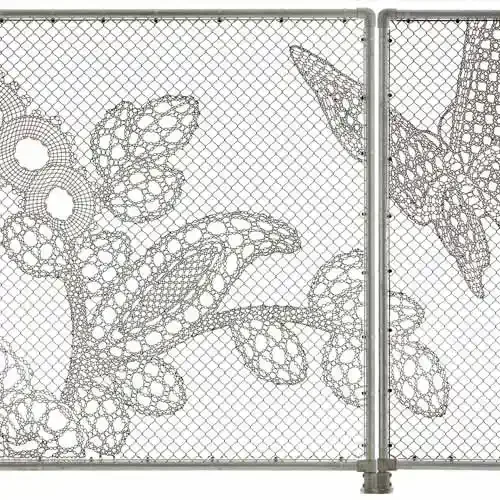
A screen in steel mesh lets you set the balance per zone. With Dedots transparency comes from patterns, gradients or open areas, from full density to almost nothing. With Lalace the pattern filters light and frames views. In Mühlhausen denser parts of a diamond pattern give privacy while lighter parts keep the view.
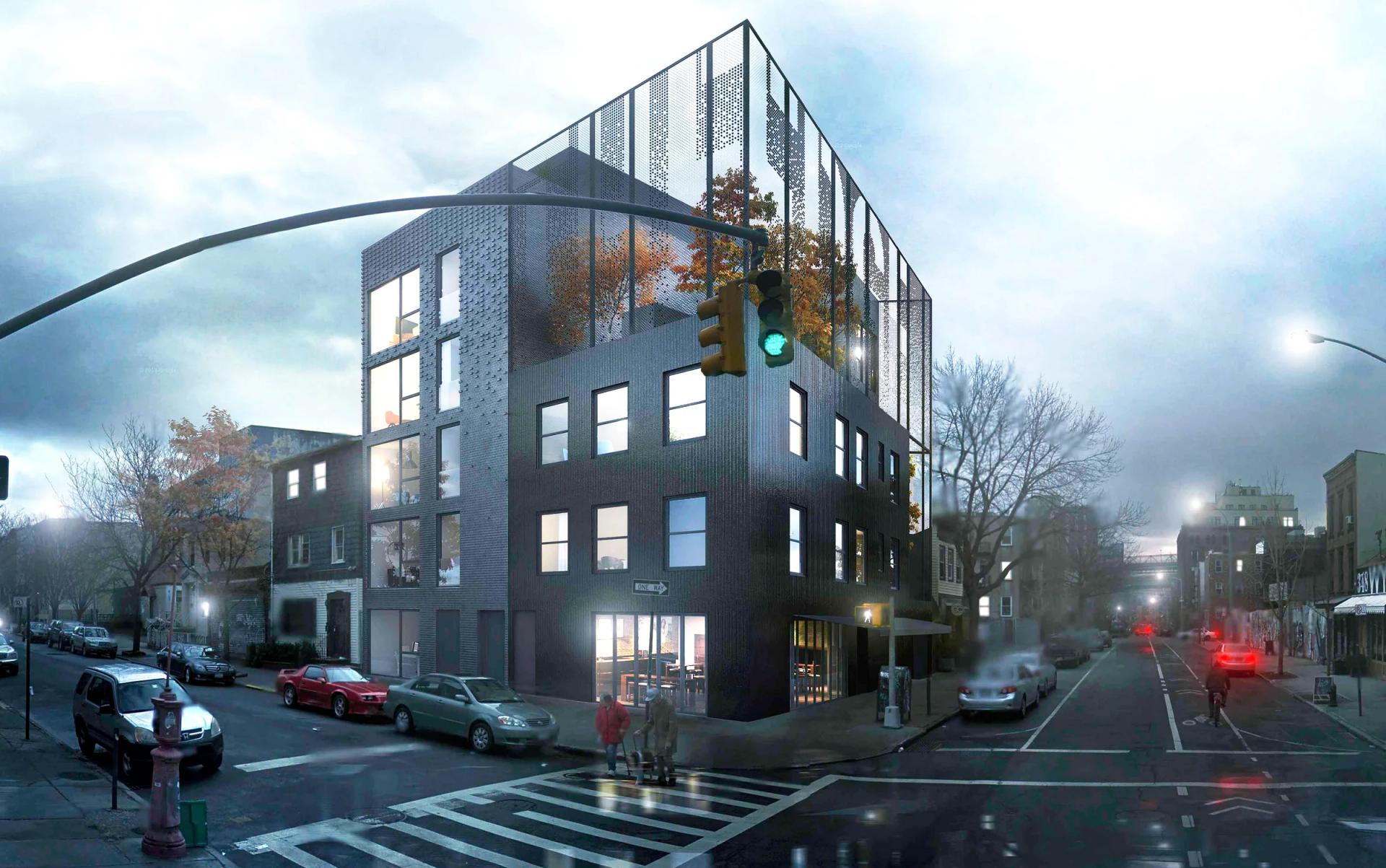
Privacy also depends on the viewpoint. On a Brooklyn roof terrace the dots are black on the outside and chrome on the inside, so the screen can disappear or reveal itself depending on view and light. Together we choose a density and a finish that work from both sides of the facade.
Dense areas of the pattern screen workplaces, homes or terraces from passers by. Because the density can change across one facade, privacy goes exactly where it is needed and the rest stays open.
Open areas let daylight pass, so rooms behind the screen stay bright. The diamond pattern in Mühlhausen reduces direct sunlight by 35% while its lighter parts keep the connection with the outside.
A screen has an inside and an outside. Dedots is two sided and can even carry different finishes, like the black and chrome dots in Brooklyn, so each side of the facade gets its own effect.
Reference projects
From an office in Mühlhausen and a roof terrace in Brooklyn to a museum in Australia and a home and studio in Bergen, these projects screen people from view without shutting out the light. Every facade privacy screen here balances cover with daylight. Open a project to see the density in the photos.
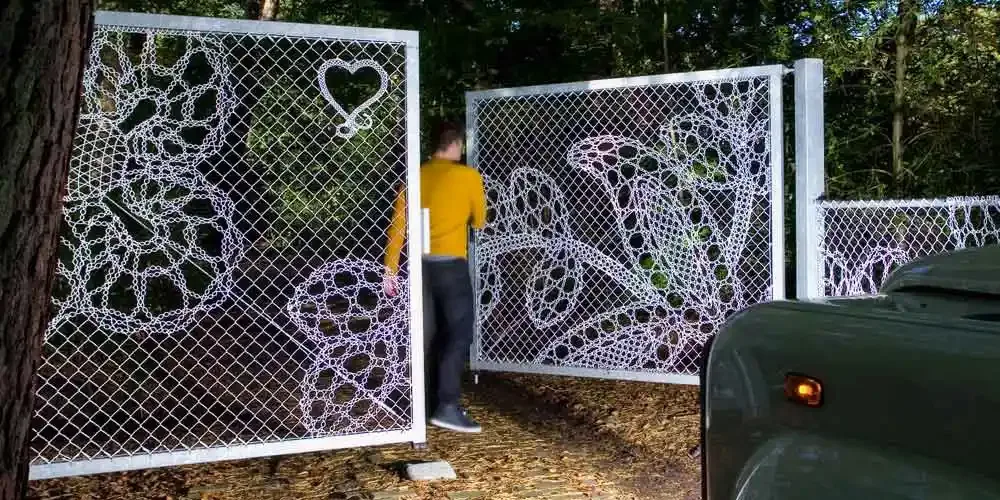
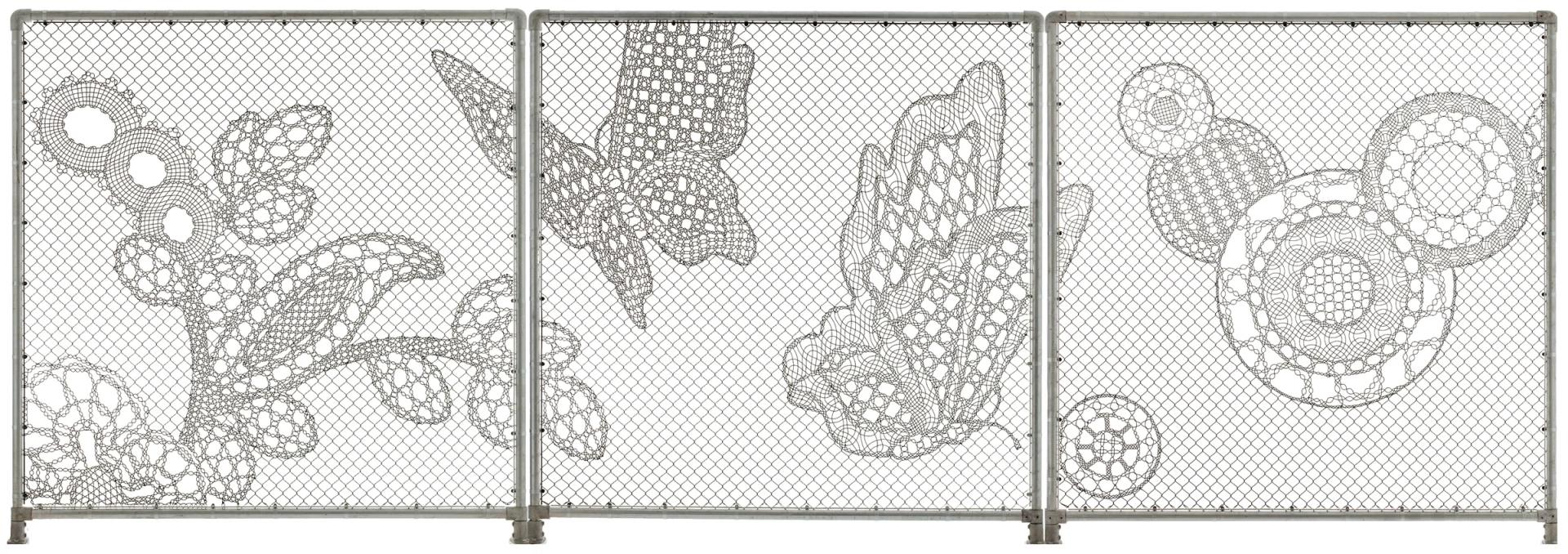
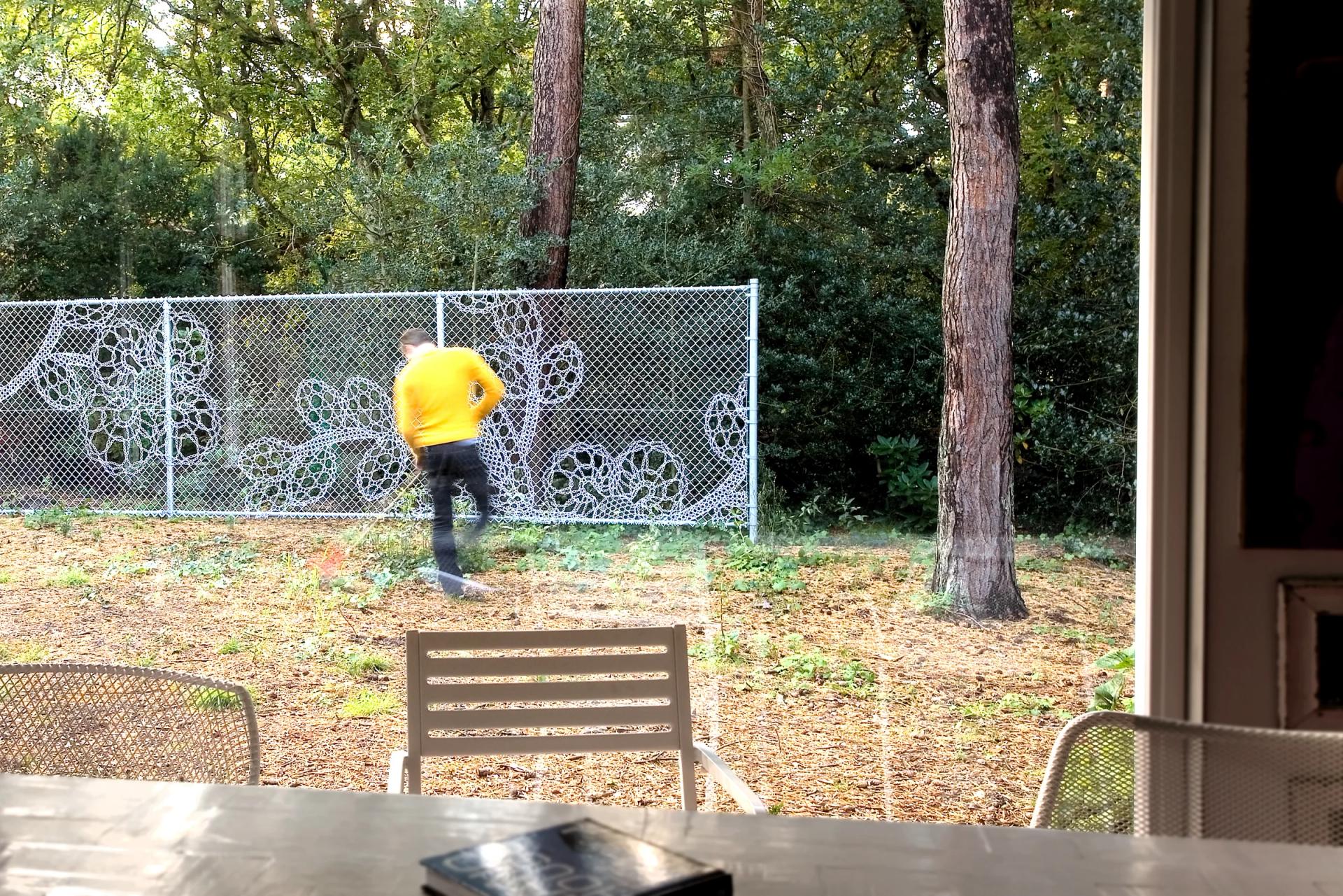
Garden enclosure for home and studio
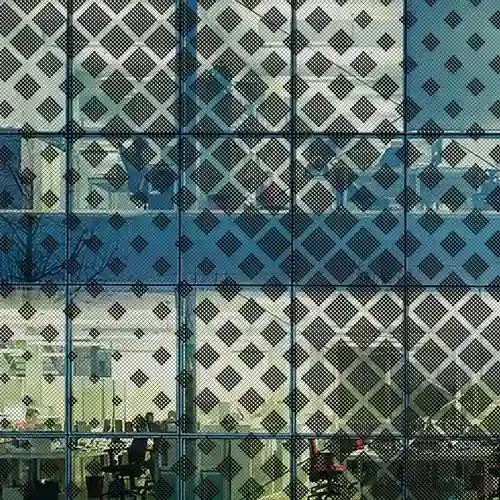
Dedots diamond-pattern facade screen for office building
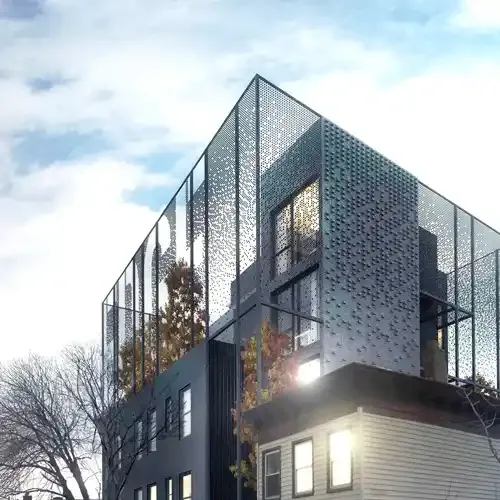
Dedots safety screen for Brooklyn roof terrace
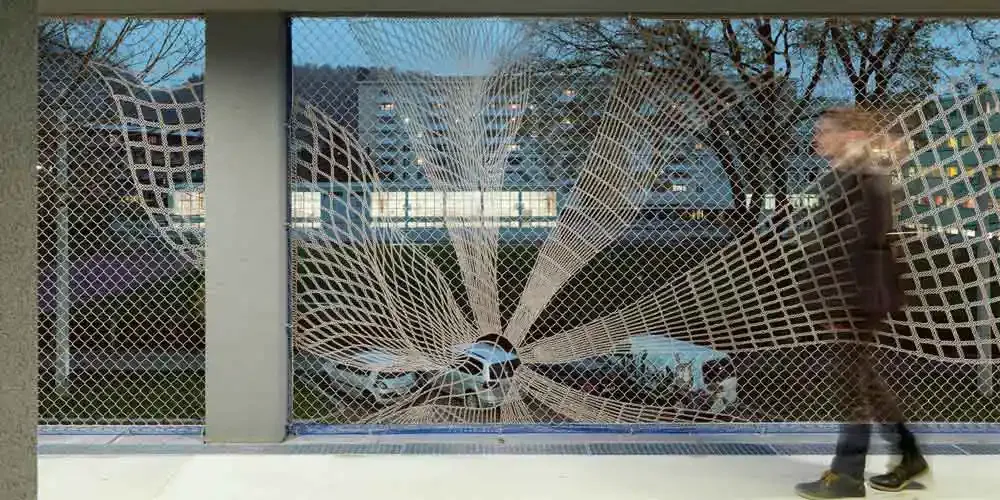
Residential complex facade integration
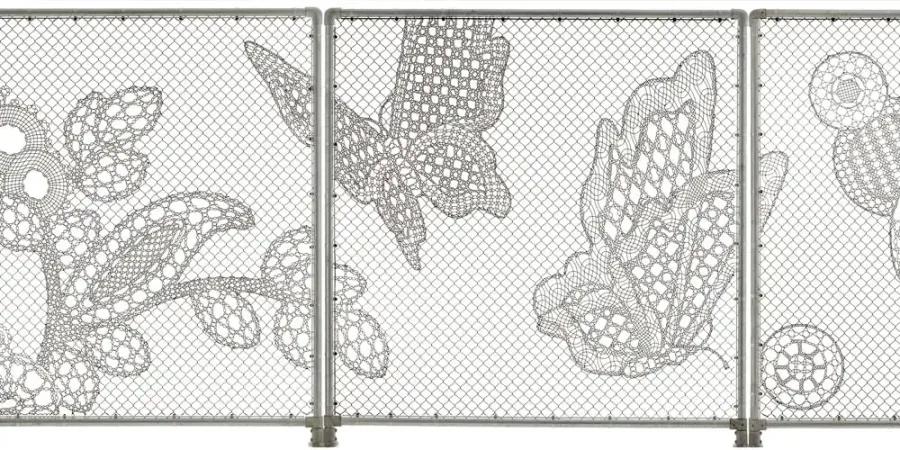
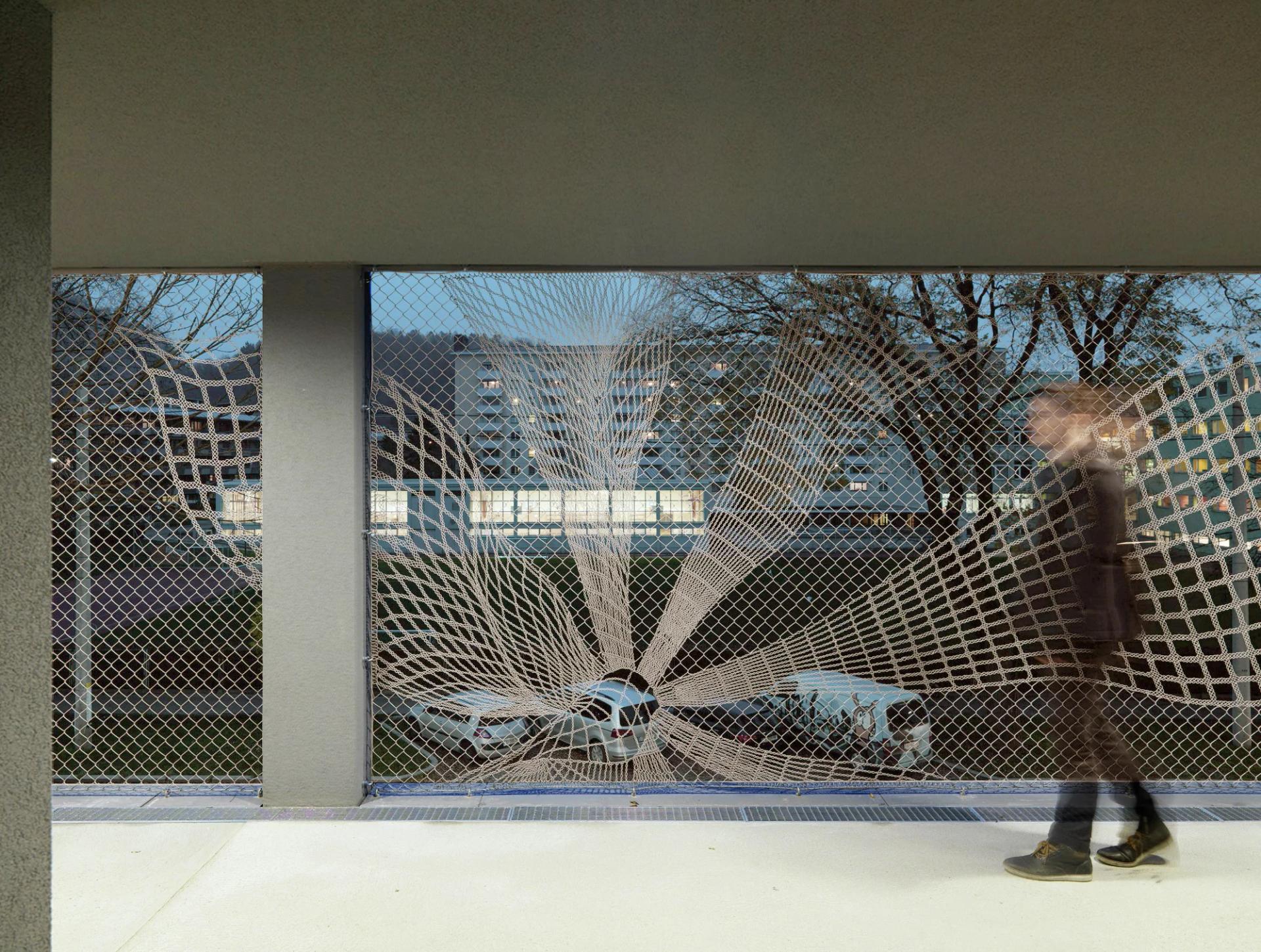
Lalace decorative facade screen for Powerhouse Museum
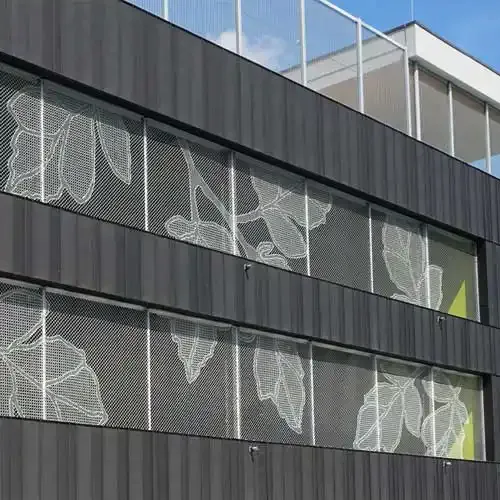
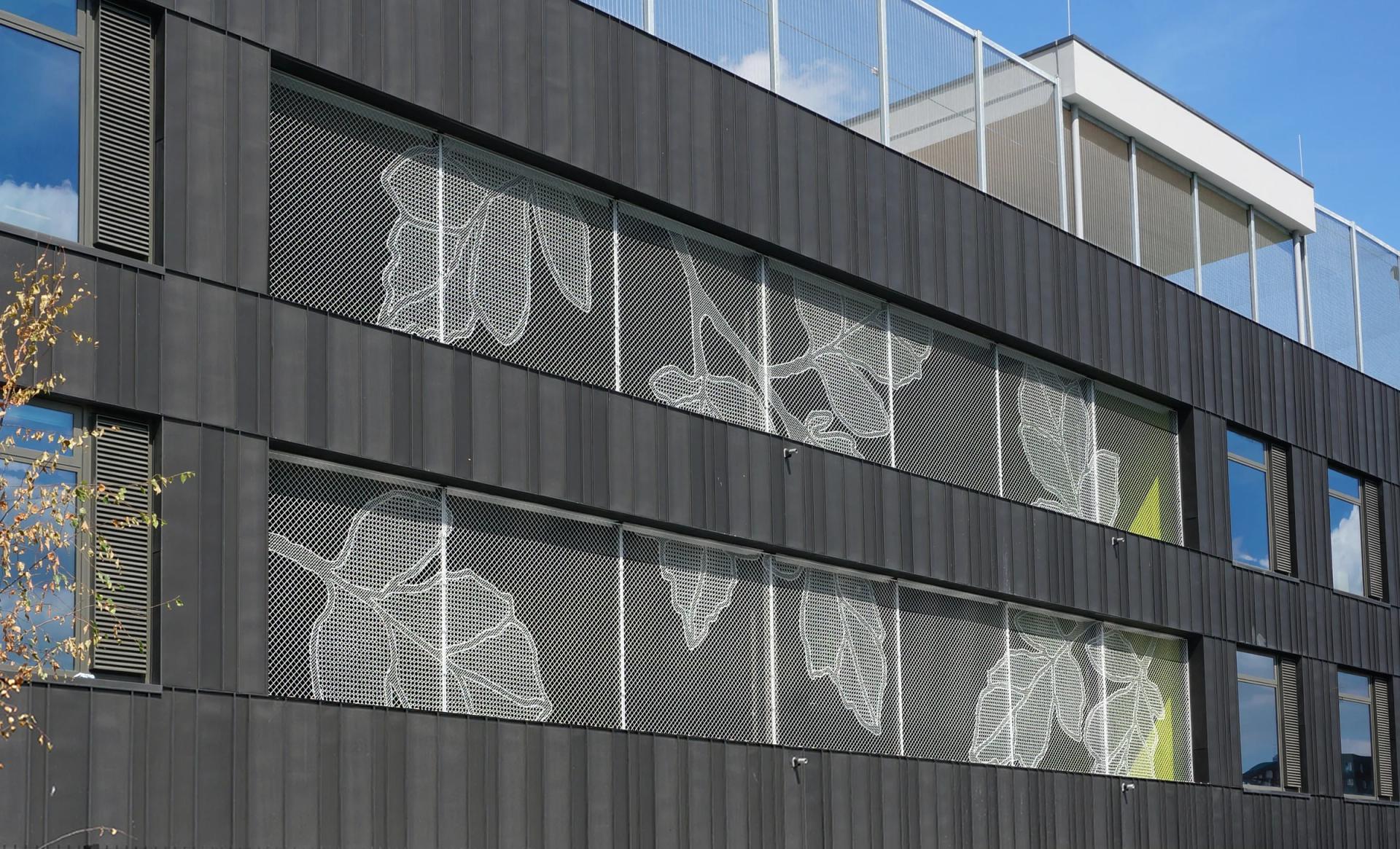
School facade inspired by nature
That depends on the density you choose. With Dedots transparency ranges from fully filled to completely open areas, and gradients create a transition between them. Lalace patterns filter light and frame views while still giving separation. The design is set zone by zone.
Less than closed solutions, because light passes through the open parts of the mesh. In Mühlhausen the screen reduces direct sunlight by 35% while lighter parts of the pattern keep view and connection. You decide where the screen is dense and where it stays open.
Yes. The open structure keeps sightlines, and the effect can differ per side. On a roof terrace in Brooklyn the dots are black outside and chrome inside, so the screen can disappear or reveal itself depending on view and light.
It can be. In Brooklyn the screen acts as fall through protection for the roof terrace. Railing designs in Lalace and Dedots meet EU standards for fall through protection, and the mesh sizes prevent climbing. Read more on railings.
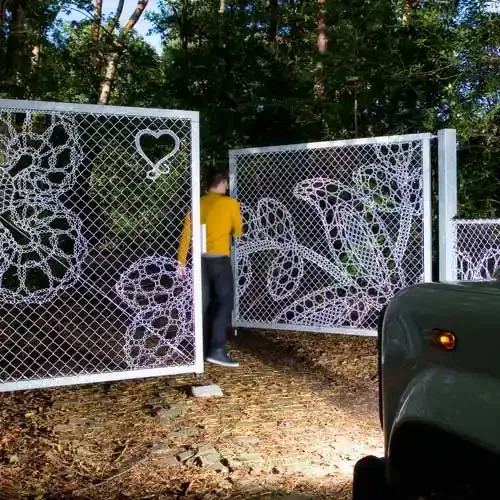
Yes. A home and studio in Bergen needed privacy from the street and security after hours, and got a Lalace enclosure and gate with a playful pattern. The same approach suits ground floor homes, patios and front gardens.
Yes. Lalace works in temperatures from minus 40 to plus 40 °C with coatings that are highly UV resistant. Dedots contains a UV blocker and has an F1 classification according to the UL746C test, so the screen keeps its look outdoors.