Substructure and frames
Large surfaces get a steel structure with brackets and tie wire. For railings and screens the mesh sits in a steel frame with rods and clips, while stiff welded panels are fixed with brackets.
Solutions
You need to clad a volume with a metal skin that stands up to sun, rain and frost yet still lets air and light through. Metal mesh cladding does exactly that. It is mounted as a separate layer in front of the structure, so the building keeps breathing behind it.
Get in touch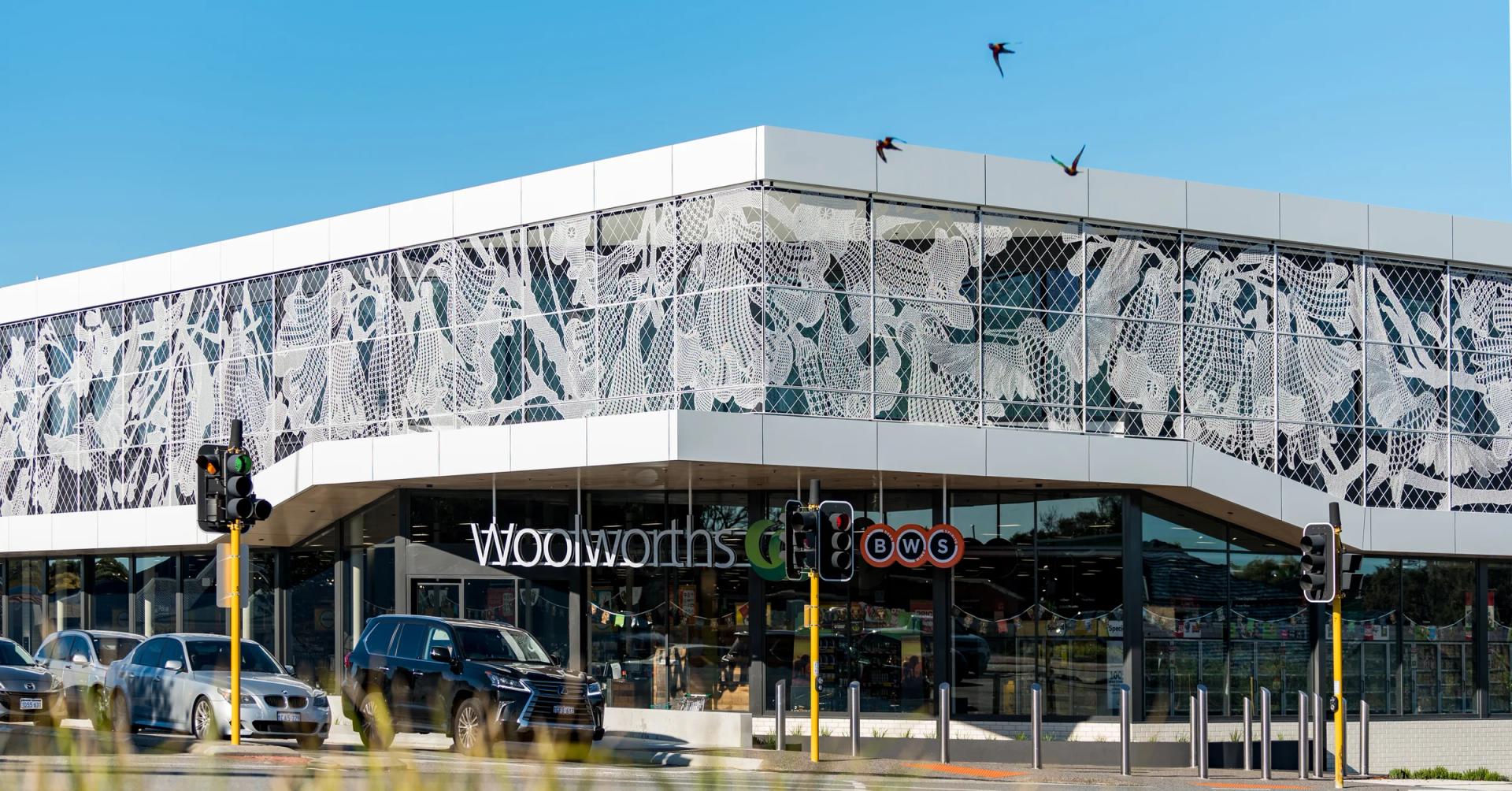
Cladding has to do several things at once. It must cover large surfaces, stay in shape in wind and weather, keep its colour in the sun and remain safe for people around the building. At the same time the volume behind it often needs ventilation, which a closed skin simply blocks.
Redfort clads buildings with steel mesh on two bases. The chain link base of the Lalace Bended type is flexible and is tensioned on a steel structure with brackets and tie wire. The Welded type forms stiff panels of up to 3 by 2 metres that need no substructure. Dedots panels join seamlessly with special mounting clips.
The skin is made to last outdoors. Lalace works from minus 40 to plus 40 °C with highly UV resistant PVC or powder coatings, and for coastal or industrial sites the Welded type fits best. Dedots has an F1 classification according to the UL746C test. At the end of its life the metal stays recyclable.
Large surfaces get a steel structure with brackets and tie wire. For railings and screens the mesh sits in a steel frame with rods and clips, while stiff welded panels are fixed with brackets.
PVC and powder coatings give Lalace a very high resistance to UV, and the Dedots plastic is coloured all the way through with a UV blocker. Both keep their look in sun, rain and frost.
Lalace is extremely fire resistant and not flammable on its own, and Dedots has the best possible UL94 fire classification. Lalace stays recyclable, and Dedots runs a return programme that recycles 96% of its products.
Reference projects
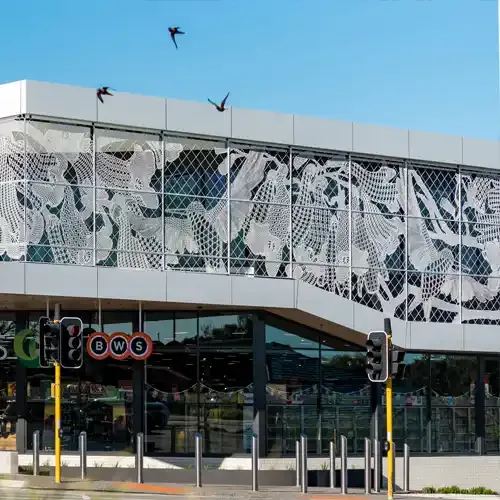
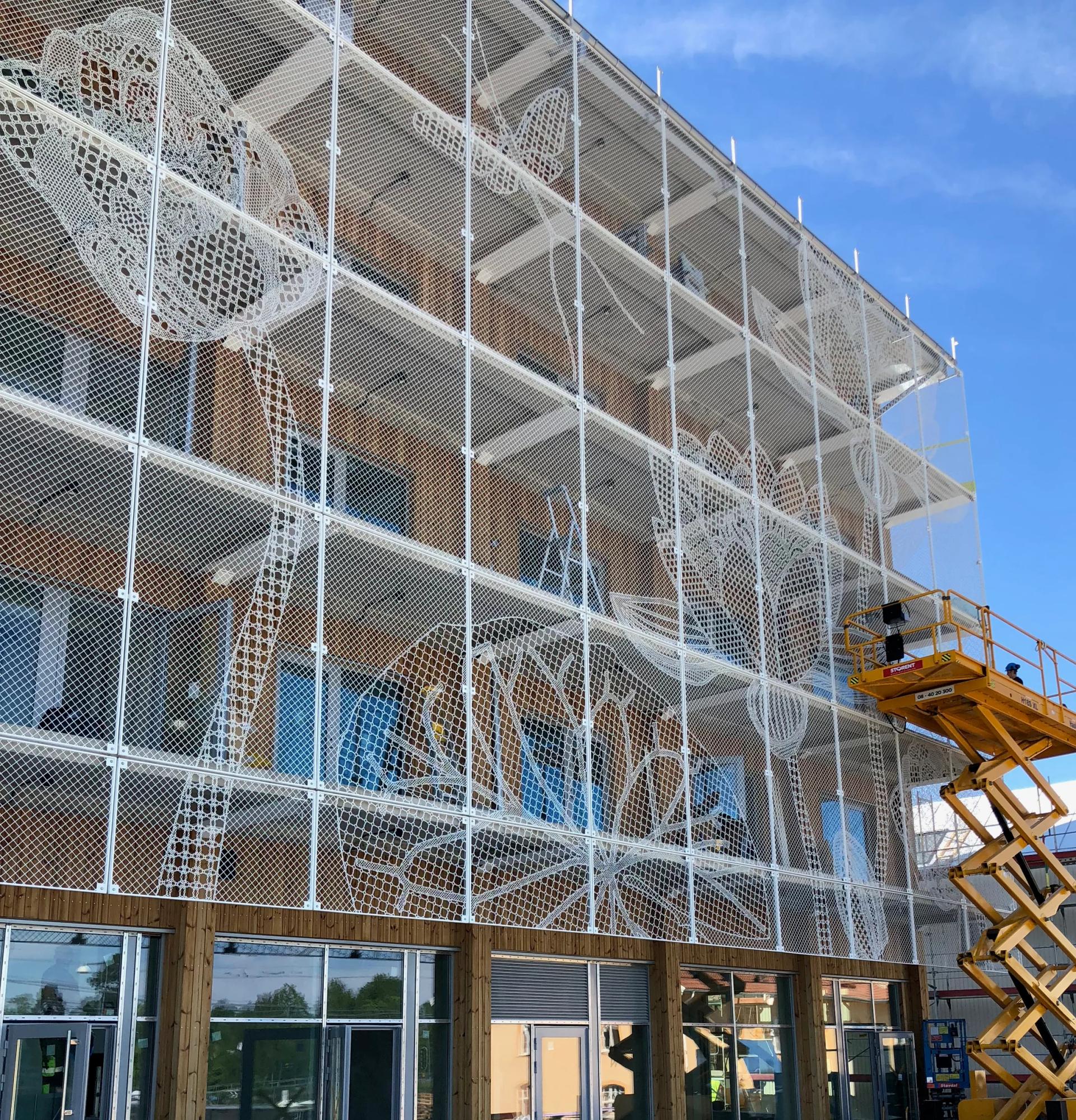
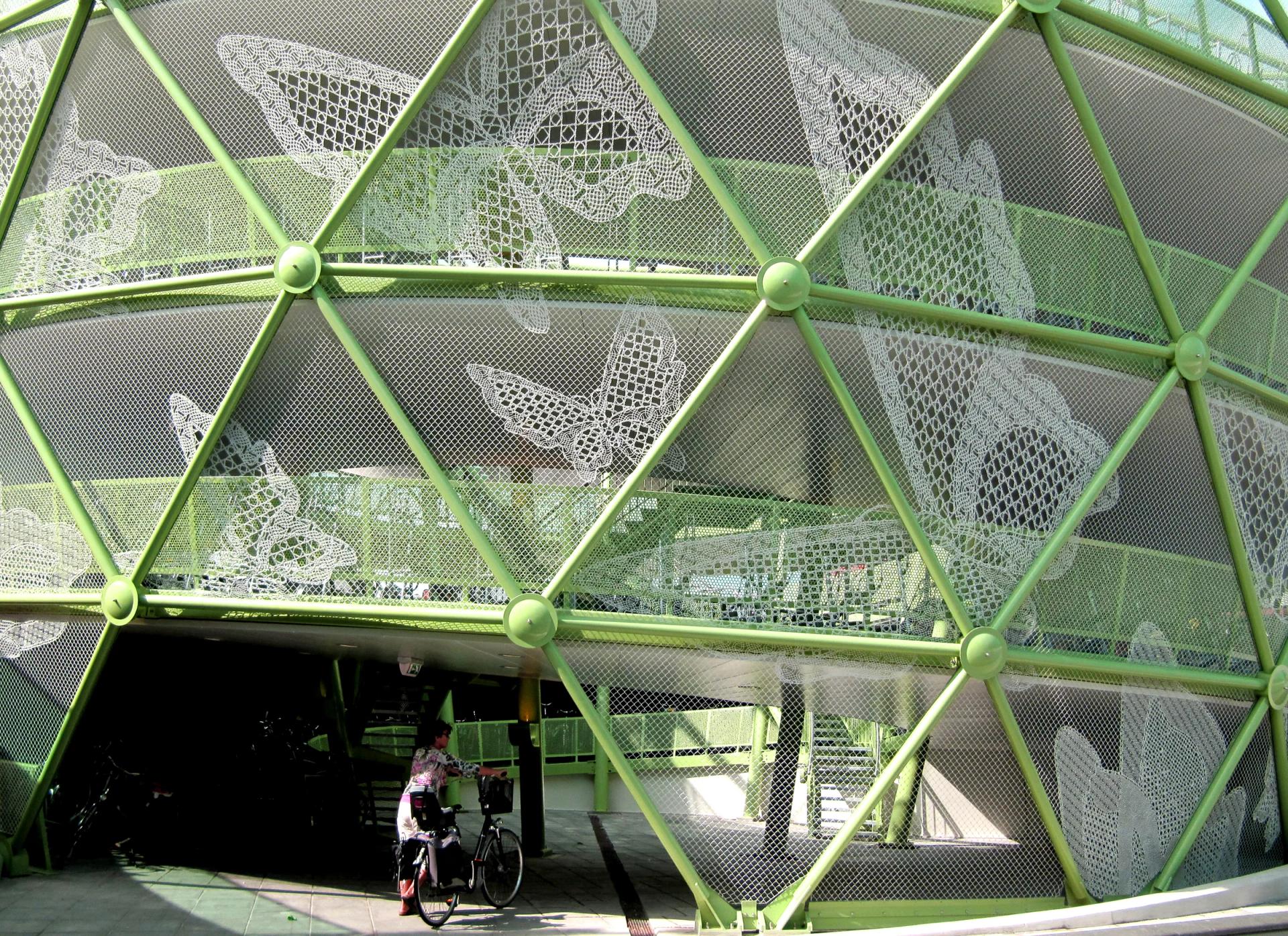
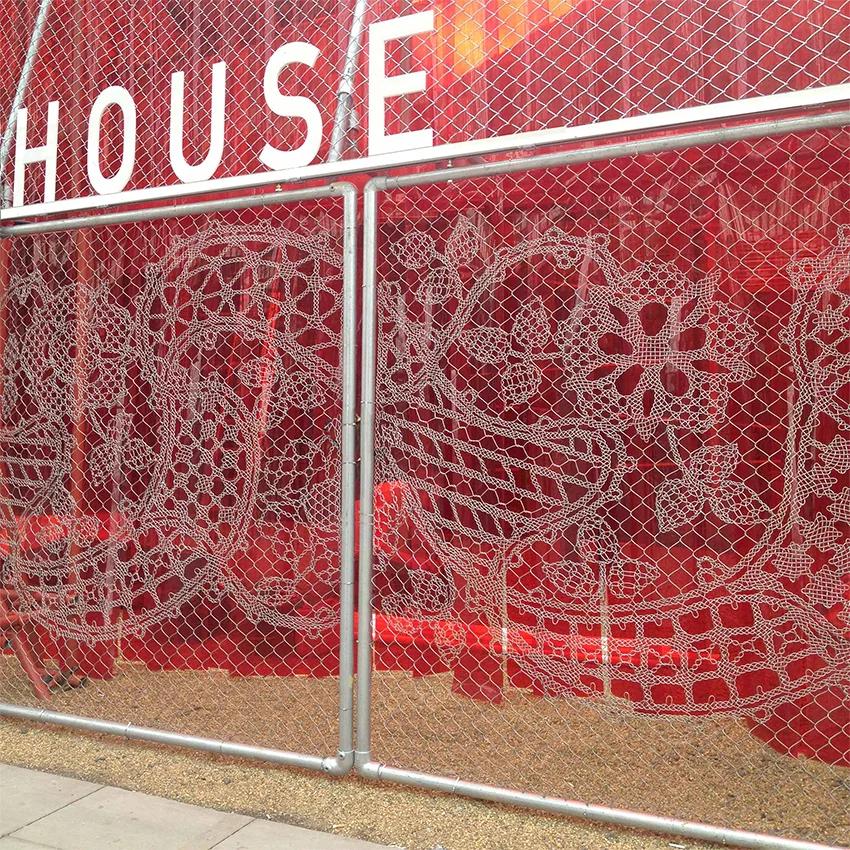
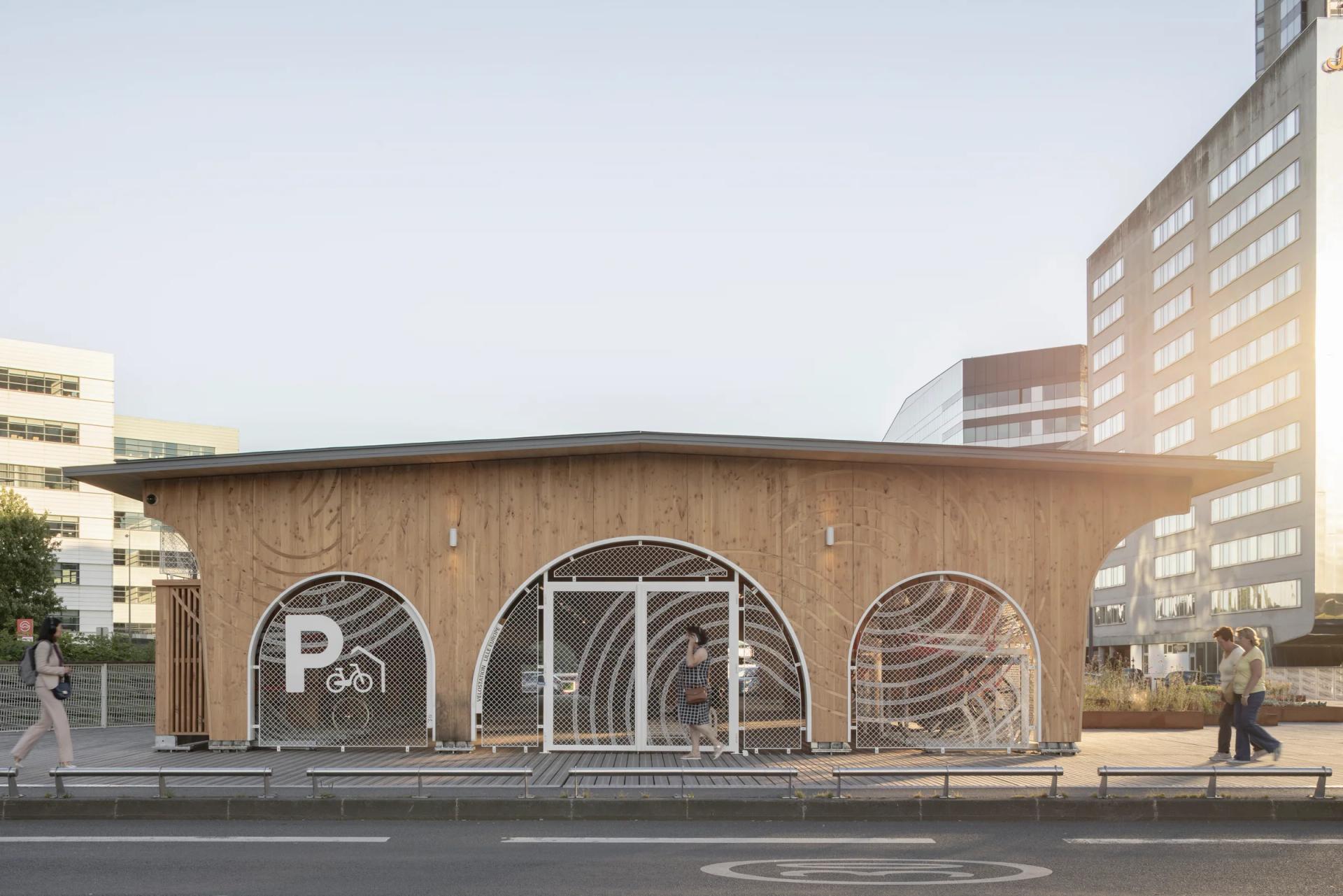
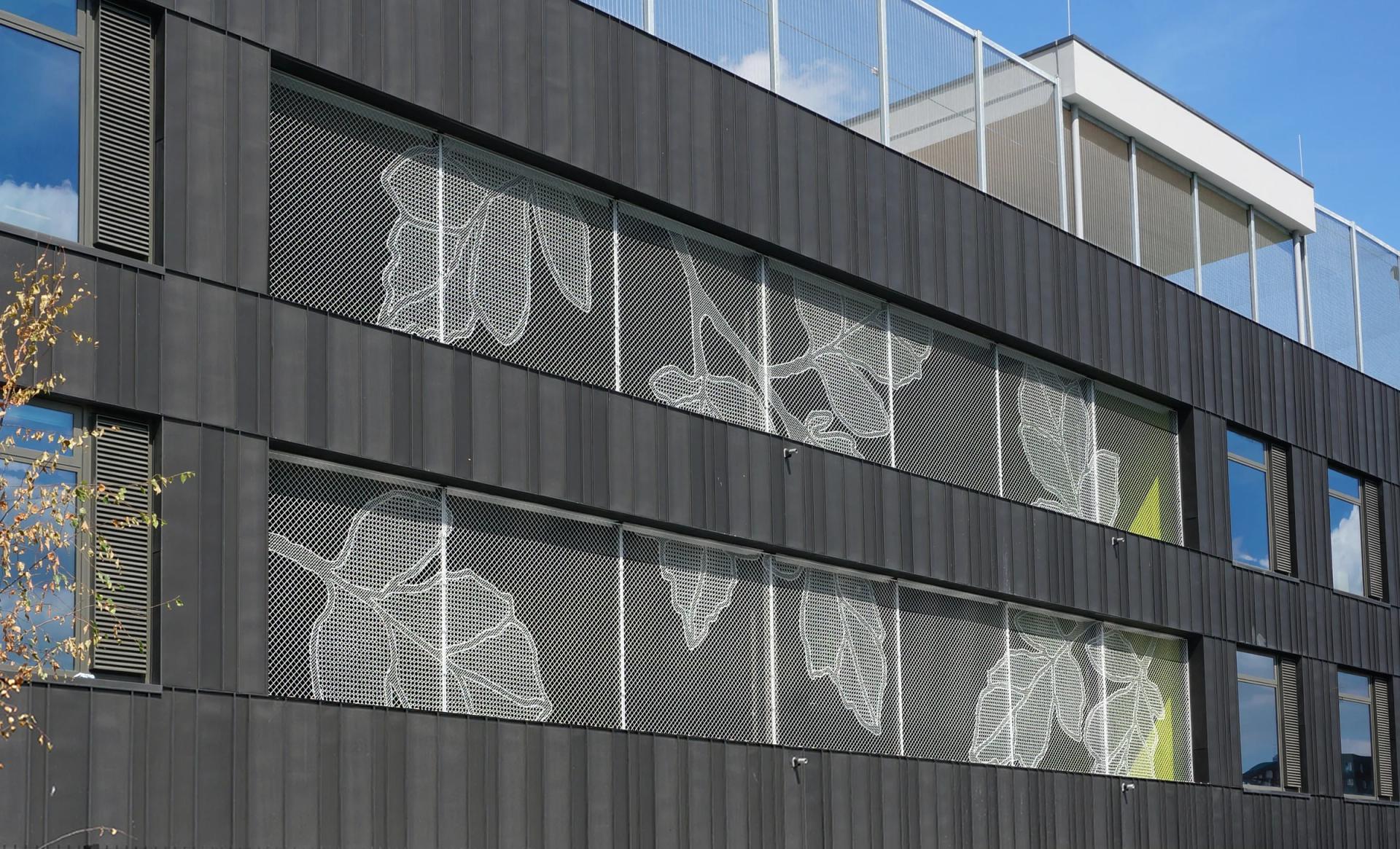
From a grocery store in Perth and an apartment building in Nykvarn to a bicycle shelter in Alphen and a pop up pavilion in London, these projects show steel mesh as a skin over a structure. Each metal mesh cladding was fixed to a frame or substructure. Open a project to see the construction details.
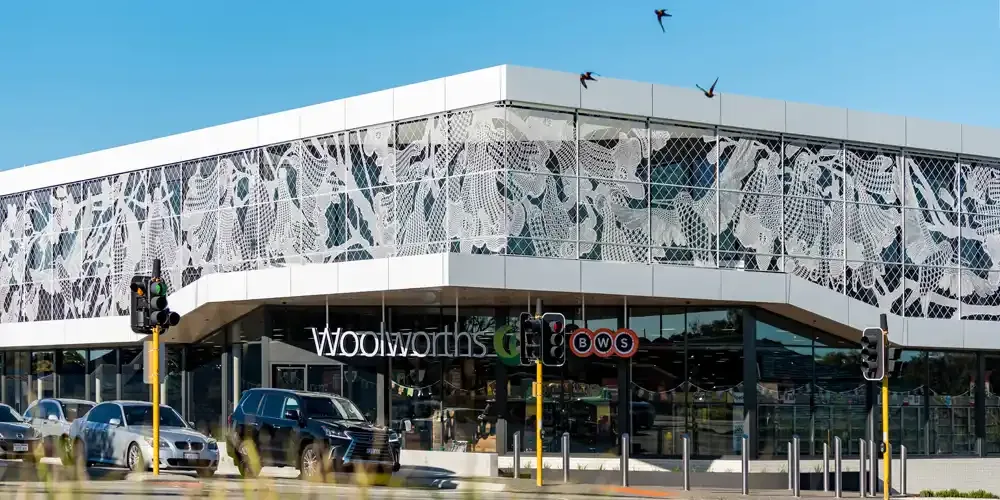
Woolworths Perth artistic facade
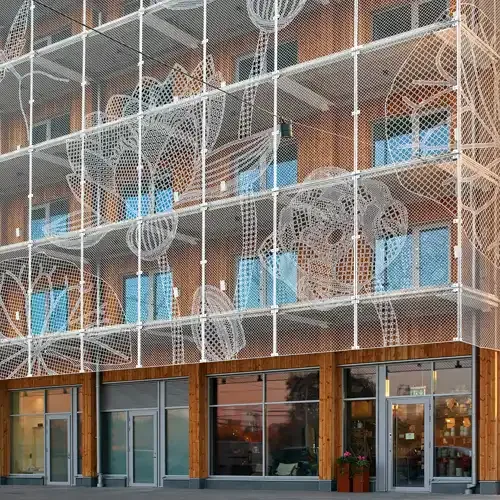
Lalace lotus-pattern facade for residential building
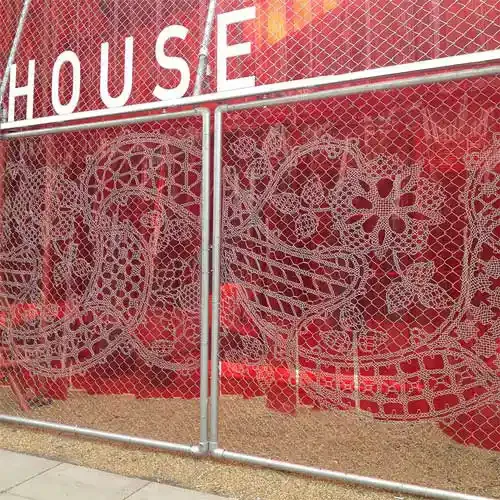
Hackney House pop-up facade
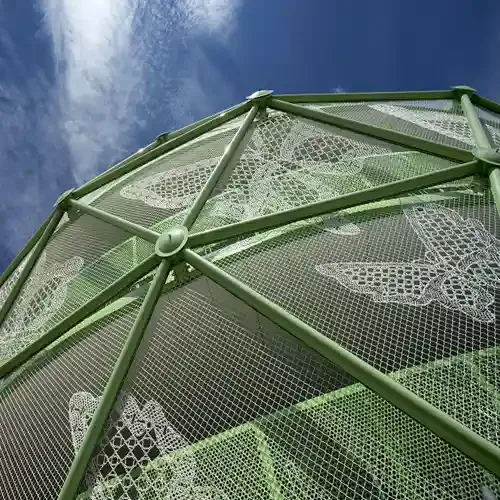
Innovative bicycle shelter “apple” wrapped in Lalace
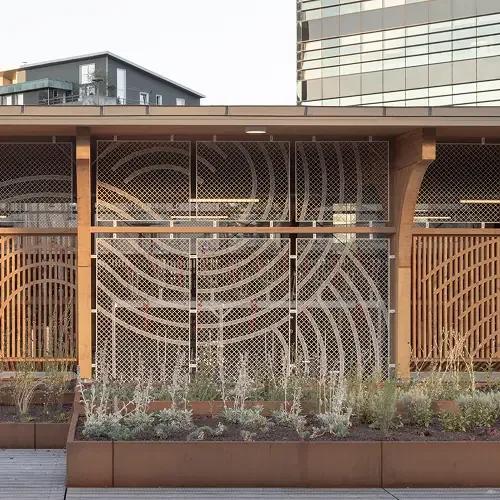
Bicycle hub blends mobility and urban design
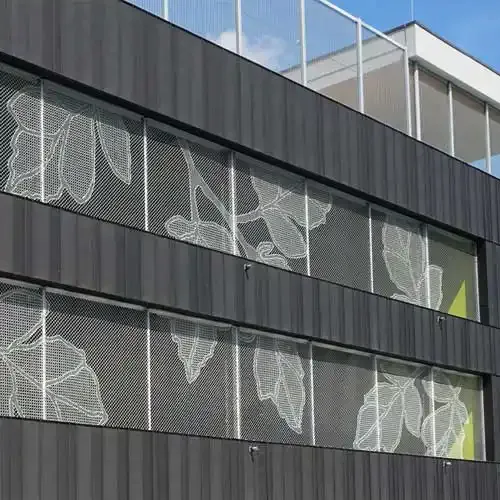
School facade inspired by nature
It depends on the base. Chain link mesh needs a supporting substructure for tension and stability, usually a steel structure with brackets and tie wire, and it is mounted on all sides. The Welded type is less flexible and needs no substructure at all.
Yes. The mesh is a separate layer, so it can be mounted in front of a new or an existing volume. Lalace adds character in both renovations and new projects. On walls the welded panels are fixed with wooden battens and wall brackets.
Welded panels are up to 3 by 2 metres, with borders finished in 6, 8 or 10 mm double rods. The Bended type allows bigger dimensions and can be delivered on a roll, which suits long or tall surfaces.
Yes. Lalace suits environments from minus 40 to plus 40 °C, and for coastal areas and industrial sites the Welded type fits best. It is made of moulded steel or stainless steel and can be powder coated in a wide range of colours.
Yes. The open structure allows natural ventilation, so air keeps flowing behind the skin. That is why metal mesh cladding is used on parking garages and on bicycle parkings such as the apple shaped shelter in Alphen for 800 bicycles.
Lalace has a high tensile strength, is TNO tested and passes the sandbag impact test, and its coatings are highly UV resistant. Dedots performs in all weather conditions. Both products are fully recyclable after a long life of use.